Driving Profitability in Commercial Landscaping Through Integrated Technology
J
Architect
Jag
Record Date
Apr 9, 2026
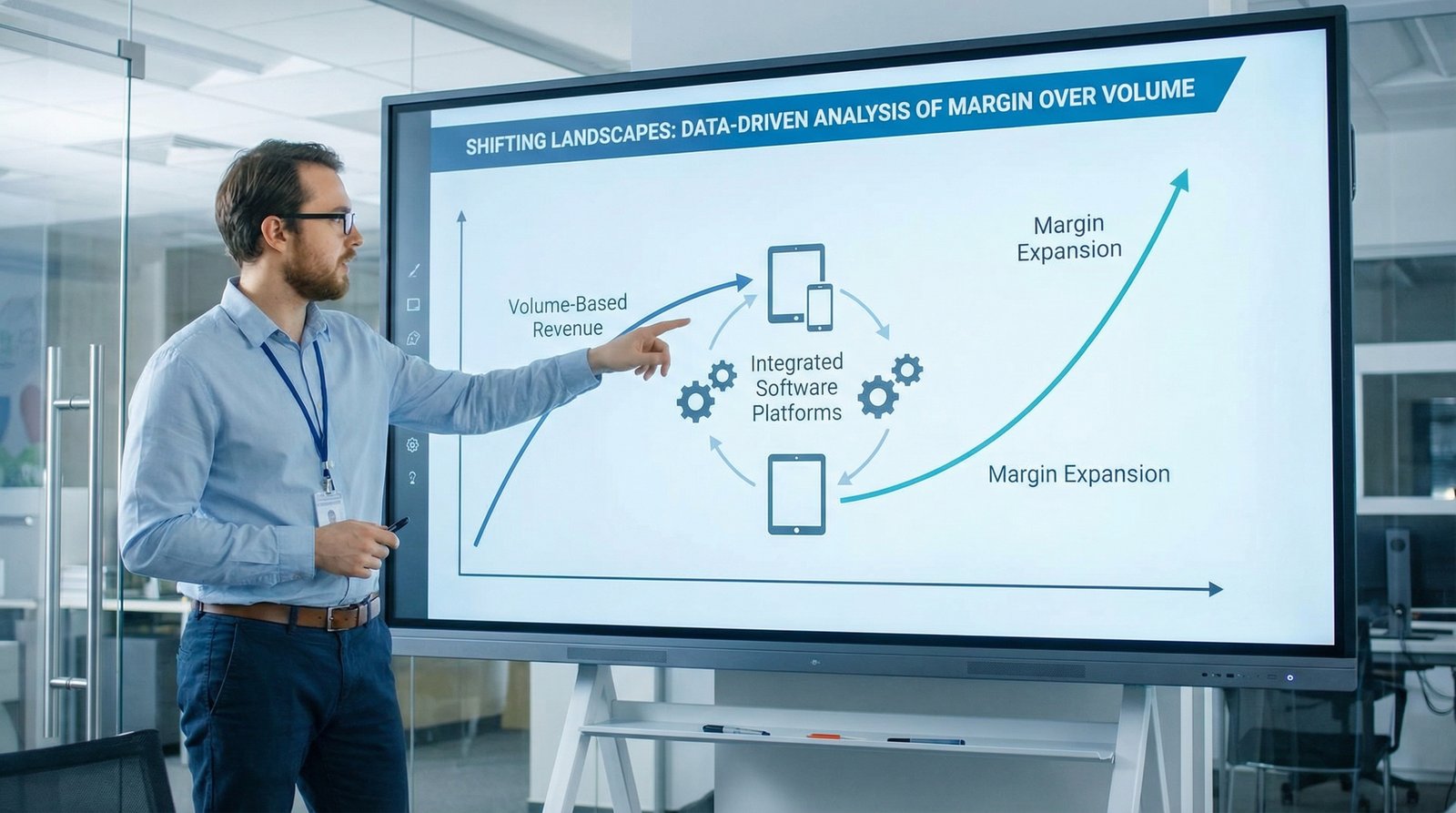
For decades, success in the commercial landscaping sector was measured almost exclusively by top-line revenue growth—adding more physical trucks to the fleet, securing more expansive acreage, and aggressively hiring more field crews. However, as the industry faces shifting macroeconomic headwinds, a stark and vital realization has taken hold among enterprise operators: being continuously busy is not synonymous with being profitable. A comprehensive 2026 industry report evaluating enterprise contractors reveals a critical strategic pivot. While 59 percent of contractors still actively seek revenue expansion, 47 percent have aggressively shifted their primary operational focus toward systemic margin improvement and operational visibility.The divergence between high-performing, highly profitable commercial landscaping companies and struggling, stagnant operators is directly correlated to their internal technological infrastructure. The empirical data is unequivocal: contractors relying heavily on manual tools or basic, disconnected spreadsheets report anemic profit margins, typically hovering between a mere 4 and 7 percent. Shockingly, zero manual operators reported achieving margins above 15 percent. Furthermore, 40 percent of these technologically siloed businesses are actually forecasting a decline in profits for the upcoming fiscal year. The operational friction within these companies is immense; lacking integrated job costing capabilities and precision estimating tools, these firms suffer from chronic margin bleed, inaccurate bidding, and highly inefficient routing.Conversely, commercial landscapers utilizing end-to-end integrated SaaS platforms—such as those providing real-time data on labor hours, material cost fluctuations, and automated, AI-driven invoicing—are experiencing a profound financial renaissance. One in five users operating on consolidated platforms report profit margins exceeding 11 percent, and they are five times more likely to save between 11 and 20 administrative hours per week. By systematically streamlining route planning by 26 percent and estimating by 15 percent, these forward-thinking companies reclaim massive amounts of operational bandwidth without increasing their overhead headcount. When commercial property managers evaluate proposals for multi-year maintenance contracts, they are increasingly demanding the extreme transparency, proof-driven reporting, and rigorous cost-control that only tech-enabled landscaping firms can reliably provide, cementing software as the ultimate competitive advantage.Pillar IV: NewsThe News category serves a highly strategic dual purpose: it firmly establishes RYY.com as an authoritative, pulse-keeping thought leader within the broader B2B and B2C landscaping ecosystem, and it captures sustained organic traffic from industry professionals, private equity investors, and stakeholders actively monitoring market trends and technological disruptions.