Smart Irrigation Systems: A Technical Guide to Water Efficiency
J
Architect
Jag
Record Date
Apr 9, 2026
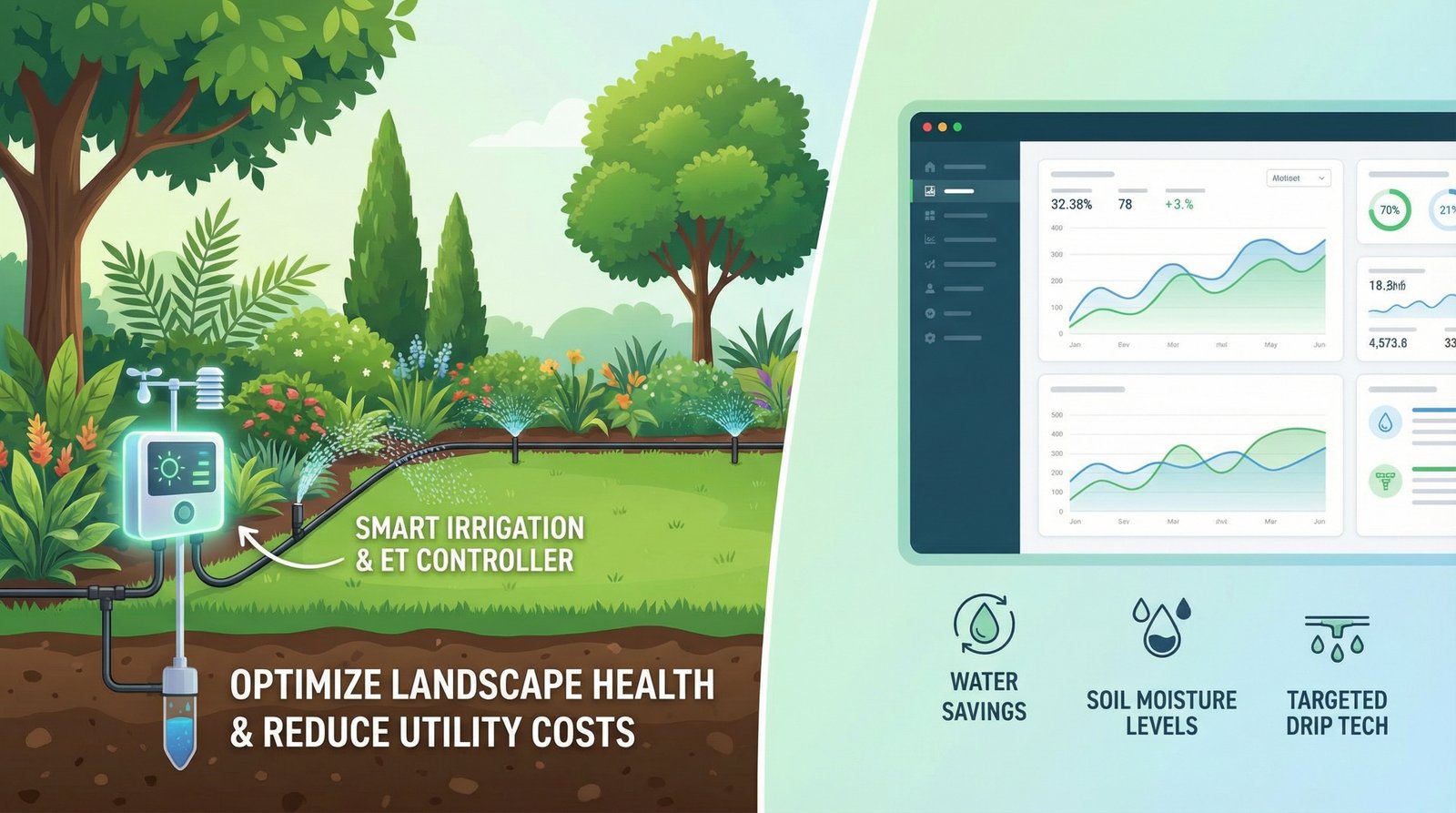
As municipalities increasingly tighten regulations around local water management and implement strict usage protocols, the transition from traditional, inefficient sprinkler systems to sensor-driven smart irrigation has become both an economic and ecological necessity. For residential property owners and commercial landscapers alike, precision tech-guided gardening eliminates the profound guesswork of hydration, resulting in substantial resource conservation and vastly healthier botanical ecosystems.The technical architecture of modern smart irrigation relies on a sophisticated, seamless fusion of hardware and real-time environmental data. Advanced controllers utilize complex Evapotranspiration computations, calculating the exact volume of water lost to soil evaporation and plant transpiration based on highly localized meteorological data, including temperature, humidity, and wind speed. When paired with subterranean soil moisture sensors, these systems dynamically adjust watering schedules in real-time, completely preventing the catastrophic effects of overwatering, nutrient leaching, and root rot. Empirical data demonstrates that integrating these smart controllers can yield remarkable water savings of 30 to 50 percent, allowing the hardware to effectively pay for itself in utility cost reductions within two to three years.At the physical delivery level, automated drip irrigation systems have emerged as the definitive gold standard for targeted hydration. Unlike broad-spray impact sprinklers that suffer from massive wind drift and rapid evaporation losses, drip systems utilize pressure-compensating emitters to deliver water directly to the root zone, achieving application uniformities exceeding 90 percent. This targeted delivery intrinsically inhibits weed growth in adjacent dry zones and actively mitigates the risk of foliar fungal diseases by keeping plant leaves entirely dry. For commercial applications, mapping every discrete irrigation zone and establishing alert thresholds for flow anomalies allows technicians to perform rapid, targeted maintenance. By proving measurable water savings to clients through verified digital portals, commercial landscapers can easily justify the initial capital expenditure of these systems, fusing environmental sustainability with rigorous operational efficiency.