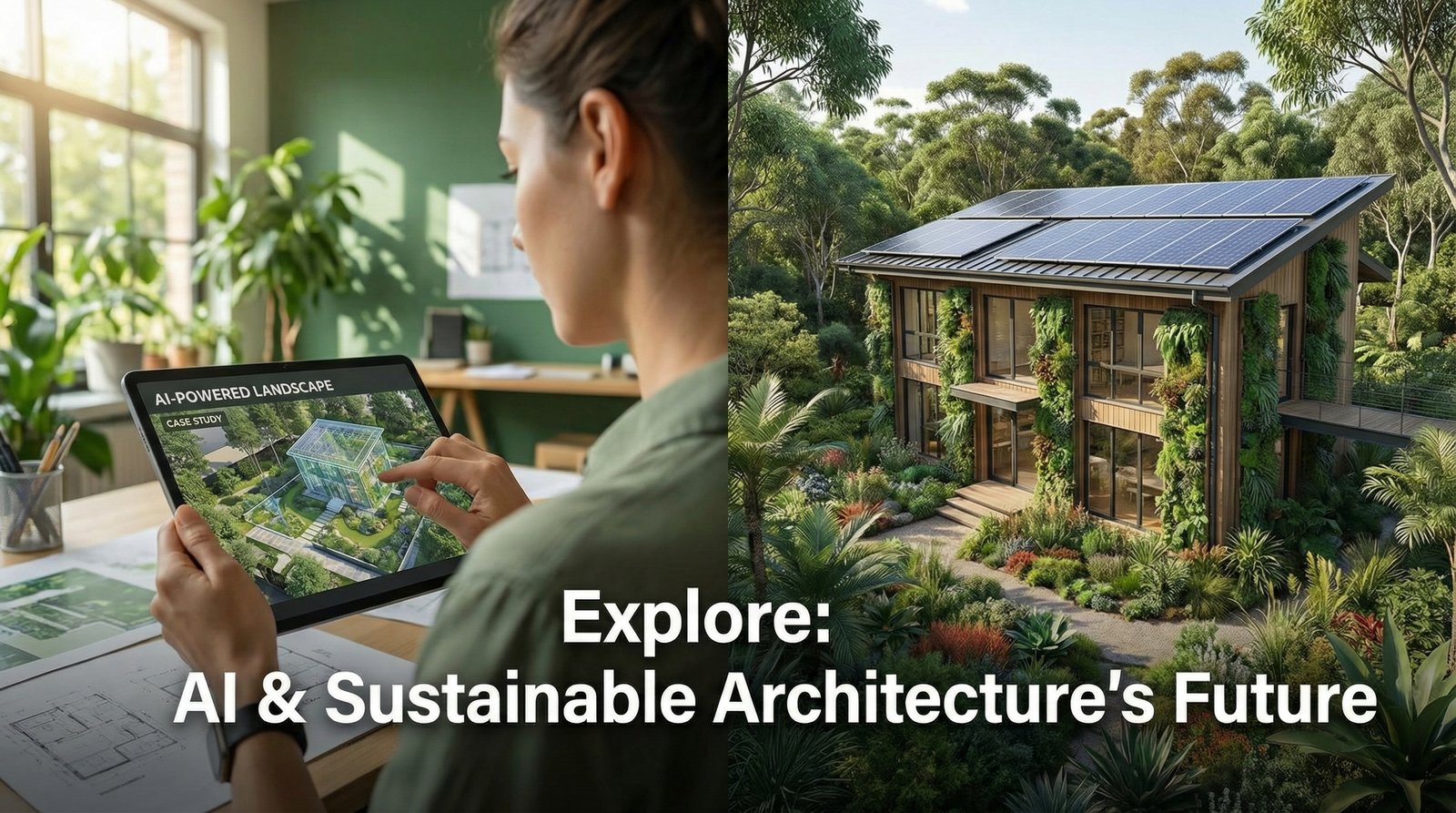
The conversation about AI in landscape design usually starts and ends with photorealistic visualisation — upload a photo, see your garden transformed. That's real and genuinely valuable. But it's only the surface of what AI is becoming capable of in design practice, particularly for projects where ecological performance matters as much as aesthetics.
The Problem AI Is Solving
Professional landscape architecture has always faced a structural tension between form and function. A design that looks extraordinary on a rendered plan may have serious problems that only emerge after construction: poor drainage that creates waterlogging, planting unsuited to actual soil conditions, hardscaping that generates excessive surface runoff, or stormwater management that fails under heavy rainfall.
Catching these issues in post-construction is expensive. Catching them in the design phase requires expert knowledge that many projects — particularly smaller commercial and residential ones — don't have access to.
What the Research Shows
A peer-reviewed study applying a multi-agent "Generative-Critical" AI framework to a large cultural park project produced results that stopped the research community:
The initial human-generated design concept was aesthetically strong but quantitatively failed on ecological metrics — it scored 59.3 on a standardised sustainability assessment due to inadequate stormwater management. The AI framework, running iterative design-critique loops against a built-in expert knowledge base, identified the critical gaps:
- Insufficient bioretention capacity at topographical low points
- Excessive hard paving creating unmanaged runoff volumes
- Missing permeable surface transitions between zones
After AI-guided iterations, the same design — with the original artistic vision preserved — achieved a sustainability score of 88.0. The improvements weren't cosmetic additions; they were structural corrections to the underlying design logic.
What This Means for Homeowners and Developers
The immediate practical applications are straightforward. AI tools can now:
- Generate hyper-localised plant lists matched to your specific soil type, aspect, and climate zone
- Flag drainage issues before construction through terrain analysis
- Optimise material selections against both cost and ecological performance criteria
- Ensure compliance with local environmental regulations before breaking ground
For smaller projects — a residential garden, a commercial courtyard — this level of analysis was previously only accessible to those who could afford specialist ecological consultants. AI is democratising it.
The Visualisation Layer
All of this analytical capability pairs with the visualisation layer that makes complex design decisions accessible to non-specialists. Seeing a photorealistic render of a bioretention planting scheme is what gets clients and homeowners to understand — and commit to — ecologically sound design choices that might otherwise feel abstract.
That's exactly what RYY does. Upload a photo and see your space transformed — free to start.