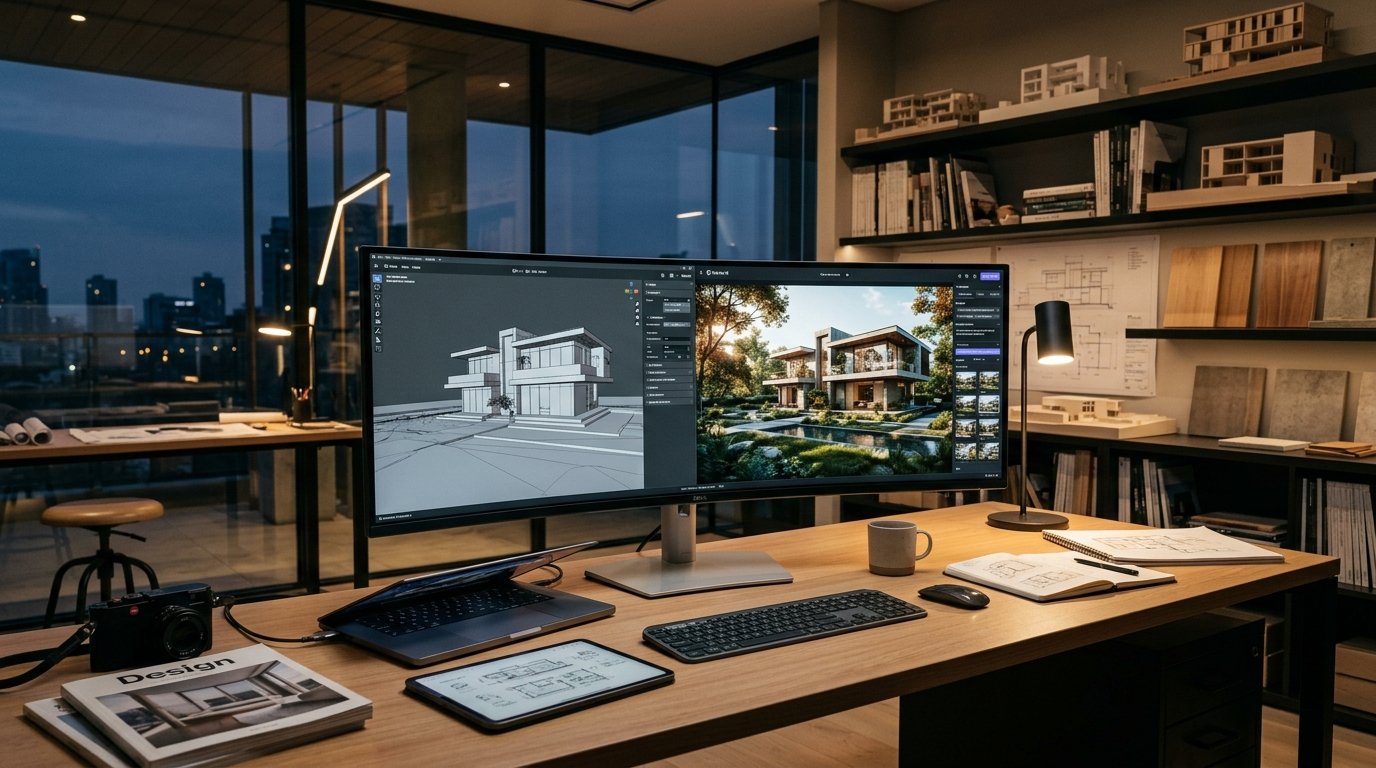
The world of architectural design is constantly evolving, driven by innovation and the perpetual quest for efficiency and stunning aesthetics. For architects, translating initial concepts into tangible, visual forms has always been a cornerstone of the design process. Traditionally, this involved laborious manual sketching, 2D drafting, and time-consuming 3D rendering. However, a revolutionary shift is underway: architect AI visualisation. This groundbreaking technology is not just an incremental improvement; it's a paradigm shift, empowering architects to generate, iterate, and refine design concepts with unprecedented speed and creativity.
At ryy.com, we understand the power of AI in transforming design, whether you're a seasoned architect envisioning a skyscraper or a homeowner dreaming of a new living room. The core principles of rapid visualisation and intelligent design assistance apply universally, making high-quality design accessible to everyone.
The Bottleneck of Traditional Rendering in Architecture
Before diving into the marvels of AI, it's essential to understand the challenges that conventional architectural rendering processes have long posed. While skilled artists and powerful software can produce breathtaking visuals, the journey to get there is often fraught with hurdles.
Manual Processes vs. AI Speed
Creating photorealistic renders typically involves multiple painstaking steps: 3D modeling, applying textures and materials, setting up lighting, defining camera angles, and then the actual rendering process, which can take hours, if not days, for complex scenes. Each design iteration requires repeating many of these steps, significantly slowing down the creative flow and concept exploration. This linear, often sequential, workflow means that exploring numerous design variations early on becomes impractical due to time constraints.
The Cost Factor
Beyond time, traditional high-quality rendering is also a significant financial investment. Hiring expert 3D artists or dedicating substantial in-house resources to rendering adds considerable overhead to architectural projects. This cost often limits the number of visualisations a client can afford, or an architect can produce for internal review, leading to fewer explored options and potentially less optimal final designs.
Limited Iteration and Exploration
The most significant impact of these bottlenecks is the stifling of iteration. Architects thrive on exploring possibilities, testing different materials, layouts, and forms. When each visualisation is a major undertaking, the temptation is to settle for "good enough" rather than push for "perfect." This can lead to missed opportunities for innovative solutions and a less robust design process overall. Imagine if you, as a homeowner, had to wait weeks and pay thousands for every slight change to your interior design plan – it's simply not feasible for most projects.
How AI Transforms Architect AI Visualisation
Enter artificial intelligence. AI-powered tools are fundamentally changing how architects approach visualisation, particularly in the critical early concept stages. By automating many of the time-consuming tasks, AI frees up architects to focus on what they do best: designing and innovating.
Rapid Concept Generation and Iteration
The most immediate and profound benefit of AI in architectural visualisation is speed. Architects can now feed simple sketches, basic 3D models, or even text prompts into AI platforms and receive diverse, high-quality visualisations in seconds or minutes. This allows for an unparalleled level of design exploration. Imagine sketching a floor plan and, with a few clicks, seeing it rendered as a modern minimalist interior, a rustic farmhouse, or a brutalist masterpiece – all before lunch!
- Instant Style Transfer: Transform a simple massing model into various architectural styles.
- Material Exploration: Quickly swap out materials and textures to see different aesthetic impacts.
- Lighting Scenarios: Generate visuals under different lighting conditions (day, night, overcast) to understand ambiance.
Enhanced Client Communication and Engagement
Clear communication is paramount in architecture. Clients often struggle to visualise abstract concepts from plans or elevation drawings. AI-generated visualisations bridge this gap effortlessly. High-quality, emotive images created rapidly allow clients to grasp design intent much faster, provide more informed feedback, and feel more engaged in the process. This leads to fewer misunderstandings, quicker approvals, and ultimately, happier clients.
Bridging the Gap Between Sketch and Reality
AI tools can take a rudimentary sketch and infuse it with realistic textures, lighting, and environmental context, turning a rough idea into something that looks almost finished. This capability allows architects to present highly compelling visuals much earlier in the design phase, captivating clients and stakeholders from the outset. It essentially compresses weeks of traditional rendering work into minutes of AI processing.
Practical Applications of AI for Architects
The integration of AI into the architectural workflow isn't just theoretical; it's already delivering tangible benefits across various stages of a project.
Early-Stage Concept Development
This is where AI shines brightest. Architects can use AI to:
- Generate Multiple Options: Quickly produce dozens of variations for a facade, interior space, or landscape element, exploring diverse forms and functions.
- Massing Studies: Instantly visualise how different building masses interact with a site and context.
- Mood Boards to Reality: Translate abstract mood boards and reference images into cohesive architectural concepts.
Material and Texture Exploration
Selecting the right materials is crucial for both aesthetics and performance. AI tools allow architects to experiment endlessly without the overhead of re-rendering. Imagine a client asking, "What if we used brick instead of concrete?" With AI, that question can be answered visually in moments, not days.
Design Reviews and Feedback Loops
During internal reviews or client presentations, AI-generated visuals facilitate more productive discussions. Changes can be implemented and visualised almost instantly, making feedback sessions dynamic and efficient. This iterative loop accelerates the design process and ensures that all stakeholders are aligned.
Accessibility and Democratization of Visualisation
AI rendering levels the playing field. Smaller firms or individual practitioners who might not have the budget for a dedicated rendering team can now produce professional-grade visualisations. This democratisation of high-quality visuals means that innovative designs from any source can be presented effectively, fostering greater creativity across the industry.
Integrating AI into Your Architectural Workflow
Adopting AI into your practice might seem daunting, but many platforms, including the underlying technology that powers ryy.com, are designed for intuitive use.
Simple Prompts, Stunning Results
The beauty of modern AI visualisation tools lies in their accessibility. Often, all it takes is a simple text prompt combined with a base image (like a sketch or a basic 3D model). You might prompt: "Modern living room, natural light, oak wood accents, minimalist furniture" and see your sketch come to life.
Start Experimenting
The best way to integrate AI is to start small. Experiment with different prompts, upload various base images, and observe how the AI interprets your input. The more you use these tools, the more you'll understand their capabilities and how to best leverage them for your specific design challenges.
Practical Tips for Architects Using AI Visualisation
To maximize the benefits of architect AI visualisation, consider these practical tips:
- Define Your Vision Clearly: While AI is powerful, precise prompts yield better results. Be specific about style, materials, lighting, and mood.
- Use High-Quality Base Inputs: Even a rough sketch benefits from being clear and proportional. For 3D models, ensure clean geometry.
- Iterate and Refine Prompts: Don't settle for the first output. Tweak your text prompts, add new descriptors, or remove conflicting ones to guide the AI.
- Focus on Early Stages: AI is exceptionally powerful for rapid concept exploration. Use it to generate numerous ideas quickly before committing to a detailed design.
- Combine with Traditional Tools: AI is a powerful assistant, not a replacement. Use it to accelerate visualisation, then refine and detail your designs with your preferred CAD and rendering software.
- Understand AI's Limitations: While impressive, AI may occasionally produce surreal or illogical elements. Treat its outputs as inspiration and a starting point, not always final products.
- Stay Updated: AI technology evolves rapidly. Keep an eye on new tools and features that can further enhance your workflow.
Embrace the Future of Design with AI
The advent of architect AI visualisation marks a pivotal moment in architectural design. It's an exciting era where creativity is amplified by technology, where ideas can be explored with unprecedented speed and depth, and where the bridge between concept and reality is built faster than ever before. For architects, this means more time for creative problem-solving, more satisfied clients, and ultimately, the ability to bring more innovative and impactful designs to life.
While this revolutionary technology empowers professional architects, you too can tap into the power of AI to transform your personal design projects. Imagine effortlessly visualizing your dream kitchen renovation or experimenting with different interior styles for your living room. At ryy.com, we bring this sophisticated AI design capability directly to your fingertips, for free!
Ready to see how AI can transform your vision into stunning reality? Whether you're an architect seeking inspiration or a homeowner planning your next project, explore the future of design. Visit ryy.com today and try our free AI design tools to visualise your concepts instantly!