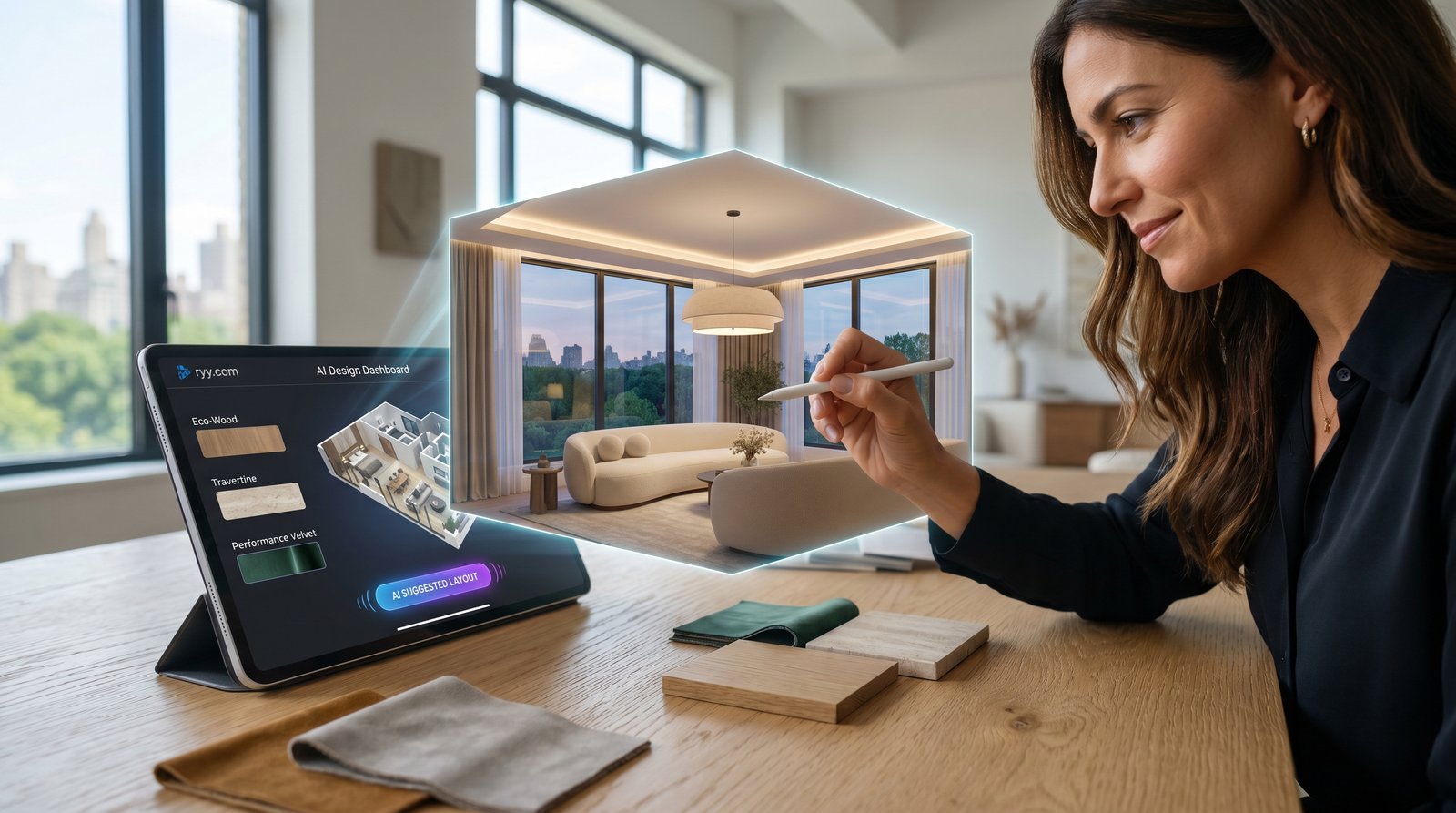
The world of interior design is undergoing a profound transformation, and at its heart lies artificial intelligence. What was once the realm of complex 3D rendering and manual mood boards is rapidly evolving, driven by innovative AI interior design tools. As we look ahead to 2026, AI is no longer just a futuristic concept; it's an indispensable partner for designers and homeowners alike, revolutionizing everything from concept generation to project management.
This isn't just about automation; it's about augmentation. AI empowers designers to unlock new levels of creativity, efficiency, and personalization, making sophisticated design more accessible than ever before. If you're searching for the best design software 2026 has to offer, you'll find AI woven into its very fabric, providing smart solutions that streamline workflows and inspire breathtaking results.
The Transformative Power of AI in Interior Design by 2026
The journey of AI in interior design has been swift and impactful. From simple visualization aids, AI has matured into a sophisticated technology capable of complex analysis, predictive modeling, and intelligent recommendation. By 2026, its role will be foundational, redefining how spaces are conceived, planned, and brought to life.
From Concept to Reality: Enhanced Visualization
One of the most immediate impacts of AI is in visualization. Gone are the days of painstakingly rendering every detail by hand or waiting hours for a single image. AI-powered visualization tools can generate photorealistic renders from simple sketches or even text prompts in seconds. This allows designers to rapidly iterate through ideas, experiment with different styles, colors, and furniture arrangements, and present clients with vivid, immersive previews of their future spaces.
Imagine showing a client dozens of variations for a living room design, each perfectly rendered and reflecting different aesthetics, all generated within minutes. This speed not only saves time but also significantly enhances client communication and satisfaction, ensuring everyone is on the same page before construction even begins.
Personalization at Scale: Understanding Client Needs
AI's ability to process vast amounts of data makes it a game-changer for personalization. By 2026, advanced AI algorithms will analyze client preferences, lifestyle data, desired aesthetics, and even psychological responses to colors and textures. This deep understanding allows AI interior design tools to suggest bespoke solutions that go beyond surface-level preferences, creating spaces that truly resonate with their occupants.
Designers can input client questionnaires, Pinterest boards, and even conversational data, and AI can help identify underlying patterns and recommend specific styles, materials, and furniture that align perfectly with their unique vision. This level of personalization, once labor-intensive, becomes scalable and more precise with AI.
Democratizing Design: AI for Every Level
Perhaps one of the most exciting aspects of AI in design is its potential to democratize access to high-quality interior design. Professional designers leverage AI for advanced capabilities, but homeowners and design enthusiasts are also gaining powerful tools to experiment and visualize their own spaces. Platforms like ryy.com exemplify this, offering intuitive AI solutions that allow anyone to explore design possibilities for their home, bridging the gap between professional expertise and personal aspiration.
Essential AI Interior Design Tools Shaping 2026
As the landscape evolves, certain categories of AI interior design tools are emerging as indispensable. These tools aren't just for the pros; many are accessible to anyone looking to enhance their living spaces. Let's explore the key players and what they offer.
AI for Instant Space Redesigns & Inspiration
This category is perhaps the most visible and instantly gratifying. Tools in this space allow users to upload a photo of their room and instantly apply different design styles, furniture layouts, color palettes, and material finishes. This capability is transformative for both professionals seeking quick inspiration and homeowners wanting to visualize changes without commitment.
- Generative AI Visualization Platforms (e.g., ryy.com): These platforms are leading the charge. With ryy.com's free AI design tools, you can upload a photo of any room and, using simple text prompts, instantly transform it into various styles like "modern minimalist," "boho chic," "industrial," or "classic elegance." This allows for rapid ideation and visualization, turning abstract ideas into concrete images in seconds. It's an essential tool for concept generation and client presentations, making design accessible and fun.
- AI Style & Mood Board Generators: These tools go beyond simple renders, helping to define a cohesive style by suggesting complementary furniture, decor, and accessories based on initial inputs.
Smart Space Planning & Layout Optimization
Optimizing space is a core challenge in interior design. AI excels here by analyzing room dimensions, traffic flow, natural light, and functional requirements to suggest optimal layouts. These tools can identify the best placement for furniture, built-ins, and even structural changes, ensuring both aesthetics and practicality.
- AI-Powered Floor Planners: These intelligent systems can generate multiple efficient and aesthetically pleasing floor plans based on user-defined parameters. They consider everything from door swings to ergonomic clearances, ensuring every inch is utilized effectively.
- Virtual Reality (VR) & Augmented Reality (AR) Tools with AI Integration: While not purely AI, these technologies are supercharged by AI. Imagine walking through a proposed design in VR, with AI adjusting elements in real-time based on your preferences, or using AR to virtually place furniture in your actual room, with AI checking for fit and style compatibility.
Predictive Analytics for Trend Spotting & Sourcing
Staying ahead of trends and efficiently sourcing materials are critical for designers. AI offers powerful capabilities in these areas by analyzing vast datasets of design projects, consumer preferences, social media trends, and market availability.
- AI Trend Analysis Tools: These tools can predict emerging design trends, color palettes, and popular materials before they hit the mainstream. This allows designers to create future-proof spaces and make informed recommendations to clients.
- Smart Sourcing & Product Matching Platforms: AI can match desired aesthetics and functional requirements with available furniture, decor, and materials from a vast network of suppliers. It can suggest alternatives based on budget, sustainability, or availability, streamlining the procurement process significantly.
Automated Documentation & Project Management
Beyond the creative aspects, AI is also revolutionizing the administrative and logistical sides of interior design. Automating tedious tasks frees up designers to focus on what they do best: designing.
- AI-Assisted Documentation: Generating material lists, furniture schedules, and specification documents can be time-consuming. AI can automate much of this, extracting information directly from designs and producing accurate, comprehensive documentation.
- Intelligent Project Management Software: AI can optimize project timelines, allocate resources, and even predict potential delays based on historical data. This helps designers manage multiple projects more efficiently and keep them on budget and schedule.
Beyond Efficiency: How AI Elevates Creativity and Decision-Making
While the efficiency gains from AI are undeniable, its most profound impact lies in its ability to enhance human creativity and facilitate more informed decision-making. By offloading repetitive tasks and providing data-driven insights, AI allows designers to focus on the truly innovative aspects of their work.
Unleashing New Creative Possibilities
AI acts as a powerful brainstorming partner, presenting designers with ideas they might never have considered. By generating variations, merging styles, or suggesting unexpected material combinations, AI pushes creative boundaries. It allows designers to rapidly experiment with concepts, explore unconventional aesthetics, and refine their vision with unprecedented speed and flexibility. This isn't about AI replacing creativity, but augmenting it, providing a broader palette from which to draw inspiration.
Data-Driven Design for Optimal Outcomes
Decision-making in design often involves balancing aesthetics, functionality, budget, and client preferences. AI provides a layer of data-driven intelligence that can optimize these choices. From analyzing energy efficiency based on material selection to predicting the emotional impact of a color scheme, AI helps designers make choices that are not just beautiful but also perform optimally. This leads to more sustainable, functional, and user-centric designs.
Streamlining Workflow & Reducing Tedious Tasks
The time savings provided by AI cannot be overstated. From initial concept generation with tools like ryy.com to automated material sourcing and documentation, AI reduces the burden of mundane, time-consuming tasks. This frees up designers to dedicate more time to client interaction, creative problem-solving, and continuous professional development, ultimately leading to higher job satisfaction and better project outcomes.
Practical Tips for Integrating AI into Your Design Workflow
Embracing AI doesn't mean overhauling your entire design process overnight. It's a gradual integration that yields significant benefits. Here are some practical tips to get started and maximize the potential of the best design software 2026 offers.
Start Small, Learn Continuously
Begin by incorporating one or two AI tools into specific parts of your workflow. Perhaps start with AI visualization for initial concepting or use an AI-powered tool for mood board generation. Explore platforms like ryy.com for free initial design explorations. As you become more comfortable, gradually expand your use of AI. The field is evolving rapidly, so commit to continuous learning and experimenting with new capabilities.
Use AI as a Collaborative Partner
View AI not as a replacement, but as a powerful assistant. It can handle the heavy lifting of data analysis, generation of options, and automation, allowing you to focus on the human elements of design: empathy, nuanced understanding, and unique artistic vision. Work alongside AI, guiding its outputs and refining its suggestions to match your expertise.
Leverage AI for Client Communication
AI-generated visualizations and data-driven insights are incredible tools for client communication. They help clients better understand your vision, explore options visually, and make more confident decisions. Use AI to create compelling presentations that minimize misunderstandings and enhance client engagement throughout the design process.
Stay Updated with "Best Design Software 2026" Trends
The AI landscape is dynamic. Regularly research new tools and updates. Follow industry blogs, webinars, and forums to stay informed about the latest advancements in AI interior design tools. Investing time in understanding new technologies will ensure you remain at the forefront of the industry.
Embrace the Future with AI Interior Design Tools
The future of interior design is undeniably intertwined with artificial intelligence. By 2026, AI interior design tools will be an indispensable part of every designer's toolkit, transforming the way we conceptualize, plan, and execute projects. From generating stunning visuals to optimizing space and predicting trends, design AI empowers professionals and enthusiasts to achieve unparalleled levels of creativity and efficiency.
Don't be left behind in this exciting evolution. Start exploring the power of AI today and unlock a world of design possibilities. Ready to visualize your dream space in seconds? Head over to ryy.com and try our free AI design tools to instantly transform your rooms and ignite your inspiration!