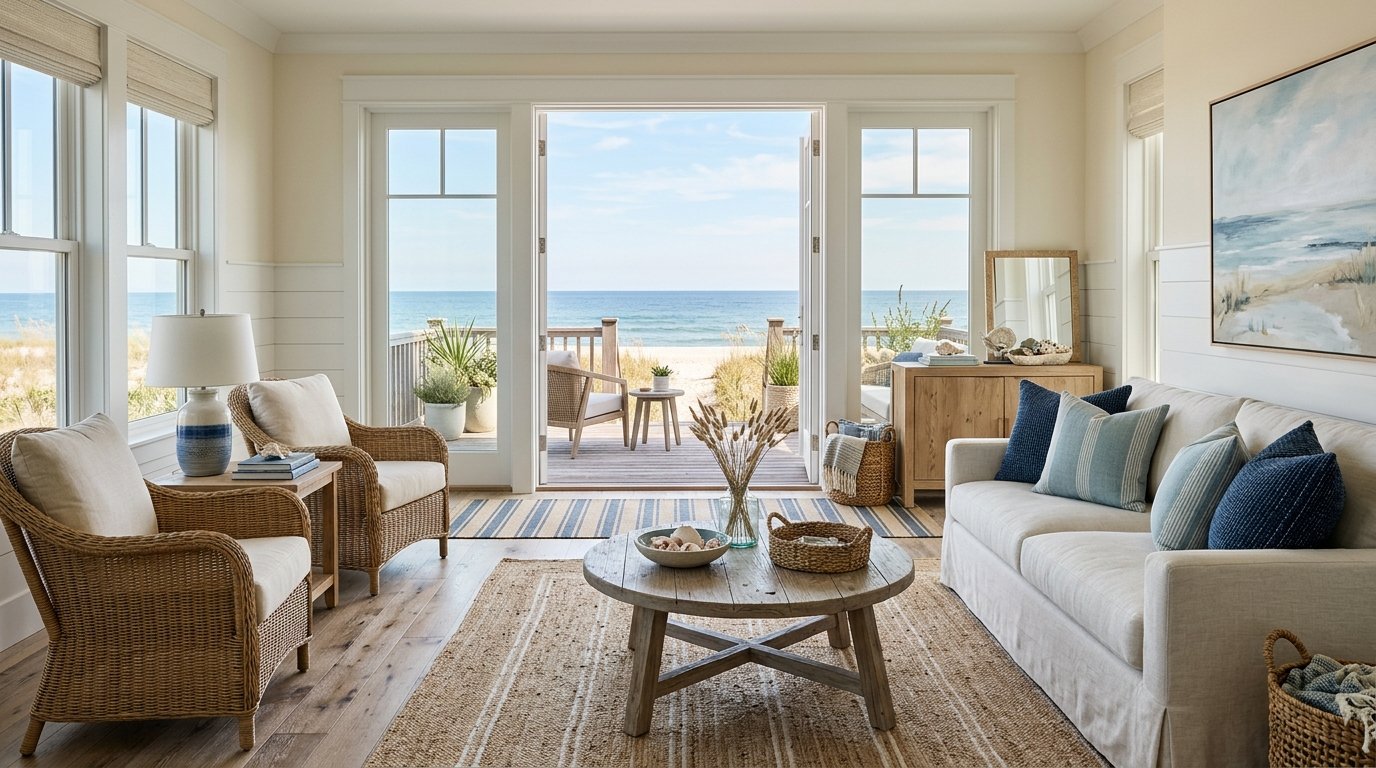
There's something universally appealing about the ocean – the gentle ebb and flow of waves, the endless horizon, the fresh salty air. It evokes a sense of peace, relaxation, and timeless beauty. But what if you could bottle that feeling and bring it into your everyday living space? With coastal interior design, you absolutely can.
Far more than just seashells and anchors, coastal style is about creating an atmosphere that feels light, airy, and effortlessly serene, much like a beautiful day at the beach. It’s a design philosophy that embraces natural light, soothing color palettes, comfortable textures, and organic elements to transform any room into a tranquil seaside escape. Whether you live miles from the nearest shore or just around the corner, this guide will help you infuse your home with the timeless charm of the coast. And the best part? You can visualize every step of the transformation using ryy.com's free AI design tools!
What is Coastal Interior Design? Defining the Aesthetic
Coastal interior design is an aesthetic inspired by the natural beauty of the seaside – from pristine sandy beaches to rugged coastlines and expansive ocean views. It’s characterized by a sense of calm, openness, and an unpretentious elegance. This style isn't about literal interpretations or themed decor; instead, it draws on the *feeling* of being by the sea, emphasizing natural elements, light, and comfort.
Unlike overly themed "nautical" or "beach house" styles that might rely heavily on anchors, steering wheels, or overly kitschy elements, true coastal design is sophisticated and subtle. It’s about creating a timeless, welcoming environment that evokes the tranquility of the ocean without screaming "I live by the beach." Think understated luxury, natural textures, and a refreshing ambiance that makes every day feel like a vacation.
The Philosophy Behind Coastal Living
- Light & Airiness: Maximizing natural light and ensuring open, uncluttered spaces.
- Connection to Nature: Incorporating natural materials and colors found in coastal environments.
- Relaxed Comfort: Prioritizing comfortable, livable furniture and textiles that invite relaxation.
- Simplicity: A less-is-more approach, focusing on quality over quantity and allowing natural elements to shine.
The Core Elements of Coastal Interior Design
To successfully achieve the coastal look, it's essential to understand its foundational components. Each element plays a crucial role in crafting that signature serene and refreshing ambiance.
Color Palette: The Hues of the Horizon
The coastal palette is inherently soothing and draws directly from nature. Think of a sunny day at the beach:
- Whites & Creams: These are the bedrock, reflecting light and creating a sense of openness. Use them on walls, large furniture pieces, and linens.
- Blues: From pale sky blue to deep navy, reflecting the ocean and sky. Integrate blues through accent pillows, rugs, artwork, or smaller furniture items.
- Greens: Soft sage, seafoam, and eucalyptus greens mimic sea glass or distant foliage, adding an organic touch.
- Neutrals & Sand Tones: Beiges, sandy yellows, and soft grays provide warmth and ground the brighter colors, reminiscent of sand and driftwood.
The key is to keep the palette light and understated, allowing natural light to enhance the colors rather than overpower them.
Furniture: Comfortably Casual
Coastal furniture prioritizes comfort, durability, and a relaxed aesthetic. Pieces often feature:
- Natural Materials: Rattan, wicker, distressed wood (especially light oak or whitewashed finishes), and bamboo are popular choices.
- Upholstery: Slipcovered sofas and chairs in light, washable fabrics like linen, cotton, or canvas are hallmarks. They offer a relaxed, inviting look that's easy to maintain.
- Clean Lines: While comfortable, coastal furniture often maintains a sense of simplicity with clean, unfussy lines rather than overly ornate designs.
Think about a worn, beloved armchair or a driftwood coffee table that tells a story – pieces that feel lived-in and loved.
Textiles: Light & Layered
Fabrics in coastal design should feel soft, breathable, and natural:
- Natural Fibers: Linen, cotton, jute, sisal, and seagrass are perfect for curtains, upholstery, throw blankets, and rugs.
- Subtle Patterns: Keep patterns understated. Think thin stripes (like ticking stripe), delicate natural motifs (coral, shell imprints), or simple geometrics. Avoid overly busy or bold prints.
- Layering: Use throws and pillows to add texture and warmth without sacrificing lightness.
Lighting: Abundant & Ambient
Natural light is paramount in coastal homes. Maximize it with:
- Minimal Window Treatments: Opt for sheer curtains, natural woven shades, or simply leave windows bare where privacy isn't an issue.
- Airy Fixtures: Choose light fixtures made from natural materials like capiz shells, woven rattan, glass, or distressed metals. Avoid heavy, dark fixtures that might weigh down the space.
- Layered Lighting: Supplement natural light with various artificial sources – ambient ceiling lights, task lighting (table lamps), and accent lighting (sconces) – to create a warm glow after sunset.
Decor & Accessories: Organic & Understated
This is where you bring in the subtle nods to the sea without overdoing it. Focus on organic forms and textures:
- Natural Elements: Seashells, coral (ethically sourced or faux), driftwood, sea glass, and sand in decorative bowls.
- Art: Landscapes of seascapes, abstract art in coastal colors, botanical prints of marine life, or photography of beaches.
- Textural Pieces: Woven baskets, ceramic vases with a slightly imperfect finish, rope accents, and glass jars.
- Greenery: Introduce simple, hardy plants that thrive indoors, adding a touch of living nature.
The goal is to curate a collection of items that feel authentic and meaningful, rather than just filling space.
Flooring: Earthy & Durable
Flooring choices often mimic the natural, resilient surfaces found near the coast:
- Hardwood: Light-colored or whitewashed hardwoods are classic and beautiful.
- Tiles: Light-colored ceramic or porcelain tiles are practical for high-traffic areas and evoke the coolness of stone.
- Rugs: Jute, sisal, or seagrass rugs add texture and warmth underfoot, while also defining zones within open-plan spaces.
Bringing the Beach Home: Room-by-Room Coastal Transformations
Ready to infuse your home with that coastal serenity? Here’s how you can apply the principles of coastal interior design to different areas of your home:
Living Room: An Open & Inviting Haven
Your living room is often the heart of your home, and in coastal design, it should feel utterly welcoming and comfortable. Start with a neutral base on walls and large furniture. Introduce blues or greens through throw pillows, a textured rug, or statement artwork. Opt for a slipcovered sofa and comfortable armchairs. A rustic wood coffee table or a rattan accent chair will add natural texture. Maximize natural light with sheer curtains or blinds, and add soft ambient lighting for evenings. Keep accessories curated – a large glass vase with driftwood or a collection of unique shells can be a focal point.
Bedroom: A Serene Retreat
Transform your bedroom into a peaceful sanctuary reminiscent of a quiet cove. Prioritize a soft, calming color palette – think whites, soft blues, and muted greens. Layer your bed with comfortable linen or cotton bedding. A simple wooden bed frame, perhaps painted white or a light natural wood, will fit perfectly. Minimal decor is key here; a piece of art depicting a seascape, a subtle woven rug, and perhaps a small collection of beach-found treasures on a nightstand are all you need. Ensure good lighting for reading and soft ambient light for winding down.
Kitchen & Dining: Bright & Functional
Coastal kitchens are typically bright, clean, and highly functional. White or light-colored cabinetry (shaker style works wonderfully) creates an airy feel. Countertops might be light granite, quartz, or even butcher block for warmth. Open shelving can display simple white dishware or clear glass items. Introduce natural wood elements through dining tables, chairs, or cutting boards. Pendants over an island or dining table made from natural materials like wicker or glass can enhance the coastal vibe. Keep clutter to a minimum for a fresh, open look.
Bathroom: Spa-like Simplicity
Create a refreshing, spa-like atmosphere in your bathroom. Stick to a clean white or light blue palette for tiles and walls. Incorporate natural wood accents through a vanity or shelving. Large mirrors will amplify light. Accessorize with plush white towels, simple glass jars for cotton balls, and maybe a small piece of abstract art or a plant. Avoid heavy shower curtains; opt for clear glass or a light linen fabric. The goal is a clean, refreshing, and uncluttered space.
Practical Tips for Embracing Coastal Interior Design
Ready to get started? Here are some actionable tips to help you on your design journey:
- Start with a Blank Canvas: Lighten your walls with fresh white, cream, or a very pale blue/green paint to immediately set a coastal foundation.
- Declutter Ruthlessly: Coastal style thrives on open, airy spaces. Remove unnecessary items to create a sense of calm and expand your room visually.
- Embrace Natural Light: Keep windows minimally dressed. If privacy is needed, opt for sheer linen curtains or simple woven blinds that allow light to filter through.
- Layer Textures: Don't underestimate the power of texture! Combine smooth glass, rough linen, chunky knits, and woven baskets to add depth and interest without relying on busy patterns.
- Go Green: Incorporate houseplants. They add life, color, and a fresh organic element that complements the natural theme.
- Consider Found Objects: Display unique shells, pieces of driftwood, or sea glass collected from your own travels. These personal touches add authenticity and tell a story.
- Mix High and Low: Combine more significant investment pieces (like a quality sofa) with budget-friendly accessories from local markets or even DIY projects.
- Use ryy.com for Visualization: Unsure how a slipcovered sofa will look in your living room, or if that specific shade of blue paint is right? Upload a photo of your room to ryy.com and use our free AI design tools to experiment with different coastal furniture, colors, and decor before making any commitments. See your vision come to life instantly!
Design Your Dream Coastal Home with ryy.com
Creating a home that feels like a permanent beach getaway is an incredibly rewarding endeavor. Coastal interior design offers a timeless aesthetic that promotes relaxation, comfort, and a deep connection to nature. By focusing on light colors, natural materials, comfortable furnishings, and subtle, organic decor, you can transform any space into a serene seaside escape, no matter where you live.
Don't let the thought of a major design overhaul intimidate you. With ryy.com's powerful and free AI design tools, you can explore countless coastal design possibilities with ease. Experiment with different furniture layouts, swap out color palettes, or try new decor elements – all from the comfort of your existing room photos. Visualize your dream coastal home today and start bringing the beach to you. Visit ryy.com to begin your design journey!