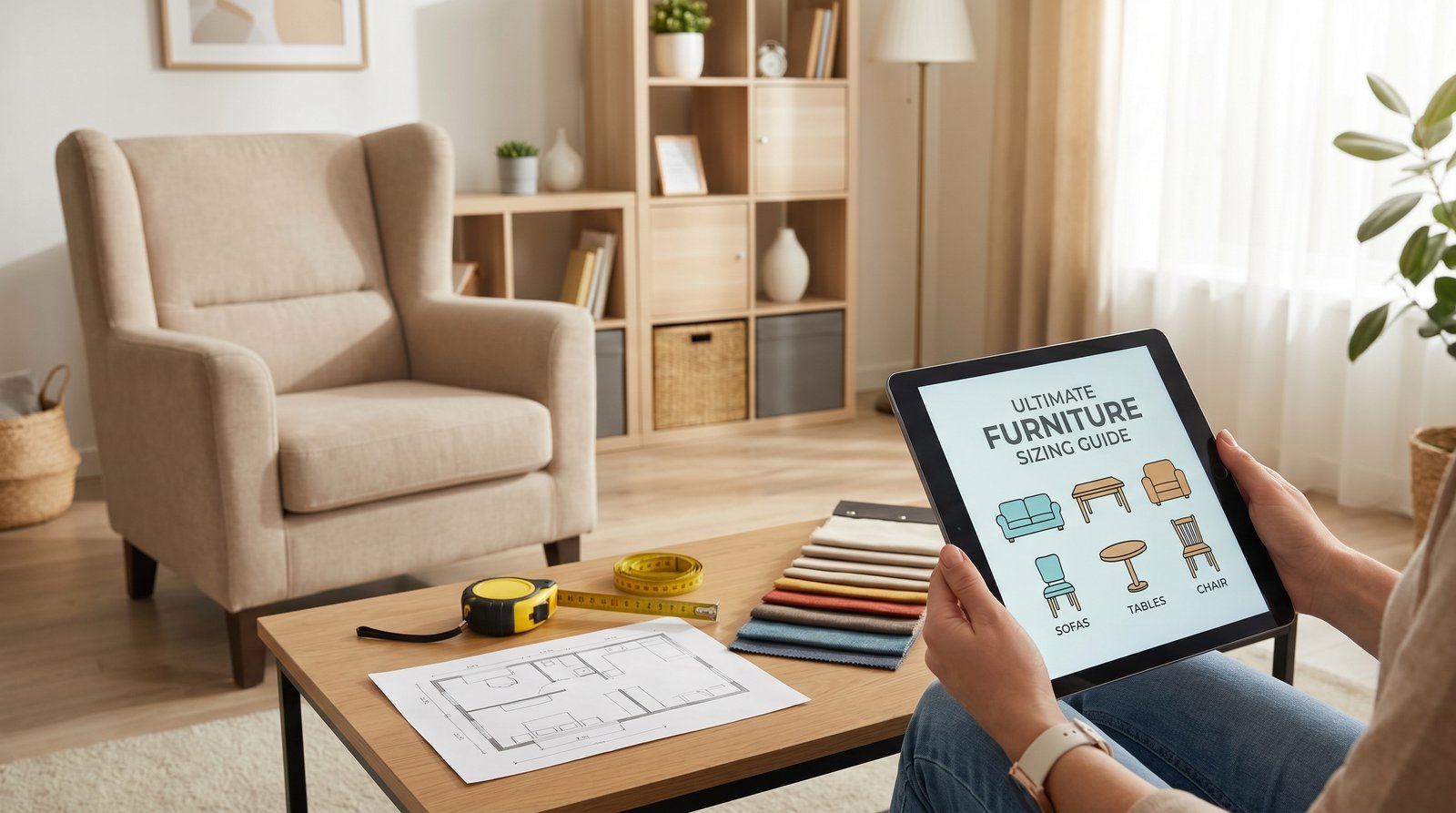
Have you ever fallen in love with a piece of furniture online, only to have it arrive and completely overwhelm your living space? Or perhaps you've struggled to make a small room feel functional without looking cramped? You're not alone. Choosing the right furniture for any room size is one of the most common challenges in interior design, yet it's also one of the most rewarding when done correctly. This ultimate furniture sizing guide from ryy.com will equip you with the knowledge and practical interior design furniture tips you need to select pieces that fit perfectly, enhance aesthetics, and optimize functionality in every corner of your home.
The secret lies in understanding not just the physical dimensions of furniture, but also its visual weight, how it interacts with traffic flow, and how it contributes to the overall room furniture layout. With a bit of planning and the right tools (like ryy.com’s free AI design platform!), you can transform any space into a harmonious and stylish haven. Let's dive in!
Understanding Your Space: The Foundation of Good Design
Before you even think about furniture, you need to become intimately familiar with the room itself. This foundational step is crucial for successful spatial planning.
Measuring Your Room Accurately
This might seem obvious, but precise measurements are non-negotiable. Grab a tape measure, a notepad, and even a floor plan sketch. Measure the length, width, and height of your room. Don't forget to measure the walls, taking into account windows, doors, radiators, and built-in features. Mark the dimensions of these fixed elements, as they will dictate where furniture can or cannot go. Also, measure doorframes and stairwells – you need to ensure the furniture can actually get into the room!
Practical Tip: Consider drawing a simple bird's-eye view sketch of your room and jotting down all measurements. For a more advanced approach, use ryy.com's free AI room planner. Simply upload a photo of your space, and our AI can help you visualize dimensions and potential layouts, making the measuring process less daunting and more interactive.
Mapping Out Traffic Flow & Functionality
A beautifully furnished room is useless if you can't move around comfortably. Think about how people will navigate the space. What are the natural pathways? How much clearance do you need around a dining table or between a sofa and a coffee table? Generally, aim for at least 30-36 inches (76-91 cm) for main walkways and 18-24 inches (45-60 cm) between larger furniture pieces like a sofa and a coffee table.
Consider the room's primary function. Is it a cozy reading nook, a bustling family living room, a formal dining area, or a versatile guest room/office? Each function demands a different room furniture layout and specific types of pieces. Defining these "zones" within a room will guide your furniture choices. For example, a living room might need a conversation zone, an entertainment zone, and perhaps a reading nook.
Ryy.com Advantage: Experiment with different room furniture layout ideas on ryy.com. Our AI can generate various floor plans and furniture arrangements, helping you visualize traffic flow and functional zones before you commit to any purchases.
Considering Architectural Features
Architectural elements like fireplaces, bay windows, alcoves, and built-in shelving aren't just decorative; they impact your furniture choices. A grand fireplace might be a natural focal point around which to arrange seating. A bay window could be perfect for a window seat. Embrace these features and let them inspire your design rather than seeing them as limitations. Ensure furniture doesn't block windows, doors, or heat sources.
Decoding Furniture Dimensions: A Practical Furniture Sizing Guide
Now that you know your space, let's talk about the furniture itself. This furniture sizing guide will break down considerations for common pieces.
Sofas & Sectionals: The Living Room Anchor
- Measure doorways and stairwells: Can the sofa physically get into your home and the room? This is critical!
- Sofa length: In a small room, a love seat or a compact sofa (under 70 inches / 178 cm) works best. In larger rooms, a grander sofa (80+ inches / 203 cm) or a sectional can define zones.
- Sofa depth: Deeper sofas (38-42 inches / 96-107 cm) are great for lounging but can eat up floor space. Standard depths are usually 34-36 inches (86-91 cm).
- Sectionals: While offering ample seating, sectionals command significant space. Measure carefully to ensure it doesn't block walkways or overwhelm the room. Corner sectionals are great for maximizing seating in corners, while chaise sectionals offer lounging comfort.
- Arm style: Slim arms can save precious inches in smaller spaces compared to bulky, rolled arms.
Dining Tables & Chairs: Balancing Comfort and Space
- Table size: Allow at least 24 inches (61 cm) of width per person at the table. Leave 36-42 inches (91-107 cm) of clearance between the table edge and the wall or other furniture for comfortable seating and movement.
- Table shape: Rectangular tables are efficient for narrow spaces. Round or oval tables promote conversation and have no sharp corners, making them ideal for smaller or high-traffic areas. Square tables are great for small, square rooms.
- Chair size: Ensure chairs fit completely under the table when not in use. Consider armless chairs or benches for space-saving in smaller dining areas.
- Extendable tables: A fantastic option for versatility, allowing you to host more guests when needed without a permanently large footprint.
Beds & Dressers: Maximizing Bedroom Functionality
- Bed size: Queen (60"x80") is the most popular, but if your room is small, a full (54"x75") might be a better fit. King (76"x80") requires a substantial bedroom.
- Clearance: Aim for at least 24-30 inches (61-76 cm) of space on three sides of the bed (or two sides if one side is against a wall) for easy movement and making the bed.
- Nightstands: Choose nightstands that are roughly the same height as your mattress for comfortable access to items. Their width should be proportionate to the bed and available wall space.
- Dressers & wardrobes: Measure the space for drawers to pull out fully. Consider tall, narrow dressers to maximize vertical storage in smaller rooms. Built-in wardrobes or custom solutions can save floor space.
AI-Powered Layouts: Experiment with different bedroom room furniture layout ideas on ryy.com. Our AI can help you place beds, dressers, and nightstands virtually to see how they impact your floor space and traffic flow before you make a purchase.
Desks & Storage: Optimizing Home Offices & Small Spaces
- Desk dimensions: A standard desk is around 24-30 inches (61-76 cm) deep and 48-60 inches (122-152 cm) wide. For small spaces, consider a floating desk, a wall-mounted desk, or a corner desk to maximize unused areas.
- Chair clearance: Ensure enough room to pull out your desk chair and move comfortably.
- Storage solutions: Embrace vertical storage with tall bookshelves, wall-mounted shelves, or cabinets. Consider furniture with hidden storage, such as ottomans with lift-off lids or beds with built-in drawers.
- Modular units: These allow you to customize and expand storage as needed, adapting to various room sizes and needs.
Beyond Dimensions: Material, Style, and Visual Impact
While physical measurements are crucial, the visual impact of furniture is equally important in determining how "big" or "small" a room feels.
The Power of Proportion and Scale
Proportion refers to the size relationship of parts within a whole (e.g., the arms of a sofa to its back). Scale refers to how an object relates to other objects and to the room itself. A tiny sofa in a vast room will look lost, while an oversized sectional in a compact space will feel oppressive. Strive for balance. Mix pieces of different scales to create interest, but ensure no single item dominates or gets swallowed up.
Light vs. Heavy: Visual Weight of Furniture
Furniture has "visual weight" determined by its color, material, and design. Dark, bulky pieces with solid forms appear heavier and can make a room feel smaller. Lighter colors, reflective surfaces (like glass or polished metal), open designs (like leggy sofas or open bookshelves), and less ornamentation can make furniture appear lighter and less intrusive, which is perfect for smaller spaces. Opt for pieces with visible legs rather than skirts that go to the floor to create an illusion of more open space.
Multi-functional and Modular Furniture Solutions
For smaller rooms, multi-functional furniture is a game-changer. Think ottomans that double as storage and extra seating, sofa beds for guest accommodation, console tables that extend into dining tables, or nesting tables that can be pulled out as needed. Modular furniture allows you to adapt pieces to various room sizes and needs, offering flexibility that fixed pieces cannot.
Design Insights: Get personalized interior design furniture tips from ryy.com's AI. Our platform can suggest multi-functional pieces and smart storage solutions tailored to your room's dimensions and style preferences.
The Magic of Mirrors and Lighting
Mirrors are fantastic for expanding the visual space of a room, reflecting light and creating the illusion of depth. Place them strategically opposite windows or in narrow hallways. Proper lighting can also transform a room. Avoid single overhead lights that create harsh shadows. Instead, layer your lighting with ambient (general), task (for specific activities), and accent (to highlight features) lighting to create warmth and define zones, making even a small room feel grander and more inviting.
Essential Interior Design Furniture Tips for Perfect Sizing
- Measure, Measure, Measure: We can't stress this enough. Measure everything—the room, doorways, stairs, and the furniture itself.
- Map It Out: Use painter's tape on the floor or cardboard cutouts to visualize how furniture will fit and where walkways will be.
- Consider Walkways: Ensure ample space (30-36 inches) for comfortable movement around your furniture.
- Don't Overcrowd: Less is often more, especially in smaller rooms. Give your pieces room to breathe.
- Embrace Vertical Space: Use tall bookshelves, wall-mounted shelving, and floor-to-ceiling drapery to draw the eye upward, making a room feel taller.
- Think About Visual Weight: Opt for lighter colors, materials, and designs in compact spaces.
- Use Multi-functional Pieces: Ottomans with storage, sofa beds, nesting tables, and benches are your best friends in tight quarters.
- Leave Negative Space: Empty space is just as important as filled space. It allows the eye to rest and prevents a room from feeling cluttered.
- Try Before You Buy (Virtually!): Leverage ryy.com's AI design tools to place furniture virtually in your space, experiment with different room furniture layout ideas, and see how they look and fit before making a purchase.
- Get a Second Opinion: Sometimes a fresh pair of eyes (or an AI algorithm!) can spot things you missed.
Conclusion: Design with Confidence
Choosing the right furniture for any room size is an art and a science. It requires careful planning, accurate measurements, and an understanding of how proportion, scale, and visual weight impact your space. By following this comprehensive furniture sizing guide and applying these practical interior design furniture tips, you're well on your way to creating a home that is both beautiful and functional.
Ready to put these tips into practice? Don't let the fear of sizing mistakes hold you back. Visit ryy.com today and unlock the power of AI to visualize your perfect room. Our free AI design tools allow you to experiment with different furniture pieces, test various room furniture layout options, and get personalized recommendations, all from the comfort of your home. Design smarter, not harder!