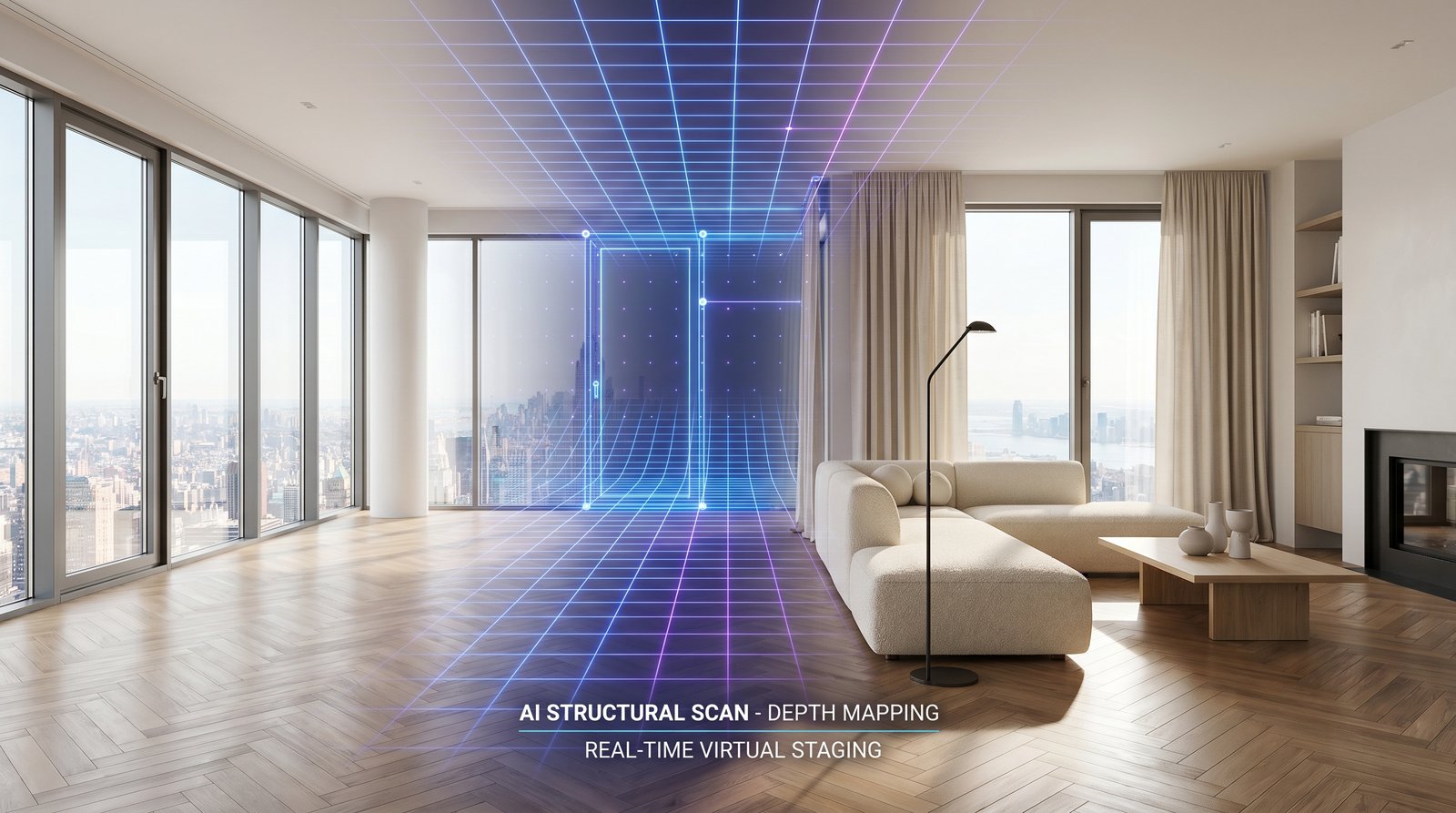
In the dynamic world of real estate, making a strong first impression is more critical than ever. As we look ahead to 2026, the technology set to dominate the market is undoubtedly AI virtual staging. For homeowners aiming to sell home faster and maximize their property’s value, understanding and utilizing this innovative tool isn't just an advantage it's a necessity. Gone are the days when a vacant property struggled to capture a buyer's imagination; now, cutting-edge artificial intelligence transforms empty spaces into aspirational homes with just a few clicks.
The journey of selling a home can often be fraught with challenges, from costly physical staging to the difficulty of helping potential buyers envision themselves in an unadorned space. Traditional methods, while effective to a degree, demand significant time, financial investment, and logistical coordination. This is where AI virtual staging steps in, offering a powerful, efficient, and cost-effective alternative that is rapidly reshaping how properties are presented and perceived. By leveraging advanced algorithms and machine learning, AI virtual staging creates stunningly realistic digital interiors that resonate deeply with modern buyers, ultimately accelerating the sales process.
The Evolution of Home Selling: Why Traditional Staging Falls Short
For decades, professional home staging has been a go-to strategy for preparing a property for sale. The idea is simple: furnish a home beautifully to help buyers visualize its potential and elevate its perceived value. While effective, traditional staging comes with a host of practical drawbacks that AI virtual staging effortlessly overcomes.
The Cost and Hassle of Physical Staging
Physical staging involves renting furniture, hiring movers, selecting decor, and often paying for storage if the homeowner is still living in the property during showings. This entire process can be incredibly expensive, often running into thousands of dollars, and incredibly time-consuming. Furniture needs to be delivered, arranged, maintained, and eventually removed. For properties that sit on the market longer than expected, these costs can quickly accumulate, eroding the seller's profit margin. Moreover, coordinating schedules with stagers, movers, and photographers adds another layer of complexity to an already stressful process.
The Limitations of Empty Spaces
Perhaps the biggest hurdle for vacant properties is the inability of many buyers to envision themselves living in an empty shell. Without furniture, a room can feel cold, small, and uninviting. It's hard to gauge scale, functionality, or even the potential layout of a living area when there are no reference points. Buyers often struggle to look past the emptiness, leading to a disconnect that can prolong the sales cycle. Conversely, poorly furnished or outdated homes can also deter buyers, as they focus on what needs to be changed rather than the property's inherent potential.
What is AI Virtual Staging and How Does It Work?
At its core, AI virtual staging is the process of digitally furnishing a room or an entire home using artificial intelligence. Instead of physical furniture, high-resolution digital models are placed into photographs of vacant rooms, creating a lifelike and aesthetically pleasing environment. The 'AI' component elevates this beyond simple Photoshop tricks, making the results far more sophisticated and realistic.
Beyond Simple Image Editing: AI's Role in Realistic Design
Unlike basic image editing, which might involve manually pasting furniture cutouts, AI virtual staging utilizes machine learning algorithms to analyze the room's dimensions, lighting, shadows, and architectural features. The AI understands perspective, depth, and how light interacts with objects, ensuring that the staged furniture appears seamlessly integrated into the space. This means shadows fall correctly, reflections behave naturally, and the scale of objects is perfectly proportioned to the room, making it incredibly difficult to distinguish from a physically staged photo.
The Process: From Empty Room to Dream Home
The process is remarkably straightforward for homeowners and real estate professionals alike:
Upload Photos: Begin by taking high-quality, well-lit photographs of your vacant rooms.
Select Style: Using an AI design platform like ryy.com, you choose from a vast library of design styles modern, traditional, minimalist, bohemian, industrial, Scandinavian, and more.
AI Magic: The AI analyzes your room and applies the chosen style, suggesting furniture layouts, decor elements, and even adjusting lighting to complement the design.
Review & Refine: You can often review the AI-generated designs, making minor adjustments or trying different styles until you achieve the perfect look.
Download & Publish: Once satisfied, you download the high-resolution, virtually staged images ready for your online listings.
This streamlined process drastically reduces the time from photoshoot to listing, a critical factor when trying to sell home faster.
The Technology Behind the Magic
The power of AI virtual staging comes from a confluence of advanced technologies:
Machine Learning: Algorithms are trained on vast datasets of interior designs, learning what makes a space visually appealing, functional, and realistic.
Generative AI: This allows the AI to "create" new designs and furniture arrangements tailored to a specific room, rather than just picking from a static catalog.
3D Rendering Engines: These engines ensure that the digital furniture has realistic textures, shadows, and lighting, blending seamlessly with the actual photograph.
Computer Vision: Helps the AI understand the geometry of the room, identifying walls, floors, windows, and doors to place objects accurately.
Key Benefits: How AI Virtual Staging Helps You Sell Home Faster
The advantages of adopting AI virtual staging are multifaceted, directly impacting how quickly and profitably a property sells. This innovative approach addresses many pain points for both sellers and buyers.
Captivate Buyers Online Instantly
In 2026, the home buying journey overwhelmingly begins online. High-quality, engaging visuals are paramount for capturing a buyer's attention within seconds. Virtually staged photos immediately transform sterile, empty rooms into warm, inviting spaces, dramatically increasing click-through rates on listings. Buyers are more likely to spend time exploring a property that feels like a potential home rather than an empty box, leading to more inquiries and showings.
Cost-Effectiveness and Time Savings
Compared to the thousands of dollars and weeks often required for physical staging, AI virtual staging is incredibly affordable and fast. A property can be virtually staged in hours, not days, at a fraction of the cost. This significant reduction in expenditure and turnaround time makes it an attractive option for any seller, especially those on a tight budget or timeline. The ability to quickly update or change styles without physical labor further enhances its efficiency.
Versatility and Customization
One of the standout benefits is the ability to showcase a single room in multiple styles. Perhaps one buyer prefers minimalist chic, while another gravitates towards cozy traditional. With AI virtual staging, you can create various design options for the same room, appealing to a broader audience. This level of customization is impossible with physical staging without incurring immense costs and effort. It allows sellers to test different aesthetics and see what resonates most with their target market.
Broadening Buyer Appeal
By presenting a home in its best light with diverse design options, you inherently broaden its appeal. A vacant property might only appeal to buyers with strong interior design skills, but a virtually staged home speaks to everyone. It helps potential buyers envision how their own furniture might fit, how a room could function, and the overall lifestyle the home offers. This inclusive approach ensures that more potential buyers see themselves in the space, increasing the pool of interested parties.
Overcoming Vacancy Challenges
Empty homes often present a specific set of challenges: they can appear smaller than they are, echo when walked through, and simply feel unloved. AI virtual staging breathes life into these spaces, providing context, warmth, and a sense of scale. It transforms an echoing, empty room into a functional living area, turning what might be a negative into a positive for potential buyers.
The Future is Now: Real Estate AI in 2026
The evolution of real estate AI doesn't stop at simple virtual staging. By 2026, we're seeing even more sophisticated applications that promise to further streamline and personalize the home-selling experience.
Hyper-Personalization for Every Buyer
Imagine a scenario where a buyer can input their personal style preferences and the AI generates a virtually staged home tailored specifically for them. This level of hyper-personalization, powered by advanced AI, will allow listings to dynamically adapt to individual buyer tastes, making the connection between buyer and property even stronger. AI will analyze a buyer's past searches, saved images, and even social media activity to predict their ideal home aesthetic.
Integration with Virtual Tours and AR
AI virtual staging is increasingly integrating with immersive technologies like virtual reality (VR) and augmented reality (AR). Buyers will soon be able to take a VR tour of a virtually staged home, walking through each room as if they were physically there. AR applications could even allow buyers to "place" virtual furniture in their current space or see how their own furniture might look in a potential new home, all in real-time. This creates an incredibly engaging and informative experience, reducing the need for multiple physical showings.
Data-Driven Design Insights
AI's ability to process vast amounts of data means it can offer invaluable insights into what design styles, furniture types, and layouts are most effective in specific markets or for particular demographics. Sellers and real estate agents can leverage this data to optimize their virtual staging choices, ensuring their property appeals to the most likely buyers and truly helps them sell home faster. This moves design decisions from guesswork to data-backed strategy.
Practical Tips for Leveraging AI Virtual Staging
To get the most out of AI virtual staging and truly accelerate your home sale, consider these practical tips:
Use High-Quality Photos: The foundation of great virtual staging is excellent original photography. Ensure your photos are well-lit, high-resolution, and taken from optimal angles. Clean up any clutter before photographing an empty room.
Experiment with Different Styles: Don't settle for the first AI-generated design. Try several styles to see which best highlights your property's features and appeals to your target demographic.
Consider Specific Room Functions: Stage each room according to its intended use. A bedroom should look like a cozy retreat, a living room like a comfortable gathering space, and a dining room ready for entertaining.
Balance Realism with Aspirational Design: While realism is key, don't be afraid to make the staging aspirational. Showcase a lifestyle that buyers dream of, but ensure the furniture proportions and style remain believable within the space.
Utilize "Before & After" Comparisons: On your listing or social media, consider showing a "before" photo of the empty room alongside the virtually staged "after." This powerfully demonstrates the property's potential.
Integrate with Your Overall Marketing Strategy: Don't use virtual staging in isolation. Combine it with compelling descriptions, floor plans, and possibly virtual tours to create a comprehensive and irresistible listing.
Choose a Reputable Platform: Tools like ryy.com offer advanced AI capabilities to ensure your virtual staging looks professional and realistic. Always opt for platforms that prioritize quality and user experience.
Conclusion: The Future of Selling Your Home Is Here
As we navigate the competitive real estate landscape of 2026, the adoption of AI virtual staging is no longer a luxury but a strategic imperative for any homeowner looking to sell home faster and achieve maximum value. By transforming empty or outdated spaces into beautifully imagined homes, AI virtual staging captivates buyers from the first glance, cuts down on costs, saves precious time, and broadens your property's appeal like never before.
The power of artificial intelligence is revolutionizing how properties are presented and perceived, making the selling process smoother, more efficient, and ultimately more profitable. Don't let your property get lost in the sea of online listings. Embrace the future of real estate presentation. Ready to see the incredible potential of your home through the lens of AI?
Visit ryy.com today and try our free AI design tools to virtually stage your home. Experience firsthand how AI virtual staging can transform your listing and help you sell home faster in the modern market.