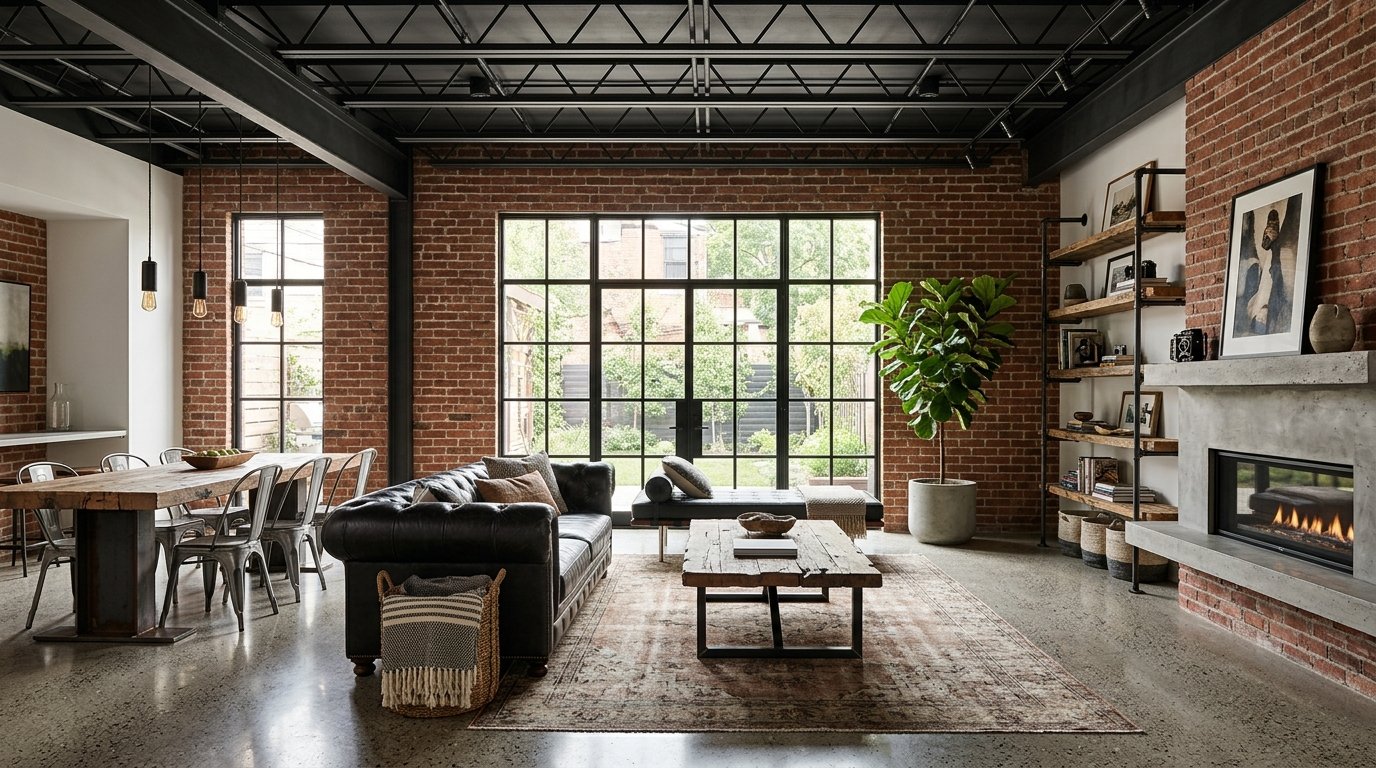
In the world of home aesthetics, few styles capture the imagination quite like industrial interior design. Born from the grit and grandeur of 19th and early 20th-century factories and warehouses, this distinctive look celebrates raw materials, robust structures, and utilitarian beauty. It's a style that speaks of history, authenticity, and a no-nonsense approach to living, transforming spaces with exposed brick walls, gleaming steel accents, and a celebrated rawness that feels both edgy and inviting.
If you've ever walked into a loft apartment with soaring ceilings, visible ductwork, and the rich texture of an exposed brick wall, you've experienced the undeniable pull of industrial design. It’s a style that embraces imperfections, turning structural elements into focal points and celebrating the very bones of a building. Far from being cold or sterile, a well-executed industrial aesthetic creates a warm, unique, and deeply personal environment. Ready to bring this urban chic vibe into your own home? Let's dive deep into the elements that define this captivating design trend, with a special focus on its most iconic features: exposed brick and steel.
The Roots of Industrial Interior Design: From Function to Fashion
The journey of industrial interior design from the factory floor to modern homes is a fascinating one. As industries shifted and old factories and warehouses in urban centers became obsolete, architects and designers saw an opportunity. These vast, open spaces, originally built for function, offered incredible potential for residential living. High ceilings, large windows, sturdy construction, and raw, unfinished materials became the canvas for a new kind of home.
The Evolution of a Style Icon
The early adopters of industrial style were often artists and bohemians drawn to the affordability and expansive spaces of these derelict buildings. They embraced the existing features – exposed pipes, concrete floors, structural beams – rather than hiding them. This pragmatic approach soon evolved into a conscious design choice, celebrated for its honesty and minimalist appeal. Today, you don't need to live in a repurposed factory to achieve this look. Modern homes, suburban houses, and even small apartments can incorporate elements of industrial design to create a similar aesthetic.
Core Characteristics of the Industrial Aesthetic
- Raw and Unfinished Materials: Think brick, concrete, steel, iron, and reclaimed wood.
- Exposed Elements: Visible ductwork, pipes, wiring, and structural beams are celebrated, not concealed.
- Open-Concept Layouts: Large, uncluttered spaces that flow seamlessly from one area to another.
- Utilitarian Furniture: Pieces that are sturdy, functional, and often made from metal, wood, or leather.
- Industrial Lighting: Pendant lights, floor lamps, and task lighting often featuring metal shades or Edison bulbs.
- Neutral Color Palettes: Grays, blacks, whites, and browns form the base, often accented by earthy tones or pops of muted color.
Mastering Exposed Brick: Raw Beauty for Your Walls
Perhaps no single element screams "industrial chic" more emphatically than an exposed brick wall. Its warm, earthy tones and varied textures immediately add character, history, and a touch of rugged elegance to any room. Whether it's a centuries-old original or a carefully applied veneer, exposed brick creates an immediate focal point and grounds the entire space.
Authentic Brick vs. Faux Brick: Choosing Your Path
If you live in an older home or a former industrial building, you might be lucky enough to uncover genuine brickwork behind plaster or drywall. Exposing existing brick involves careful assessment of its condition, cleaning, and sealing. This can be a dusty, labor-intensive process, but the payoff of authentic, historical texture is immense.
For those without an existing brick wall, modern solutions make achieving the look remarkably easy. Faux brick panels, veneers, and even wallpaper can replicate the appearance of real brick. While faux options might lack the deep texture and thermal properties of genuine brick, they offer flexibility, easier installation, and are often more budget-friendly. When selecting faux brick, opt for high-quality products with realistic textures and variations to avoid a flat, artificial look.
Styling Exposed Brick: Complementary Elements
An exposed brick wall is a star, but it needs a supporting cast. Pair it with:
- Metal Accents: Blackened steel shelving, iron light fixtures, or a wrought-iron clock create a harmonious contrast.
- Wood: Reclaimed wood furniture, wide-plank flooring, or rough-hewn beams introduce warmth and texture, preventing the space from feeling too cold.
- Soft Furnishings: Balance the hard edges of brick with plush textiles like a sheepskin rug, a velvet sofa, or chunky knit throws.
- Art: Large-scale modern art or abstract pieces in neutral or bold colors pop against the brick backdrop.
To see how an exposed brick wall might transform your living room or kitchen, try uploading a photo of your space to ryy.com and experiment with different wall textures using our free AI design tools. You can instantly visualize the impact!
Integrating Steel and Metal Elements: Strength and Style
Steel and other metals are the backbone of industrial interior design, embodying strength, durability, and a sleek, modern edge. From structural components to furniture and decorative accents, metal adds a crucial layer of authenticity to the industrial aesthetic.
Structural Steel: Celebrating the Bones
In true industrial style, structural steel beams, columns, and exposed pipework are not just functional; they are design features. Leaving these elements visible speaks to the building's integrity and adds an undeniable raw, mechanical charm. If you don't have existing structural steel, you can introduce decorative steel beams, pipes, or even conduit to mimic the look, especially on ceilings or along walls.
Metal Furniture and Fixtures: Utilitarian Elegance
Furniture made from metal is a hallmark of industrial design. Think about:
- Steel-framed seating: Chairs, barstools, and benches with metal legs or frames, often paired with wood or leather.
- Metal shelving units: Open shelves made of black steel or iron piping, perfect for displaying books or curated décor.
- Industrial tables: Coffee tables or dining tables with heavy metal bases and reclaimed wood tops.
- Cabinets and lockers: Repurposed metal lockers or factory-style cabinets provide storage with character.
Beyond Silver: Blackened Steel, Copper, and Brass Accents
While raw, brushed, or galvanized steel is classic, don't limit yourself. Blackened steel offers a sophisticated, dramatic touch, especially for door frames, window casings, or statement light fixtures. Copper and brass, with their warm hues, can introduce a touch of refinement and help balance the cooler tones of steel and concrete. Use them for pendant lights, hardware, or decorative objects to add a touch of subtle warmth and gleam.
Beyond Brick and Steel: Other Core Industrial Elements
While brick and steel are quintessential, a complete industrial look integrates several other key components that contribute to its distinctive character.
Concrete Surfaces: Floors and Countertops
Concrete floors, left raw and sealed, offer a seamless, durable, and low-maintenance surface that instantly grounds an industrial space. Their cool, understated aesthetic provides a perfect backdrop for warmer materials like wood and textiles. Beyond floors, concrete can be used for countertops, wall panels, or even custom furniture, adding a brutalist yet elegant touch.
Reclaimed Wood: Warmth and Character
To prevent an industrial space from feeling too stark, reclaimed wood is indispensable. Its distressed texture, visible grain, and often unique history bring warmth, character, and a sense of narrative. Use reclaimed wood for dining tables, shelves, wall cladding, or even statement headboards. The contrast between rough-hewn wood and smooth metal is incredibly appealing.
Industrial Lighting: Function Meets Form
Lighting in industrial design is both practical and decorative. Look for:
- Pendant Lights: Often featuring metal shades (domed, cage, or factory-style) or exposed Edison bulbs, suspended over dining tables or kitchen islands.
- Task Lighting: Articulated floor lamps or desk lamps with metal arms and exposed mechanics, reminiscent of factory workstations.
- Track Lighting: Practical for illuminating specific areas, especially in open-concept spaces.
- Edison Bulbs: Their visible filaments and warm glow are perfect for creating an ambient, vintage feel.
Open-Concept Layouts and High Ceilings
The original industrial spaces were vast and open, and this philosophy carries into modern industrial homes. An open-concept layout enhances the feeling of spaciousness and allows light to flow freely. High ceilings are a bonus, making a room feel expansive and allowing for dramatic light fixtures or exposed ductwork to become design statements.
Practical Tips for Bringing Industrial Interior Design to Life
Ready to infuse your home with the rugged elegance of industrial style? Here are some actionable tips:
- Start Small: You don't need a full renovation. Begin with industrial-style lighting, a metal-framed mirror, or a piece of reclaimed wood furniture to test the waters.
- Balance Raw with Refined: The key to a successful industrial interior is balance. Soften hard lines and raw materials with plush fabrics, lush plants, and warm lighting.
- Source Authentic Materials: Look for genuine reclaimed wood, vintage metal lockers, or antique factory stools. Flea markets, salvage yards, and online marketplaces are great hunting grounds.
- Embrace Neutrality with Intent: While the color palette is generally neutral, use varying shades and textures to add depth. Introduce subtle pops of color through artwork, cushions, or a vibrant plant.
- Don't Forget Functionality: Industrial design is rooted in utility. Ensure your choices are not just aesthetically pleasing but also practical and durable for everyday living.
- Prioritize Lighting: Good lighting is crucial. Mix overhead, task, and ambient lighting to create a versatile and inviting atmosphere.
- Visualize Before You Commit: Before making significant changes, use tools like ryy.com to upload photos of your rooms and experiment with different industrial elements. Our free AI design tools can help you see how exposed brick, steel accents, concrete floors, or industrial lighting will look in your actual space, saving you time and potential costly mistakes.
Unleash Your Inner Designer with Industrial Style
Industrial interior design is more than just a trend; it's a celebration of history, function, and raw beauty. By embracing exposed brick, steel, concrete, and reclaimed wood, you can create a home that feels authentic, sophisticated, and uniquely yours. It’s about finding beauty in the unfinished, joy in the utilitarian, and character in the robust.
Whether you're starting from scratch or looking to inject a dose of industrial charm into an existing space, the possibilities are endless. Don't be afraid to mix and match textures, play with contrasts, and let the character of the materials shine through. And remember, designing your dream industrial space is easier than ever. Visit ryy.com today and use our free AI design tools to visualize how exposed brick walls, sleek steel furniture, or striking industrial light fixtures can transform your home. Start designing your industrial sanctuary now!