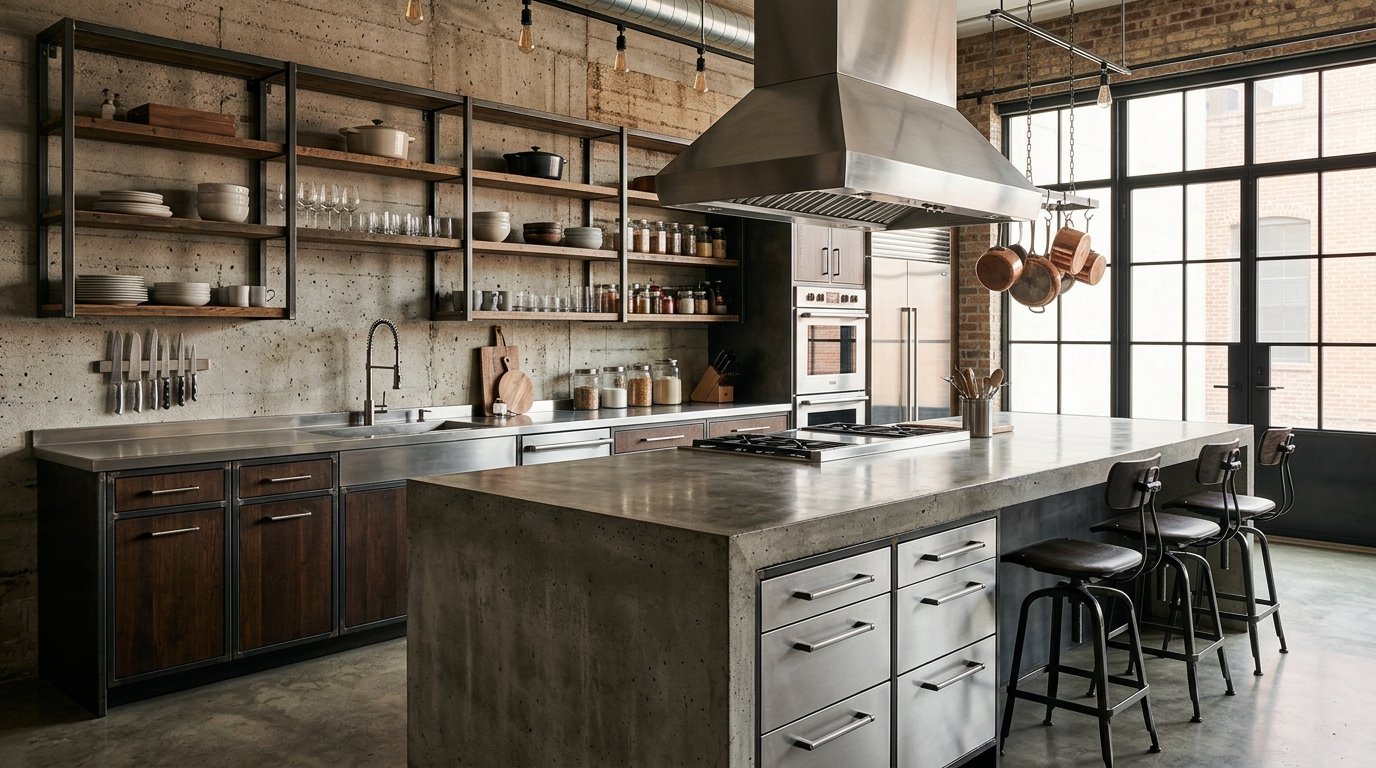
There's an undeniable allure to spaces that blend raw materials with sophisticated design, and nowhere is this more evident than in the rising popularity of industrial kitchen design. This style, which takes cues from old factories, warehouses, and urban lofts, is celebrated for its utilitarian chic, exposed elements, and no-nonsense functionality. If you're drawn to the rugged beauty of concrete, the sleekness of steel, and the minimalist appeal of open shelves, an industrial-style kitchen might be your next design obsession. At ryy.com, we empower homeowners and design enthusiasts to explore and visualize these bold transformations with our free AI design tools.
An industrial kitchen isn't just a trend; it's a statement. It's about celebrating the honest beauty of materials, creating a space that feels both robust and inviting. In this comprehensive guide, we'll dive deep into the key components of industrial kitchen design, explore how to incorporate its defining features, and share practical tips to help you bring this distinctive aesthetic into your home.
The Core Elements of Industrial Kitchen Design: Raw Beauty Unleashed
At its heart, industrial kitchen design is about showcasing the structural and material components typically hidden away. This transparency creates an authentic, lived-in feel that's surprisingly versatile.
Raw Materials: The Power of Concrete & Steel
These two materials are arguably the bedrock of the industrial aesthetic, each bringing unique properties and visual weight to the space.
- Concrete: The Foundation of Form and Function
Concrete is no longer confined to foundations and sidewalks. In an industrial kitchen, it shines as a versatile and durable surface. It can be used for:
- Countertops: Polished concrete countertops offer a sleek, monolithic look that's incredibly durable and resistant to heat. They can be poured in situ or prefabricated, customized with various finishes (matte, polished, stained) and colors. Each concrete counter is unique, with its own subtle variations and imperfections that add to its character.
- Flooring: Polished concrete floors are incredibly tough, easy to clean, and reflect light, making a space feel larger and brighter. They can be sealed to protect against stains and can even be radiant heated for comfort.
- Feature Walls: A concrete accent wall can add incredible texture and a sense of permanence. Even faux concrete finishes can achieve a similar effect without the structural commitment.
The beauty of concrete lies in its brutalist charm and its ability to act as a neutral canvas for other elements.
- Steel: Sleekness, Strength, and Shine
Stainless steel is synonymous with professional kitchens, and it brings that same level of hygiene, durability, and commercial-grade aesthetic to the home. Integrate steel through:
- Appliances: Stainless steel refrigerators, ranges, and dishwashers are a natural fit, offering a clean, professional look.
- Shelving and Cabinetry: Open stainless steel shelving units or even full stainless steel cabinetry can amplify the industrial feel. This metal is incredibly easy to clean and highly resistant to corrosion.
- Backsplashes: A stainless steel backsplash behind the range offers both practical protection and a striking visual element.
- Island Bases or Furniture: Steel frames for kitchen islands, bar stools, or dining tables reinforce the hard-wearing, utilitarian vibe.
The reflective quality of steel also helps to brighten the space and complement the often darker or more subdued tones of concrete and brick.
Embracing Open Shelving: Display and Accessibility
Open shelving is a hallmark of industrial kitchen design, replacing bulky upper cabinets with a more airy and accessible storage solution.
- Visual Lightness: By removing solid upper cabinets, open shelves make a kitchen feel larger, more open, and less cluttered, especially in smaller spaces.
- Display Opportunity: They provide a perfect stage to showcase carefully curated dishes, glassware, cookbooks, or decorative items, allowing your personality to shine through. Think white ceramic dishes, vintage finds, or practical necessities beautifully arranged.
- Easy Access: Everything is immediately visible and within reach, which can streamline cooking processes.
When incorporating open shelving, consider shelving made from reclaimed wood, pipe and wood combinations, or sleek metal. The key is thoughtful curation to avoid a messy look. Use ryy.com's AI design tools to see how open shelving impacts your kitchen's visual flow and helps you plan your display.
Exposed Elements & Architectural Details
Authenticity is crucial for an industrial space. Don't hide what can be celebrated:
- Exposed Brick Walls: A natural brick wall instantly adds texture, warmth, and a historical narrative. If you don't have natural brick, consider brick veneers.
- Visible Ductwork and Pipes: Instead of concealing HVAC ducts or plumbing, paint them to blend in or stand out, turning them into architectural features.
- Large Windows: Industrial spaces often feature large, expansive windows that flood the room with natural light, connecting the interior to the urban environment.
- High Ceilings: While not every home has them, high ceilings are characteristic of industrial buildings, offering a sense of grandeur and space.
Beyond the Basics: Adding Warmth and Personality to Your Industrial Kitchen
While raw materials define the industrial look, it’s essential to prevent the space from feeling cold or sterile. Thoughtful additions can infuse warmth, character, and a touch of refinement.
Wood Accents & Textures
Wood is the perfect counterpoint to the coolness of concrete and steel, introducing natural warmth and organic texture.
- Reclaimed Wood: Beams, shelves, or even a statement island top made from reclaimed wood bring history, character, and a beautiful aged patina.
- Butcher Block Countertops: A section of butcher block can provide a warm, tactile workstation, contrasting beautifully with polished concrete or steel.
- Wooden Flooring: While concrete floors are popular, warm-toned wooden floors can also soften the industrial edge.
Lighting as a Design Feature
Lighting in an industrial kitchen is more than just functional; it's a key design element that contributes significantly to the overall aesthetic and mood.
- Pendant Lights: Oversized metal pendants, caged lights, or fixtures with exposed Edison bulbs are iconic industrial choices. Hang them over an island or dining area.
- Track Lighting: Flexible and functional, track lighting can highlight specific areas or features.
- Sconces: Wall-mounted metal sconces can provide ambient light and reinforce the factory-chic vibe.
- Layered Lighting: Combine overhead ambient lighting with task lighting (under-cabinet lights) and accent lighting (decorative pendants) to create a dynamic and functional space.
Incorporating Color and Art
While often characterized by a monochromatic palette (grays, blacks, whites), industrial kitchens benefit from subtle injections of color and personal touches.
- Subtle Color Pops: Introduce color through bar stools, a painted accent wall (think deep greens, navy blues, or burnt oranges), or appliances in a unique finish.
- Artwork: Large-scale abstract art, vintage posters, or metal sculptures can add visual interest and a curated feel.
- Greenery: Houseplants, particularly large leafy varieties or hanging plants, bring life, softness, and a touch of nature, effectively softening harsh lines.
Planning Your Industrial Kitchen Design: Practical Steps
Bringing your industrial kitchen vision to life requires careful planning and a clear understanding of your needs. Fortunately, ryy.com's free AI design tools can be an invaluable asset throughout this process.
Define Your Vision and Budget
Start by gathering inspiration. Look through magazines, Pinterest, and design blogs for industrial kitchen examples that resonate with you. Create a mood board to consolidate your ideas for materials, colors, and specific fixtures. Simultaneously, establish a realistic budget for materials, labor, and appliances. Industrial materials like custom concrete countertops or bespoke steel fabrications can vary significantly in cost.
Layout and Functionality First
Even with a focus on aesthetics, your kitchen must be functional. Consider the classic "work triangle" (sink, stove, refrigerator) and how it fits into your proposed industrial layout. Where will your major appliances go? How will traffic flow through the space? If you're incorporating open shelving, think about what you'll store there and what needs to be easily accessible versus tucked away in closed storage.
Sourcing Materials & Finishes
Identifying reliable suppliers for concrete pouring and finishing, steel fabrication, and specialty lighting is crucial. You might need to work with contractors experienced in these industrial materials. For a truly authentic look, explore architectural salvage yards for unique finds like factory lights, reclaimed wood, or vintage metal cabinets.
Don't Forget the Details
- Hardware: Opt for minimalist, sturdy hardware in matte black, brushed nickel, or raw steel.
- Faucets: Industrial-style pull-down faucets in a metallic finish (like brushed brass or matte black) will complete the look.
- Seating: Metal bar stools or benches with simple lines complement the aesthetic perfectly.
- Flooring: Beyond concrete, consider large format tiles, dark wood, or even epoxy-coated floors for a sleek, durable surface.
Quick Tips for Your Industrial Kitchen Design Journey
- Start Small: If a full overhaul feels daunting, begin by incorporating smaller industrial elements like metal pendant lights, open pipe shelving, or a concrete-style backsplash.
- Balance Raw with Refined: Prevent your kitchen from feeling too cold by balancing rough textures (concrete, exposed brick) with softer elements (wood, textiles, plants).
- Consider Maintenance: Polished concrete floors need sealing, and stainless steel can show fingerprints. Understand the upkeep required for your chosen materials.
- Plan Your Open Shelves: To avoid clutter, decide what you'll display and ensure those items are cohesive in style or color. Consider a mix of open and closed storage.
- Visualize with ryy.com: Upload a photo of your current kitchen to ryy.com's free AI design tools. Experiment with different concrete finishes, steel accents, and open shelving configurations. See how new lighting fixtures or a pop of color would transform your space before making any commitments.
Embrace the Industrial Edge with ryy.com
The beauty of industrial kitchen design lies in its honest, no-frills approach to materials and its ability to blend robust functionality with striking aesthetics. From the commanding presence of concrete countertops to the sleek efficiency of stainless steel appliances and the airy appeal of open shelves, this style offers endless possibilities for creating a unique and highly personalized space.
Ready to envision your dream industrial kitchen? Don't leave your design to chance. Visit ryy.com today and use our free AI design tools to upload a picture of your kitchen and instantly apply different industrial styles, materials, and layouts. See how concrete floors, exposed brick, or a new set of open metal shelves would look in your space with just a few clicks. Your journey to a beautifully rugged and functional industrial kitchen starts here!