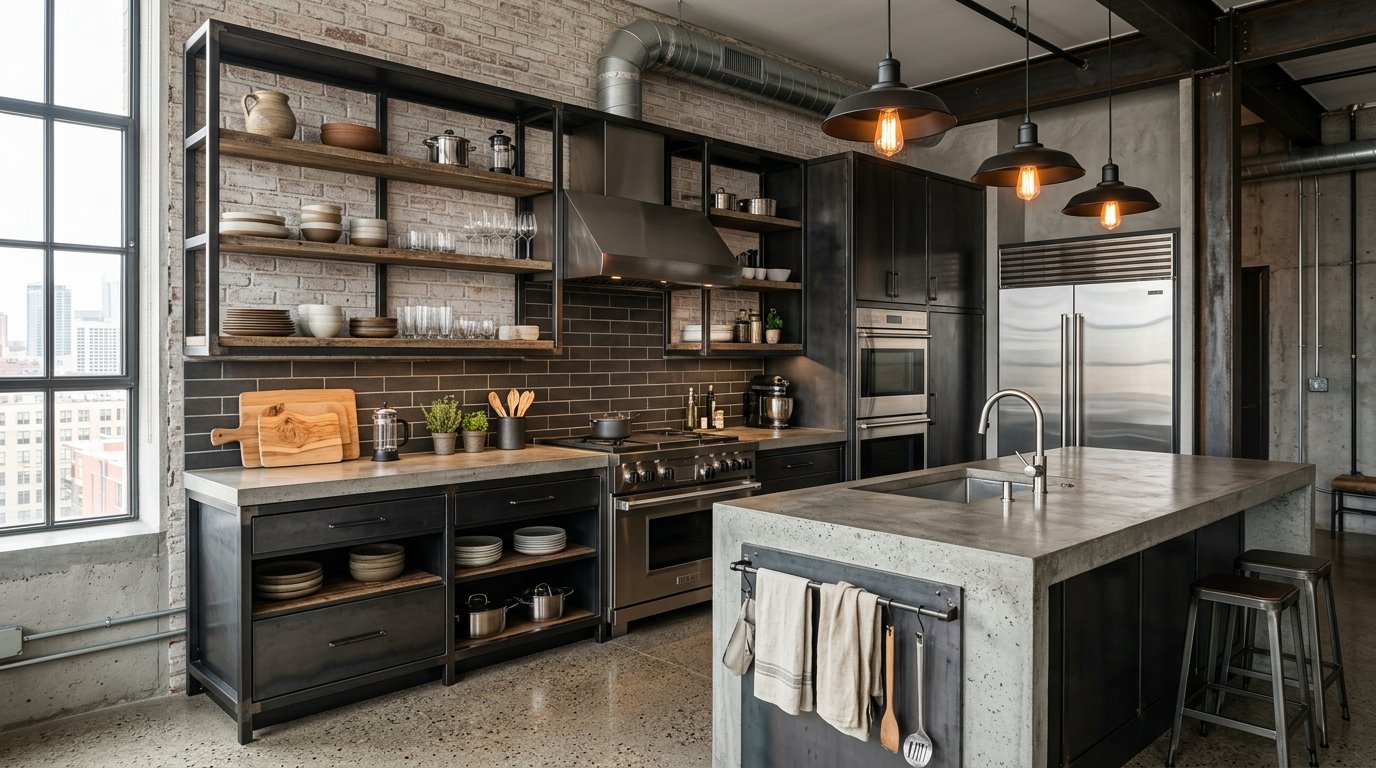
In the world of interior design, trends come and go, but some styles possess an enduring appeal that transcends fleeting fads. One such style, increasingly popular in homes today, is industrial design. When applied to the kitchen, it transforms the space into a hub of raw beauty and practical efficiency. If you're drawn to the rugged charm of exposed materials, the utilitarian grace of stainless steel, and the minimalist aesthetic of open shelving, then an industrial kitchen design might be your perfect match.
Rooted in the factory floors and workshops of the past, industrial kitchens celebrate functionality, durability, and honest materials. It's a look that champions exposed elements, robust finishes, and a no-nonsense approach to form and function. But don't mistake its ruggedness for a lack of sophistication. A well-executed industrial kitchen is a testament to thoughtful design, blending strength with surprising warmth and character.
At ryy.com, we understand the desire to create a kitchen that not only serves its purpose but also reflects your unique style. Our AI design tools can help you visualize how concrete, steel, and open shelves can come together to create your dream industrial space. Let's explore the key ingredients of this exciting design trend.
The Core Elements of Industrial Kitchen Design
The industrial aesthetic isn't about perfectly polished surfaces or hidden features; it's about showcasing the bones of the building and the beauty of raw materials. This transparency gives industrial kitchens their distinct, confident personality.
Concrete: The Foundation of Form
Concrete is perhaps the most iconic material in an industrial kitchen. Its versatility allows it to be used in various applications, bringing a sense of grounded permanence and urban chic.
- Concrete Countertops: Durable, heat-resistant, and incredibly stylish, concrete countertops are a hallmark of industrial design. They can be poured in situ or prefabricated, offering a seamless, monolithic look. Their inherent imperfections – natural variations in color and texture – add to their appeal, telling a story of craftsmanship. While known for their strength, remember that concrete surfaces require proper sealing to prevent staining and maintain their finish over time.
- Concrete Flooring: Polished concrete floors provide an expansive, easy-to-clean surface that beautifully complements the industrial theme. They reflect light, making the space feel larger and brighter, and are exceptionally hard-wearing. For added warmth, consider radiant heating underneath or strategically placed area rugs.
- Concrete Walls/Backsplashes: Exposed concrete walls or backsplashes offer a strong visual statement. Their raw, textured appearance creates a dramatic backdrop for other kitchen elements, establishing an immediate industrial vibe.
Steel: The Backbone of Durability and Shine
Stainless steel is another non-negotiable material in industrial kitchens, echoing the professional kitchens that inspired the style. It brings both resilience and a sleek, reflective quality.
- Stainless Steel Appliances: From refrigerators and ovens to dishwashers and range hoods, stainless steel appliances are a natural fit. Their commercial-grade appearance and robust build reinforce the utilitarian aspect of the design. Integrated or freestanding, their metallic sheen adds a touch of modern sophistication.
- Stainless Steel Countertops and Backsplashes: For the truly authentic industrial look, consider stainless steel countertops. They are incredibly hygienic, heat-resistant, and easy to clean, making them a practical choice for serious cooks. A stainless steel backsplash can extend this sleekness, creating a continuous, easy-to-wipe surface behind the cooking area.
- Steel Shelving and Fixtures: Beyond appliances, steel appears in open shelving units, island bases, and even lighting fixtures. Blackened steel or raw steel components add an even grittier, more authentic touch, often paired with exposed rivets or bolts.
Open Shelves: Displaying Functionality and Personality
Open shelving is a cornerstone of industrial kitchen design, moving away from traditional upper cabinets to create a more expansive and less cluttered feel. It’s about transparency and accessibility.
- Practicality and Access: Open shelves make frequently used items easily accessible, streamlining your cooking process. This functional aspect aligns perfectly with the industrial ethos of efficiency.
- Visual Lightness: By removing bulky upper cabinets, open shelving creates a sense of airiness and openness, especially valuable in smaller kitchens or those with lower ceilings. It allows the eye to travel further, making the space feel larger.
- Showcasing Your Style: Open shelves are an opportunity to display carefully curated dishware, vintage finds, cookbooks, and plants. This adds personality and warmth, preventing the space from feeling too stark. Choose durable materials like reclaimed wood, metal piping, or thick industrial-grade steel for the shelves themselves.
Crafting Your Industrial Kitchen: Beyond the Big Three
While concrete, steel, and open shelves are foundational, several other elements work in harmony to complete the industrial aesthetic.
The Industrial Color Palette and Texture Play
Industrial kitchens typically favor a neutral color palette, which allows the textures of the raw materials to shine.
- Grays, Blacks, and Whites: These form the base, echoing concrete, steel, and exposed plaster. They provide a sophisticated, urban backdrop.
- Earthy Tones and Warm Woods: To prevent the space from feeling cold, incorporate natural wood elements (reclaimed wood shelves, butcher block islands, wooden bar stools) or exposed brick. These add warmth, texture, and a touch of organic softness.
- Metallic Accents: Beyond stainless steel, introduce other metals like copper or brass in lighting fixtures or hardware for subtle pops of warmth and reflection.
Lighting: The Industrial Glow
Lighting in an industrial kitchen is both functional and decorative, often featuring exposed bulbs and robust fixtures.
- Pendant Lights: Large, cage-style, or metal dome pendant lights are iconic. Suspend them over an island or dining area to define the space and provide ample task lighting.
- Track Lighting: Flexible and directional, track lighting can highlight specific areas or features, adding to the utilitarian charm.
- Exposed Bulbs: Edison bulbs with their warm glow are a popular choice, enhancing the vintage industrial feel.
Hardware and Fixtures: Utilitarian Elegance
Every detail matters, and hardware is no exception.
- Commercial-Style Faucets: Pull-down sprayers, spring coil necks, and robust handles evoke a professional kitchen feel.
- Cabinet Pulls: Opt for simple, chunky metal handles, bar pulls, or industrial pipe handles.
- Exposed Ductwork and Piping: Where possible and safe, exposing ceiling ducts or wall piping can further enhance the authentic factory aesthetic.
Practical Tips for Your Industrial Kitchen Design Transformation
Ready to bring the raw elegance of industrial design into your home? Here are some actionable tips:
- Start Small: If a full renovation seems daunting, begin by incorporating key elements like open shelving with metal brackets, a striking industrial pendant light, or a concrete-effect accent wall.
- Mix Old and New: Blend vintage finds (factory stools, old metal signs, reclaimed wood pieces) with sleek, modern appliances for a layered, authentic look.
- Embrace Imperfection: Industrial design celebrates the worn and weathered. Don't shy away from materials with natural variations, distressed finishes, or visible welds.
- Prioritize Function: Every element in an industrial kitchen should ideally serve a purpose. Think about ergonomic layouts, durable materials, and easy-to-clean surfaces.
- Add Greenery: Plants (especially large, leafy varieties) can soften the hard edges of industrial materials and introduce a touch of life and color.
- Consider Storage Carefully: While open shelving is characteristic, balance it with closed storage (like base cabinets or a pantry) to keep clutter at bay and maintain a tidy appearance.
- Experiment with Textures: Combine smooth concrete with rough brick, glossy steel with matte wood, to create visual interest and depth.
Visualize Your Industrial Kitchen Design with ryy.com
An industrial kitchen design is more than just a trend; it's a lifestyle statement that celebrates honest materials, robust functionality, and a captivating urban edge. Whether you're planning a complete overhaul or simply looking to inject some industrial flair, the combination of concrete, steel, and open shelves provides a strong foundation.
Feeling inspired but unsure how these elements will look in your unique space? Don't leave it to guesswork! At ryy.com, our free AI design tools allow you to upload a photo of your current kitchen and experiment with different materials, layouts, and styles. See how concrete countertops interact with a stainless steel backsplash, or visualize open shelving against an exposed brick wall, all before making any commitments. Take the first step towards creating your dream industrial kitchen today – visit ryy.com and let our AI bring your vision to life!