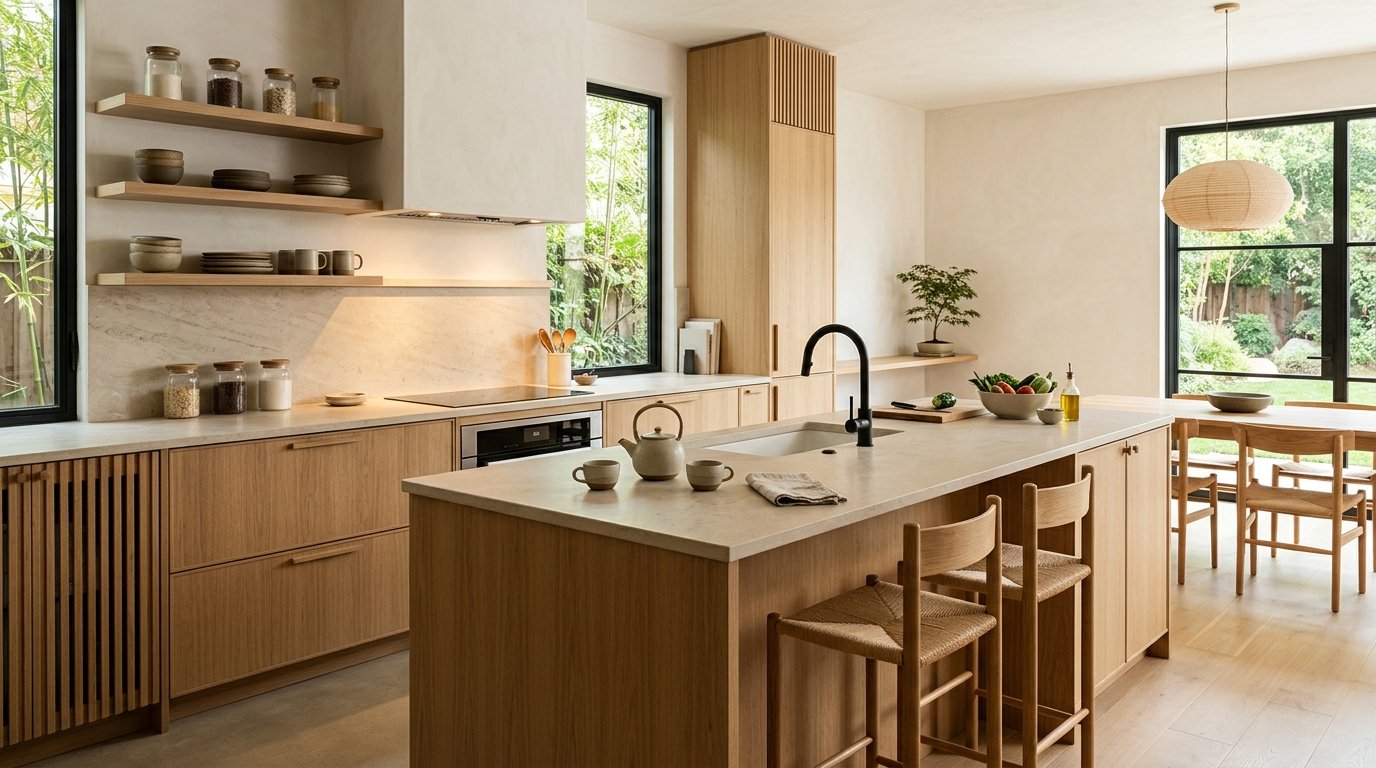
In our fast-paced lives, the desire for a tranquil sanctuary within our homes has never been stronger. The kitchen, often the heart of the home, is a prime candidate for this transformation. Enter Japandi kitchen design: a sophisticated fusion of Japanese minimalism and Scandinavian warmth that promises not just beauty, but profound calm and unparalleled functionality.
Imagine a kitchen where every element serves a purpose, where natural light abounds, and where clutter is a foreign concept. This is the promise of Japandi. It's about creating a space that feels effortlessly serene, inviting, and highly efficient. If you're looking to imbue your home with a sense of peace and order, while elevating your culinary experience, read on. We’ll delve into the philosophy, essential elements, and practical tips for designing your own Japandi kitchen, and show you how ryy.com's free AI design tools can bring your vision to life.
What is Japandi, Really? The Philosophy Behind the Aesthetic
Japandi isn't just a design trend; it's a philosophy that marries two distinct yet harmonious cultures. It's about finding beauty in imperfection (Wabi-Sabi) and appreciating cozy contentment (Hygge), resulting in a style that is both minimalist and incredibly inviting.
Scandinavian "Hygge" Meets Japanese "Wabi-Sabi"
- Hygge (Scandinavian): This concept emphasizes comfort, coziness, and well-being. Think warm textiles, natural wood, soft lighting, and a feeling of contentment and togetherness.
- Wabi-Sabi (Japanese): This philosophy finds beauty in imperfection, transience, and the authentic nature of materials. It celebrates the worn, the weathered, and the handmade, appreciating the story behind each object.
When these two meet, you get Japandi: a style that is refined yet rustic, sleek yet warm, and functional yet deeply soulful. It sheds the sterile aspects often associated with pure minimalism, embracing a more human-centric design that prioritizes comfort, natural elements, and thoughtful living.
Core Principles: Minimalism, Functionality, Natural Beauty
At its heart, Japandi design is guided by these three pillars:
- Minimalism: Not stark emptiness, but rather a deliberate reduction to essentials. Every item in a Japandi kitchen is chosen for its purpose and beauty, eliminating visual noise and creating a sense of spaciousness.
- Functionality: The kitchen is a workspace, and Japandi ensures it performs flawlessly. Layouts are optimized for efficiency, storage is smart and hidden, and appliances are integrated seamlessly.
- Natural Beauty: A deep connection to nature is paramount. This translates into the use of natural materials, an earthy color palette, and abundant natural light, bringing the outdoors in.
Essential Elements of Japandi Kitchen Design
Crafting a successful Japandi kitchen design involves a careful selection of colors, materials, and forms. Here's a breakdown of the key ingredients:
The Color Palette: Serene Neutrals & Earth Tones
Japandi kitchens are a symphony of calm. The palette is intentionally subdued, fostering a sense of peace and openness. Think:
- Soft Whites and Off-Whites: For brightness and a clean base.
- Muted Grays and Greiges: Adding depth without heaviness.
- Warm Beiges and Browns: Introduced through natural wood tones, providing warmth and grounding.
- Subtle Greens and Blues: Often as accents through plants or natural stone, referencing nature.
The goal is a cohesive, harmonious backdrop that allows the textures and forms of the materials to shine. Unsure how different Japandi palettes will look in your space? ryy.com's AI design tools can help you visualize various color schemes instantly, ensuring your choices create the perfect serene atmosphere.
Materials Matter: Natural Textures & Sustainable Choices
This is where Japandi truly comes alive. The interplay of natural, often contrasting, textures is key:
- Woods: A cornerstone of Japandi. Lighter woods like birch, ash, or light oak bring Scandinavian brightness, while darker, richer woods such as walnut or darker oak introduce Japanese depth and sophistication. Mix and match for intriguing contrast.
- Stone: Natural stone countertops (soapstone, marble, granite) or backsplashes add an organic, tactile quality. Concrete is also a popular choice for its raw, industrial-meets-natural appeal.
- Ceramics and Clay: Used in pottery, tiles, or decorative elements, they bring an earthy, handcrafted touch.
- Fibers: Linen, cotton, and wool for textiles like dish towels, placemats, or subtle window treatments add softness and natural texture.
Sustainability is often an inherent aspect, with a preference for durable, long-lasting materials and handcrafted items that tell a story.
Clean Lines & Uncluttered Spaces: The Art of Subtlety
Japandi celebrates simplicity in form. This means:
- Sleek Cabinetry: Flat-panel doors, often handleless or with integrated pulls, create a seamless, uninterrupted look.
- Integrated Appliances: Refrigerators and dishwashers are often paneled to blend in with cabinetry, maintaining visual calm.
- Minimal Open Shelving: If used, open shelves display only a few carefully curated, beautiful, and frequently used items. Otherwise, storage is discreetly hidden away.
- Clear Countertops: A fundamental rule. Only essential items (e.g., a beautiful kettle, a small plant, a handmade bowl) should reside on the counter.
Thoughtful Lighting: Ambience & Task
Lighting in a Japandi kitchen is both practical and atmospheric:
- Maximize Natural Light: Large windows, skylights, and minimal window treatments are prioritized.
- Layered Artificial Lighting:
- Ambient: Soft, diffused lighting (e.g., recessed lights, cove lighting) creates an overall glow.
- Task: Directed lighting over work surfaces (e.g., under-cabinet lighting, pendant lights over an island) ensures functionality.
- Accent: Minimal, perhaps a single sculptural pendant light that doubles as art, or subtle indirect lighting to highlight a feature.
Functionality First: Smart Storage Solutions
A Japandi kitchen works hard behind the scenes to maintain its serene facade:
- Deep Drawers with Organizers: For pots, pans, and everyday utensils.
- Pantry Systems: Well-organized, often walk-in or pull-out pantries keep food items out of sight.
- Integrated Waste and Recycling Bins: Hidden within cabinetry.
- Built-in Solutions: Custom nooks for small appliances, knife blocks, or spice racks keep counters clear.
Bringing Japandi into YOUR Kitchen: Practical Application
Ready to transform your kitchen into a Japandi haven? Here's how to apply these principles:
Furniture & Fixtures: Simplicity in Form
- Stools & Seating: Opt for minimalist designs in wood, perhaps with woven seats. Lines should be clean and uncluttered.
- Faucets: Choose sleek, unadorned designs in matte black, brushed nickel, or brass. Functionality is key, and intricate details are avoided.
- Hardware: If not handleless, select simple, unassuming pulls or knobs that blend with the cabinetry, often in matte finishes.
Decor & Accessories: Less is More, More or Less
This is where Wabi-Sabi truly shines. Every decorative item should be meaningful and beautiful:
- Handcrafted Pottery: Unique, imperfect ceramic bowls or mugs add character and warmth.
- Simple Greenery: A single potted plant (bonsai, snake plant, orchid) or a delicate branch in a vase introduces life and natural elements without overwhelming the space.
- Textile Accents: High-quality linen dish towels or a simple runner can add subtle texture.
- Avoid Clutter: Resist the urge to display too many items. Rotate cherished pieces if you have several.
Ready to see your own kitchen transform? Upload a photo of your current kitchen to ryy.com and let our AI explore Japandi styles, layouts, and material suggestions tailored to your space. It's a fantastic way to visualize before you commit.
Layout & Flow: Optimizing Your Workspace
Japandi emphasizes an efficient and intuitive kitchen layout:
- The Work Triangle: Ensure a smooth flow between the sink, refrigerator, and cooktop.
- Clear Pathways: Design the layout to allow for easy movement and avoid obstacles.
- Island Functionality: If incorporating an island, consider its purpose – prep, dining, or both – and ensure it supports the overall workflow.
Common Pitfalls to Avoid in Japandi Kitchen Design
While the Japandi aesthetic is captivating, there are a few missteps to watch out for that can detract from its intended calm functionality.
Too Much Minimalism (Feeling Cold)
The danger of strict minimalism is that a space can feel sterile or uninviting. Japandi counters this with warmth. Ensure you incorporate:
- Texture: Don't rely solely on smooth surfaces. Mix in rough wood, woven elements, or subtly textured stone.
- Warm Lighting: Opt for warmer Kelvin temperatures (around 2700-3000K) for your ambient lighting.
- Personal Touches: A few carefully chosen handmade items or a personal piece of pottery can add soul.
Ignoring Functionality (Just for Looks)
A beautiful kitchen that doesn't work well is a frustrating one. Remember:
- Smart Storage: A Japandi kitchen is minimalist on the surface because storage is impeccable behind closed doors. Don't skimp on clever organizers.
- Ergonomics: Ensure counter heights, appliance placements, and lighting are comfortable and efficient for daily use.
- Durability: Choose materials that can withstand daily kitchen demands, not just look good.
Overlooking Natural Light
Natural light is a vital component of the Japandi aesthetic, creating openness and connection to the outside. If your kitchen lacks ample natural light:
- Strategic Artificial Lighting: Use layered lighting to mimic natural light as much as possible.
- Reflective Surfaces: Incorporate reflective materials sparingly, such as a glossy tile backsplash or a polished countertop, to bounce light.
- Light Colors: Stick to lighter wall and cabinet colors to maximize brightness.
Forgetting the Human Touch (Handcrafted Elements)
The Wabi-Sabi principle is about embracing imperfection and the beauty of the handmade. A kitchen solely composed of mass-produced, identical items can feel soulless.
- Artisan Pieces: Invest in a few high-quality, handcrafted items like a ceramic utensil holder, a unique serving platter, or hand-blown glass tumblers.
- Plants: Living plants bring organic texture and a connection to nature, softening sharp lines.
- Comfort: Ensure there are comfortable seating options, even if minimalist, to encourage lingering and connection.
Practical Tips for Your Japandi Kitchen
- Start with a Clean Slate: Declutter ruthlessly. Remove anything that doesn't serve a purpose or bring joy.
- Invest in Quality over Quantity: Choose fewer, better-made items that will last and age beautifully.
- Embrace Imperfection: Don't strive for sterile perfection. A slightly uneven handmade mug or a beautifully worn wooden cutting board adds character.
- Integrate Greenery: Simple, elegant plants add life, color, and a connection to nature.
- Consider Texture: Varying textures (smooth stone, rough wood, soft linen) add depth and interest without adding visual clutter.
- Use ryy.com for Visualization: Upload a picture of your current kitchen to ryy.com. Our free AI design tool can generate Japandi-inspired concepts, experiment with different materials and colors, and help you visualize your dream kitchen before you lift a finger.
Design Your Calm, Functional Japandi Kitchen Today!
The allure of Japandi kitchen design lies in its ability to create a space that is both visually stunning and deeply comforting. By harmonizing Japanese minimalism with Scandinavian warmth, you can transform your kitchen into a sanctuary of calm functionality – a place where cooking is a joy and gathering is a serene experience.
Ready to embark on your Japandi kitchen transformation? Don't let the details overwhelm you. ryy.com offers free AI design tools that can help you explore endless Japandi possibilities, generate design ideas from your existing space, and visualize new layouts, materials, and color palettes. Take the guesswork out of design and start creating your peaceful, functional kitchen with ryy.com today!