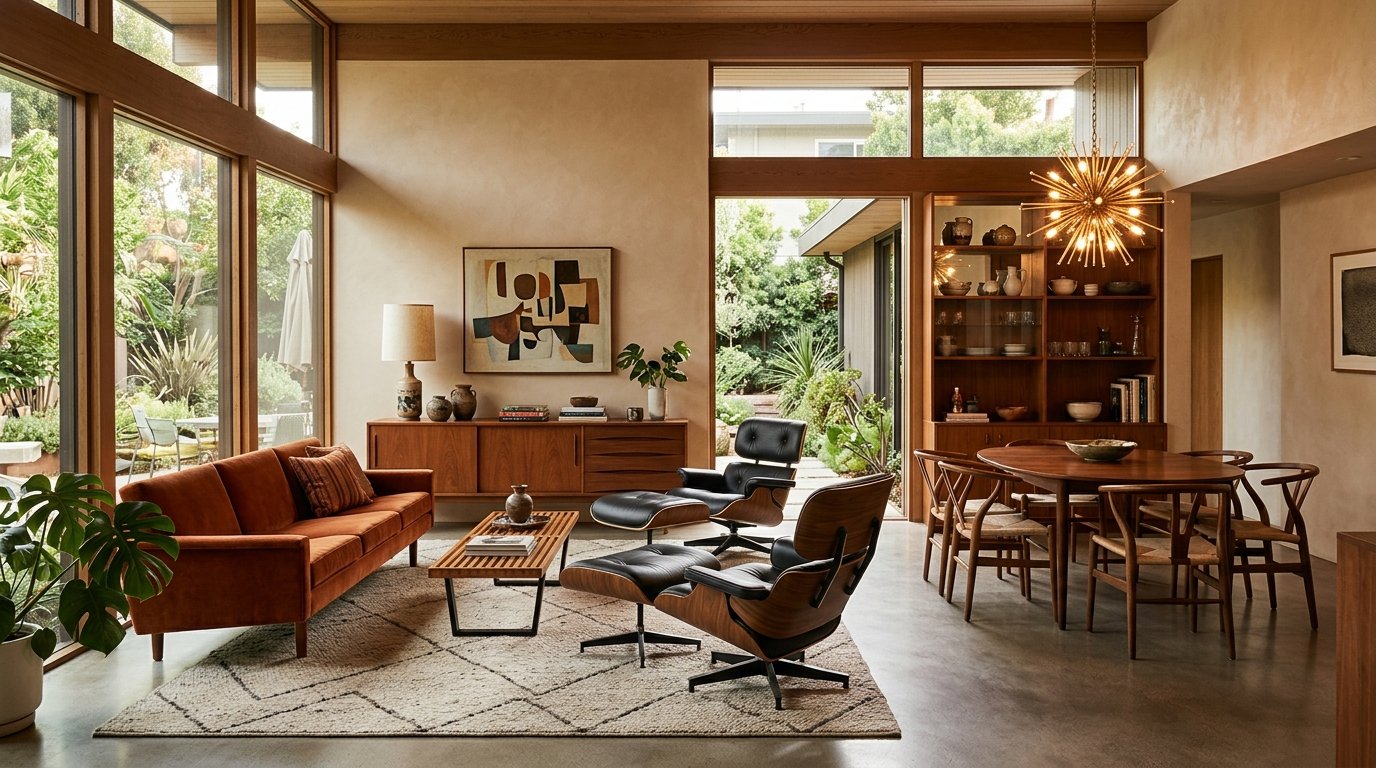
In the vast landscape of interior design trends, few styles have captured the collective imagination and endured the test of time quite like mid century modern interior design. Originating in the mid-20th century, this iconic aesthetic continues to influence homes worldwide, celebrated for its clean lines, organic forms, and an unwavering commitment to both beauty and functionality. If you've ever admired a sleek, low-slung sofa or a striking Sputnik chandelier, you've witnessed the magic of MCM.
But what exactly is it about Mid-Century Modern that makes it so perennially popular? Is it the nostalgia for a bygone era, the inherent practicality, or simply the undeniable elegance? This comprehensive guide will delve into the history, key characteristics, and practical tips for incorporating this beloved style into your own living spaces. And with ryy.com's free AI design tools, you can effortlessly visualize how this timeless aesthetic can transform your home.
The Origins and Philosophy of Mid-Century Modern
To truly appreciate Mid-Century Modern, it's essential to understand its roots. This design movement emerged roughly between the 1930s and 1960s, a period marked by significant social, economic, and technological shifts.
A Post-War Revolution
The post-World War II era brought with it a desire for optimism, progress, and a fresh start. Returning soldiers needed housing, and families were growing. This created a demand for efficient, accessible, and mass-producible furniture and home goods. Designers of the time, many of whom had emigrated from Europe, embraced new materials and manufacturing techniques to meet these needs, moving away from the ornate, heavy styles of previous decades.
Innovators like Charles and Ray Eames, Eero Saarinen, George Nelson, and Hans Wegner became pioneers, designing pieces that were not only aesthetically pleasing but also practical for the average American family. Their work laid the foundation for an aesthetic that championed democratic design – good design for everyone.
Form Follows Function & Organic Shapes
At its core, Mid-Century Modern philosophy is deeply rooted in modernism's "form follows function" principle. Every element was designed with purpose, stripping away unnecessary ornamentation to reveal the inherent beauty of the materials and structure. This pragmatic approach didn't mean sacrificing beauty; instead, it elevated functionality to an art form.
Simultaneously, there was a growing appreciation for organic shapes and natural forms, a counterpoint to the rigid geometry of earlier modernism. Designers often drew inspiration from nature, creating furniture with gentle curves, tapered legs, and flowing lines that brought a sense of softness and approachability to modern design. Think of the iconic "Womb Chair" by Eero Saarinen or the sweeping curves of an Eames Lounge Chair.
Key Characteristics of Mid-Century Modern Interior Design
When you encounter a space that embodies mid century modern interior design, certain elements immediately stand out. Understanding these hallmarks is key to successfully bringing the style into your home.
Iconic Furniture & Materials
Furniture is arguably the most recognizable aspect of MCM. Pieces are typically characterized by:
- Clean Lines and Minimalist Forms: Furniture features sleek, uncluttered silhouettes, often with tapered or slender legs.
- Organic & Geometric Shapes: A blend of soft curves (like Saarinen's Tulip Table) and sharp angles (like Nelson's Platform Bench).
- Mixed Materials: Designers expertly combined innovative materials like molded plywood, fiberglass, plastic, and chrome with traditional woods such as teak, walnut, and rosewood, and natural fabrics like wool and leather.
- Functionality & Modularity: Many pieces were designed to be versatile, stackable, or easily moved, catering to smaller living spaces and a more casual lifestyle.
Examples abound: the Eames Lounge Chair and Ottoman, the Wegner Wishbone Chair, Knoll's Barcelona Chair, and Florence Knoll's low-slung sofas are just a few icons that define the era.
Bold Colors and Patterns
While the overall aesthetic leaned towards minimalism, MCM interiors were far from sterile. A distinctive palette of vibrant, often earthy, colors provided warmth and personality. Think of:
- Jewel Tones: Deep teal, mustard yellow, avocado green, burnt orange, and rich blues.
- Neutrals: Alongside the bold hues, a backdrop of warm grays, creams, and natural wood tones provided balance.
- Geometric Patterns: Fabrics and wallpapers often featured abstract, geometric, or atomic-inspired patterns, adding visual interest without overwhelming the clean lines of the furniture.
Integration with Nature
A crucial element of Mid-Century Modern design is its seamless connection between indoor and outdoor spaces. This was achieved through:
- Large Windows & Sliding Doors: Encouraging natural light and offering expansive views of the outdoors.
- Indoor Plants: Large, leafy plants like Monstera, Fiddle Leaf Figs, and Snake Plants were (and still are) essential accessories, bringing life and organic texture indoors.
- Natural Materials: The use of wood, stone, and natural fibers blurred the lines between the built environment and the natural world.
How to Incorporate Mid-Century Modern into Your Home Today
You don't need a sprawling Eichler home to embrace the MCM aesthetic. Here's how you can infuse this timeless style into any modern dwelling:
Start with a Statement Piece
The easiest way to introduce Mid-Century Modern is by investing in one or two key pieces. A genuine vintage find or a high-quality reproduction of an iconic chair, a sleek credenza, or a unique coffee table can anchor your space and set the tone. Remember, authenticity and quality matter more than quantity.
Embrace Thoughtful Layouts
MCM favors open, airy layouts. Arrange furniture to promote conversation and flow. Avoid clutter. Think about how each piece relates to the others and how it contributes to the overall sense of spaciousness. If you're struggling with layout, ryy.com's AI room planner can help you experiment with different arrangements and see how MCM furniture fits your existing space before you commit.
Lighting is Key
Lighting fixtures from the Mid-Century era are works of art in themselves. Look for Sputnik chandeliers, arc floor lamps, atomic-inspired pendants, or sculptural table lamps. These pieces are not just functional but serve as significant decorative elements, adding a touch of period authenticity and warmth.
Curate Accessories & Art
Minimalism doesn't mean emptiness. Choose accessories that complement the clean lines and natural materials. Think:
- Ceramics: Hand-thrown pottery, often in organic shapes or earthy tones.
- Wall Art: Abstract expressionist prints, graphic posters, or large-scale photography.
- Mirrors: Geometric or starburst mirrors can add dimension and light.
- Indoor Plants: As mentioned, large, vibrant plants are non-negotiable for an authentic MCM vibe.
Remember to keep it curated; a few well-chosen pieces are more impactful than a multitude of small items.
Practical Tips for Achieving a Mid-Century Modern Look
- Prioritize Quality over Quantity: Invest in fewer, high-quality pieces that will last. MCM furniture is known for its durability and craftsmanship.
- Mix and Match: Don't feel pressured to make your entire home a museum of MCM. Blend vintage finds with contemporary pieces for a fresh, updated look. For instance, pair an MCM credenza with a modern sofa.
- Consider Color Schemes: Use a balanced palette. If you choose a bold accent color for a sofa, complement it with more neutral walls and natural wood tones.
- Focus on Functionality: Before buying a piece, ask yourself how it will be used and how it contributes to the room's flow.
- Embrace Natural Light: Keep windows unobstructed. Use sheer curtains or blinds if privacy is needed, but allow as much natural light in as possible.
- Add Texture: Introduce texture through rugs (often geometric patterns), throw pillows, and upholstery to prevent the space from feeling too stark.
- Don't Forget the Outdoors: Extend the MCM aesthetic to your patio or balcony with sleek outdoor furniture and lush greenery.
- Visualize with AI: Unsure how a specific MCM piece will look in your space? Use ryy.com's free AI interior design tools. Upload a photo of your room, and our AI can generate design ideas, showing you how different MCM furniture, colors, and layouts could transform your home, helping you design your perfect mid-century modern interior!
Conclusion: The Enduring Appeal of Mid-Century Modern
The allure of mid century modern interior design lies in its ability to marry sophisticated aesthetics with practical living. It's a style that feels both nostalgic and utterly contemporary, offering comfort, elegance, and timeless appeal. By understanding its core principles – clean lines, organic forms, rich materials, and a vibrant color palette – you can create a home that truly reflects this iconic era.
Whether you're starting from scratch or looking to infuse a touch of MCM into your current décor, remember that thoughtful design makes all the difference. Ready to bring the timeless elegance of Mid-Century Modern into your home? Let ryy.com be your design partner. Our free AI interior design tools empower you to experiment with different MCM looks, furniture placements, and color schemes, making your design journey exciting and effortless. Explore the possibilities and design your dream Mid-Century Modern space today!