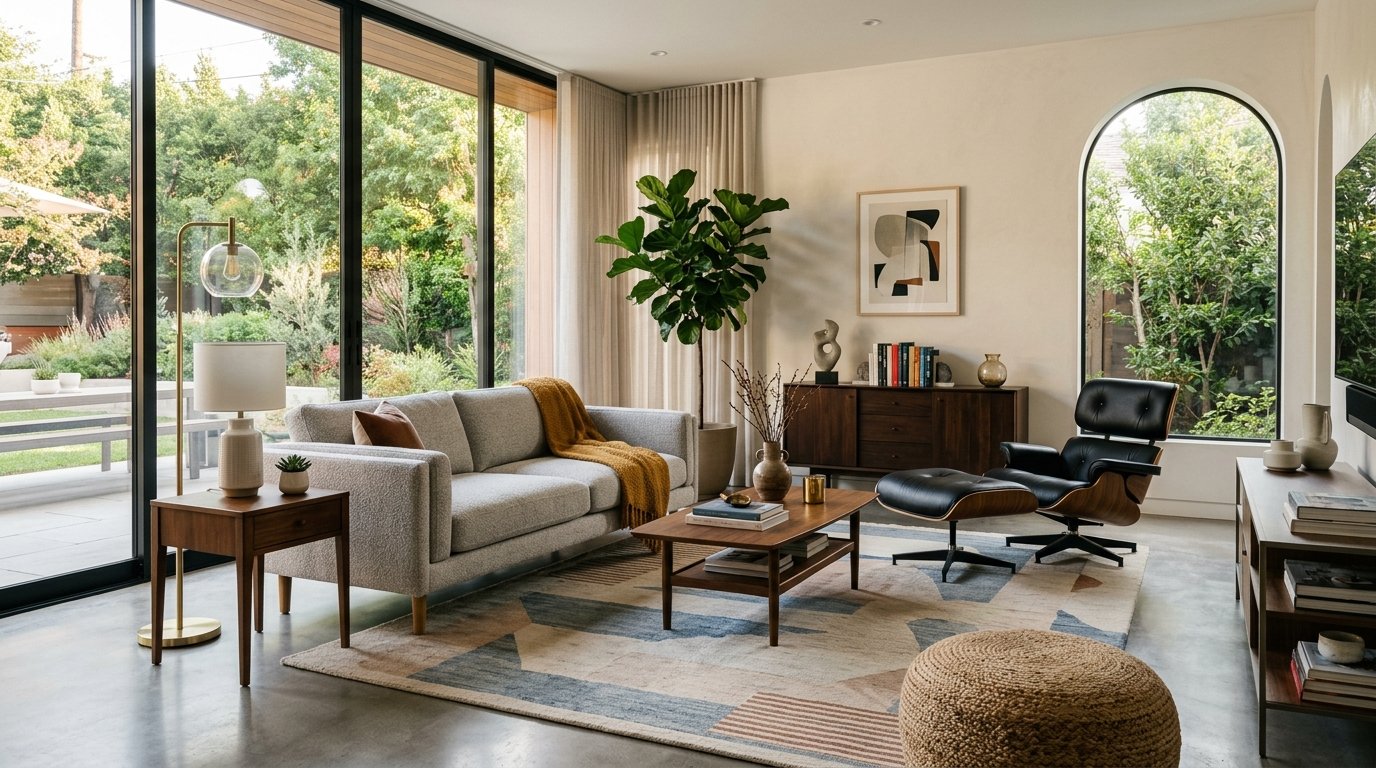
Are you looking to create an interior that feels both rooted in classic design and refreshingly current? The secret might lie in mastering how to mix Mid-Century Contemporary design elements. This captivating fusion isn't just a fleeting trend; it's a sophisticated approach that brings together the best of two beloved eras, resulting in spaces that are timeless, inviting, and truly unique. Imagine the iconic silhouettes of Mid-Century Modern furniture gracefully coexisting with the clean lines and minimalist aesthetic of today's contemporary style. It’s a design marriage built on shared principles of functionality, form, and understated elegance, offering an unparalleled depth to your home’s character.
At ryy.com, we believe in empowering homeowners and design enthusiasts to explore their creative vision without limitations. Blending styles can seem daunting, but with the right guidance and tools, you can transform your living space into a masterpiece that reflects your personal taste and sophistication. Let's dive into the art of merging these two powerful aesthetics.
The Allure of Blending Eras: Why Mix Mid-Century and Contemporary?
The beauty of combining Mid-Century Modern (MCM) and contemporary design lies in their surprising synergy. Both styles prioritize clean lines, functionality, and a less-is-more approach, making them ideal partners for a harmonious blend. Instead of competing, they complement each other, adding layers of interest and a sense of curated history to your home.
Mid-Century Modern: A Glimpse into its Charm
Originating in the mid-20th century (roughly 1945-1969), Mid-Century Modern design is characterized by its innovative use of materials, organic shapes, and a profound emphasis on functionality. Iconic pieces by designers like Charles and Ray Eames, Eero Saarinen, and George Nelson defined an era of optimism and progress. Key characteristics include:
- Organic and Geometric Forms: Think curved lines, boomerang shapes, and sleek, angular silhouettes.
- Innovative Materials: Plywood, fiberglass, plastic, metal, and natural wood (especially teak and walnut).
- Functionality: Furniture designed for practical use and comfortable living.
- Bold Colors: Often incorporating vibrant accent colors like avocado green, mustard yellow, and orange alongside more subdued neutrals.
Contemporary Design: Defining the Now
Contemporary design, by its very nature, is ever-evolving. It refers to what is current and of the moment, reflecting prevailing trends while often drawing inspiration from various periods. Unlike historical styles, "contemporary" isn't fixed but rather a fluid concept. However, certain commonalities define its current iteration:
- Minimalism and Simplicity: Uncluttered spaces, clean lines, and a focus on essentials.
- Neutral Color Palettes: Grays, whites, blacks, and creams often dominate, with textures and subtle patterns adding depth.
- Open Spaces: Emphasizing light, airiness, and a seamless flow between rooms.
- Sustainable Materials: A growing focus on eco-friendly and natural materials.
- Textural Richness: Despite minimalism, contemporary spaces often feature a variety of textures – rough woods, smooth metals, soft fabrics – to add warmth.
The Synergistic Connection: How They Complement Each Other
When you place an MCM credenza next to a sleek, modern sofa, or a vintage Sputnik chandelier above a minimalist dining table, magic happens. Both styles share a deep appreciation for craftsmanship, quality materials, and innovative design. MCM's warm woods and iconic forms can soften contemporary's sometimes stark edges, while contemporary's minimalist tendencies can highlight the sculptural beauty of MCM pieces without making the space feel dated or overly themed. The result is an eclectic yet cohesive environment that feels both sophisticated and incredibly inviting.
Mastering the Blend: Key Principles to Mix Mid-Century Contemporary
Successfully blending these two distinct yet harmonious styles requires a thoughtful approach. It’s not about haphazardly throwing pieces together, but rather about creating a dialogue between the eras. Here’s how to achieve a balanced and beautiful fusion:
Start with a Neutral Canvas: Setting the Foundation
A neutral backdrop (walls, large rugs, foundational furniture like sofas) is your best friend when attempting to mix Mid-Century Contemporary elements. Think soft grays, warm whites, or sophisticated creams. This allows your carefully selected furniture and decor pieces from both eras to truly pop, without competing with a busy background. A neutral base provides cohesion and prevents the space from feeling chaotic or overwhelmed.
Focus on Form and Function: A Shared Philosophy
Both MCM and contemporary design prioritize clear, functional forms. When selecting pieces, look for this common thread. An MCM chair, though perhaps bolder in shape, shares a commitment to utility and clean lines with a contemporary side table. Choose items that are not only beautiful but also serve a purpose, reflecting the core ethos of both design movements. This ensures every piece earns its place, contributing to a streamlined yet character-rich environment.
Balance is Key: The Art of Proportionality
Achieving balance means ensuring neither style completely dominates the other. If you have several prominent MCM pieces, offset them with more subtle, contemporary elements. Conversely, if your space leans heavily contemporary, a few well-chosen MCM statement pieces can inject personality and warmth. Consider the scale and proportion of your furniture; a large MCM sectional might be balanced by a minimalist contemporary coffee table, rather than another bulky vintage piece.
Curate Thoughtfully: Quality Over Quantity
This blended aesthetic thrives on a curated look. Invest in fewer, higher-quality pieces that truly speak to you. A single, iconic Eames lounge chair can make a powerful statement when paired with contemporary art and lighting, far more than a room cluttered with mediocre reproductions. Thoughtful curation elevates the space, making it feel intentional and sophisticated rather than merely a collection of items.
Bringing It to Life: Practical Applications and Examples
Now that we've covered the principles, let's explore how to apply them in different areas of your home.
Furniture Fusion: The Right Pieces
- Living Room: Pair a classic MCM sofa (like a low-slung, tufted Danish modern design) with a minimalist, angular contemporary coffee table. Add a contemporary accent chair with sleek metal legs alongside a vintage credenza for storage.
- Dining Room: A Saarinen Tulip Table (MCM) can look stunning with modern, upholstered dining chairs in a neutral fabric. Or, combine a contemporary glass-top dining table with a set of iconic Eames DSW chairs.
- Bedroom: A simple platform bed (contemporary) provides a clean backdrop for a pair of MCM nightstands with tapered legs. Add a vintage dresser or an abstract contemporary headboard.
Lighting the Way: Illuminating Both Styles
Lighting is a fantastic way to bridge the gap between these two aesthetics. A dramatic MCM Sputnik chandelier can serve as a focal point in a contemporary dining area, while minimalist track lighting or a sleek arc floor lamp can illuminate a space furnished with vintage pieces. Look for lighting that shares clean lines, sculptural forms, or interesting materials like brass, chrome, or frosted glass.
Art and Accessories: Adding Personality
This is where you can truly express your personal style. Abstract contemporary art can hang beautifully above an MCM credenza. Mid-Century geometric prints or abstract expressionist pieces can complement a minimalist contemporary wall. Incorporate vintage ceramics or a teak bowl alongside modern sculptural objects. Textiles like throws and pillows can feature contemporary patterns or MCM-inspired colors to tie everything together. Remember, accessories should be carefully chosen and not overwhelm the space.
Textures and Materials: Creating Depth
Both styles celebrate natural materials, albeit sometimes in different ways. MCM often features warm woods like walnut and teak, alongside leather and wool. Contemporary design frequently uses concrete, glass, steel, and linen. To blend them, use these materials thoughtfully: a plush contemporary rug can ground an MCM seating arrangement; a polished concrete fireplace can be softened by a vintage wooden mantel. Mixing rough with smooth, soft with hard, creates visual and tactile interest.
Color Palettes: Unifying the Space
While MCM is known for its bolder color accents, contemporary favors neutrals. A successful blend often starts with a neutral base (white, gray, taupe) and then introduces MCM-inspired accent colors through textiles, artwork, or smaller furniture pieces. Think mustard yellow throw pillows on a gray contemporary sofa, or a terracotta vase on a minimalist white console. This allows the vibrant MCM hues to provide pops of interest without overwhelming the serene contemporary backdrop.
Practical Tips for Your Mid-Century Contemporary Home
- Don't Overdo It: Resist the urge to fill every corner with "cool" pieces. A few well-chosen items from each era are more impactful than a cluttered space.
- Look for Common Threads: Identify similarities in materials, colors, or forms between pieces from both styles. For example, a contemporary chair with exposed wood legs will likely pair well with an MCM wooden credenza.
- Consider Scale and Proportion: Ensure that the furniture from different eras works together in terms of size and visual weight. A delicate contemporary table might get lost next to a massive MCM sideboard.
- Invest in Quality: Both MCM and good contemporary design value craftsmanship. Investing in well-made pieces will ensure your blended space looks sophisticated and lasts for years.
- Use Art as a Bridge: Art is incredibly versatile. A single piece of art can incorporate elements of both styles, or simply bridge the gap with its color palette or abstract form.
- Experiment with Textiles: Rugs, curtains, and throw pillows are excellent for introducing color, pattern, and texture without a huge commitment. They can also subtly reference either era.
- When in Doubt, Simplify: If a space feels too busy, remove an item. Minimalism is a core tenet of contemporary design that can help temper the more decorative aspects of MCM.
- Embrace Technology: Use modern smart home devices and integrate them seamlessly. Their sleek designs often align perfectly with contemporary aesthetics, and their functionality aligns with MCM’s ethos.
Unleash Your Inner Designer with ryy.com
Creating a harmoniously blended space that perfectly combines Mid-Century Modern and Contemporary design can be an exciting journey. If you're struggling to visualize how these elements will look together in your own home, or simply want to explore endless possibilities, ryy.com is here to help.
Our free AI design tools empower you to experiment with different furniture layouts, color palettes, and decor elements from both eras. Upload a photo of your room, and let our AI transform it with countless design ideas, showing you how to expertly mix Mid-Century Contemporary pieces to achieve the perfect balance. From choosing the right MCM statement chair to selecting the ideal contemporary rug, ryy.com can guide you through every step of the process, making sophisticated design accessible and fun.
Ready to unlock the full potential of your home and create an interior that is truly a reflection of your refined taste? Visit ryy.com today and start designing your dream space for free!