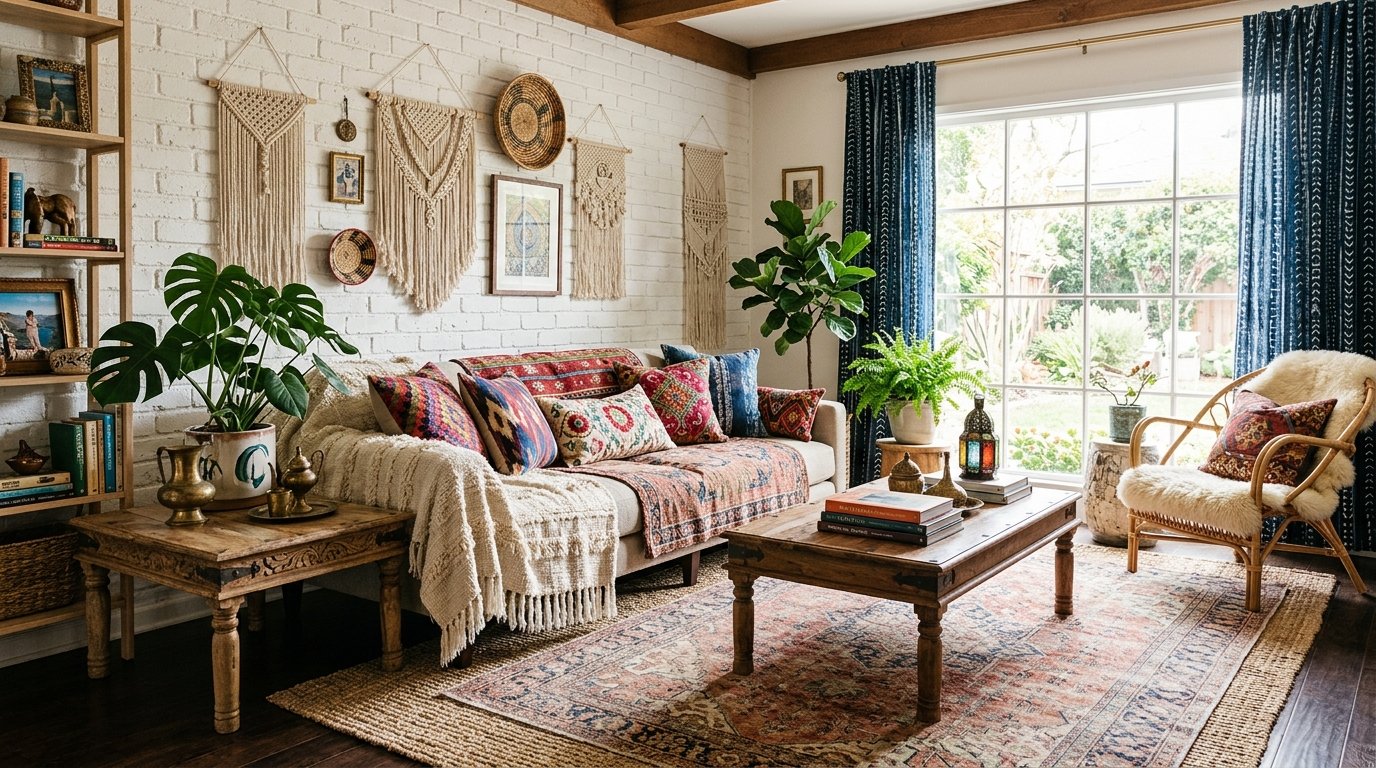
Bohemian style, with its free-spirited ethos and global influences, is more than just a decor trend—it’s a lifestyle statement. It celebrates individuality, comfort, and a rich tapestry of cultural aesthetics. But how do you achieve that effortlessly eclectic look without your space feeling chaotic? The secret lies in mastering the art of combining bohemian patterns textures. This guide will walk you through the nuances of blending different prints, fabrics, and materials to create a harmonious and inviting boho sanctuary in your own home.
Imagine a room where a vibrant Moroccan rug meets a soft, woven macrame wall hanging, and plush velvet pillows are nestled amongst linen throws. This is the magic of bohemian design: a tactile and visual feast that speaks to wanderlust and comfort. Ready to transform your space? Let's dive in.
The Soul of Bohemian Design: A Symphony of Patterns
Patterns are the heartbeat of bohemian style, injecting personality, history, and a sense of curated collection into any room. From intricate geometrics to flowing florals, understanding how to layer these visual elements is crucial.
Global Inspirations: Where Boho Patterns Come From
Boho patterns draw heavily from diverse cultures across the globe. Think of:
- Moroccan Geometrics: Often seen in tiles, rugs, and poufs, these intricate, symmetrical designs add an exotic touch.
- Indian Block Prints: Paisley, floral, and animal motifs in earthy or jewel tones, commonly found on textiles like bedspreads and curtains.
- Turkish Kilims: Bold, geometric, and often brightly colored flat-woven rugs that bring warmth and character.
- Tribal & Ethnic Motifs: Patterns inspired by African, Native American, or South American artistry, often featuring earthy tones and strong lines.
- Mandalas & Henna Designs: Intricate circular patterns symbolizing the cosmos, frequently used in tapestries and decorative accents.
The beauty lies in combining these different cultural expressions, creating a story within your decor.
Rule of Three (or More!): Mixing Pattern Scales
When mixing patterns, think about their scale—small, medium, and large. A common design principle is to use at least three different scales to prevent any single pattern from overwhelming the others, or from everything blending into a muddled mess.
- Large Scale: Your foundational piece, like a large area rug with a bold, eye-catching design. This sets the tone for the room.
- Medium Scale: Introduce patterns of a medium size, perhaps on curtains, throws, or larger throw pillows. These should complement, not compete with, your large pattern.
- Small Scale: Use smaller, more intricate patterns on accent pillows, decorative objects, or smaller textile items. These add detail and a sense of depth.
For example, a large kilim rug (large scale) could be paired with a block-print throw (medium scale) and several small, intricately embroidered cushions (small scale) on a sofa. The goal is visual interest and movement, not a static display.
Color Harmony: Unifying Your Pattern Play
While bohemian style embraces a vibrant spectrum, a cohesive color palette is what truly brings disparate patterns together. You don't need everything to match perfectly, but aim for a common thread.
- Earthy Neutrals: Begin with a base of warm neutrals—think creams, beiges, terracottas, and olive greens. These provide a calming backdrop for more intense patterns.
- Pops of Color: Introduce rich jewel tones (emerald, sapphire, ruby) or warm spices (saffron, cinnamon) through your patterned textiles. Ensure these colors appear in at least two or three different patterns to create visual continuity.
- Muted Tones: Alternatively, you can create a subdued boho look using patterns in dusty pinks, pale blues, and soft grays, allowing the patterns themselves to be the main focal point rather than overt color.
Before committing, try arranging your patterned items together. Do they feel harmonious? Or does one pattern or color clash too much? Use ryy.com's free AI design tools to visualize how different patterns and color schemes would look in your actual room, helping you find the perfect balance!
Texture Talk: Adding Depth and Warmth to Your Boho Space
If patterns are the visual melody, textures are the tactile harmony. They add warmth, comfort, and a sense of inviting luxury to a bohemian space, creating a multi-sensory experience.
From Jute to Velvet: A Tactile Feast
Bohemian design celebrates natural, raw, and comforting materials. Incorporating a variety of textures is key to achieving that layered, lived-in feel.
- Rough & Rustic: Jute, sisal, rattan, wicker, linen, and raw wood bring an organic, grounding element. Think woven rugs, baskets, and furniture.
- Soft & Plush: Faux fur, sheepskin, velvet, chunky knits, and cotton tassels add unparalleled comfort and luxury. Perfect for throws, pillows, and ottomans.
- Handcrafted & Artisanal: Macrame, hand-knotted wool, ceramic, and terracotta items showcase human artistry and unique character.
- Metallic & Sheen: A touch of brass, copper, or hammered silver (in lanterns, trays, or decorative objects) can add a subtle sparkle and sophistication without losing the boho charm.
Each material has a distinct tactile and visual weight. Contrast a smooth, cool ceramic vase with a warm, fuzzy sheepskin rug to create dynamic interest.
Layering for Lushness: Building Dimension
Layering textures is where the magic truly happens in bohemian decor. It creates a sense of abundance and coziness that is central to the style.
- Rug on Rug: A popular boho technique is to layer a smaller, plush rug (like a sheepskin or a shaggy flokati) over a larger, flat-weave rug (like jute or a kilim). This instantly adds warmth and depth.
- Pillow Play: Combine pillows of different materials—a chunky knit, a velvet, an embroidered cotton, a linen—on a sofa or bed. Don't worry about perfect symmetry; embrace an artfully arranged pile.
- Throw Galore: Drape throws of varying textures over armchairs, sofas, and beds. A faux fur throw next to a knitted blanket and a lightweight cotton throw creates an inviting tableau.
- Furniture Mix: Don't feel obliged to stick to one furniture material. A rattan armchair beside a velvet sofa, complemented by a wooden coffee table, exemplifies the eclectic textural blend.
Natural Elements: Grounding Your Design
The bohemian aesthetic is deeply connected to nature. Incorporating natural elements not only adds texture but also a sense of tranquility and life to your space.
- Greenery: Abundant houseplants, from large fiddle leaf figs to trailing Pothos, add organic texture, purify the air, and bring a vibrant splash of color.
- Wood & Stone: Unfinished wood furniture, stone planters, or even found natural objects like driftwood or geodes ground the space and connect it to the outdoors.
- Sunlight: Sheer, flowing curtains allow natural light to filter in, enhancing the textures and creating a soft, ethereal glow.
Mastering the Mix: Practical Strategies for Bohemian Patterns Textures
Now that we’ve explored the individual components, let’s bring it all together with actionable strategies for blending patterns and textures seamlessly.
Start with a Foundation Piece
Begin your design journey with one significant item that you love. This could be a large patterned rug, an intricately carved wooden console, or a unique piece of artwork. Let this piece inspire the rest of your selections. Its colors, motifs, or materials will guide your choices for complementary patterns and textures.
Balance is Key, Not Symmetry
Unlike traditional design, bohemian style thrives on an artful imbalance. You’re not aiming for mirror images, but rather a visually pleasing distribution of weight and interest. Place a bold pattern on one side of the room, and counterbalance it with a collection of textured items on the other. Mix tall, slender plants with low, wide baskets. The goal is dynamic equilibrium, not perfect order.
Introduce Solids and Neutrals
Amidst the riot of patterns and textures, solid colors and neutral zones are essential. They act as visual "breathing room," allowing the eye to rest and preventing the space from feeling cluttered or overwhelming. A plain linen sofa, a white painted wall, or a simple wooden floor can be the perfect canvas against which your bohemian patterns and textures truly pop. These neutral anchors unify the space and make your eclectic choices feel intentional.
Don't Forget the Walls and Windows
Walls and windows offer prime real estate for pattern and texture play. Instead of just paint, consider a woven wall hanging, a macrame piece, or a tapestry as a focal point. Sheer, breezy curtains made of linen or cotton add soft texture and diffuse light beautifully, enhancing the cozy atmosphere. For a bold statement, a small accent wall with patterned wallpaper can introduce an unexpected layer of design.
Practical Tips for Your Boho Pattern & Texture Journey:
- Start Small: If you're new to mixing, begin with low-commitment items like throw pillows, blankets, or small decor pieces. It's easier to swap these out than a large rug.
- Use Your Senses: Touch the fabrics, feel the wood, imagine the comfort. Bohemian style is about creating an immersive environment.
- Embrace Imperfection: Handcrafted items often have irregularities—these are features, not flaws, adding to the authentic, well-traveled vibe.
- Gather Inspiration: Collect images from magazines, Pinterest, and design blogs. Notice how experts combine different elements. Better yet, upload photos of your own room to ryy.com's AI design tools to see instant bohemian makeovers and experiment with countless combinations of bohemian patterns textures.
- Experiment Fearlessly: There are no hard and fast rules in bohemian design. Trust your instincts and play around until it feels right to you.
- Step Back and Assess: Periodically take a few steps back from your design to view it holistically. Does it feel balanced? Inviting? Does it reflect your personality?
Conclusion: Your Unique Bohemian Story Awaits
Mastering the art of mixing bohemian patterns textures is about more than just decorating; it's about telling a story. Your story. It's about curating a space that feels authentic, lived-in, and deeply personal. By understanding how to harmonize diverse patterns and layer a rich array of textures, you can transform any room into a cozy, vibrant, and utterly unique bohemian retreat.
Ready to unleash your inner boho designer? Head over to ryy.com's free AI design tools today! Simply upload a photo of your room, and our intelligent platform will help you visualize endless possibilities. Experiment with different patterns for your rug, see how various textured pillows would look on your sofa, or even imagine new wall hangings – all before making a single purchase. Bring your bohemian dreams to life with ryy.com!