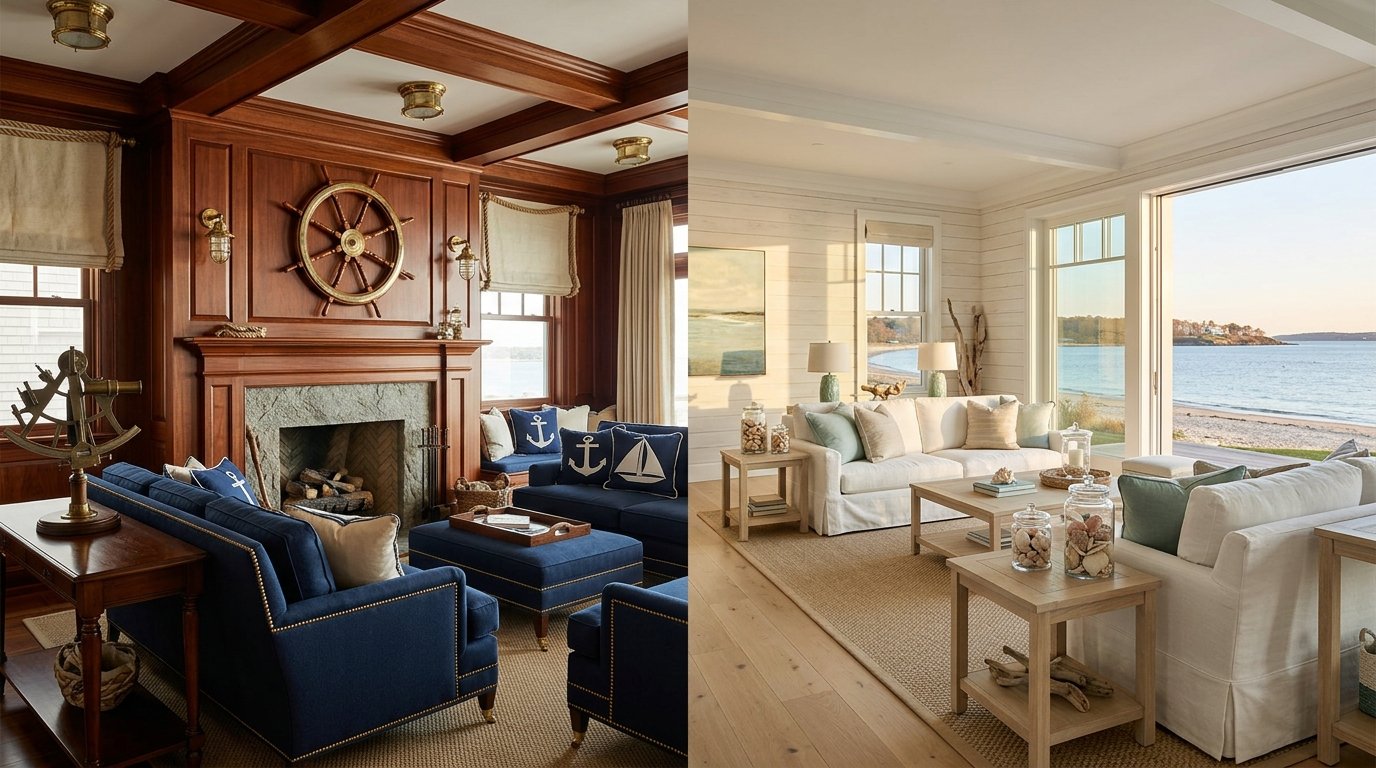
Ever found yourself scrolling through stunning beach house interiors, thinking, "Is this coastal or nautical?" You're not alone! These two beloved design styles, while sharing a common love for the ocean, are distinct in their inspirations, aesthetics, and overall feel. While both evoke images of sea and sand, understanding the nuances between nautical coastal design is key to achieving the specific ambiance you desire in your home. Get ready to dive deep into the differences, unraveling the unique characteristics that define each and discovering how ryy.com's AI design tools can help you perfect your chosen look.
Nautical Design: The Timeless Allure of Life at Sea
Nautical design is rooted in the rich history and romanticism of seafaring. It's less about lounging on the beach and more about the adventure, structure, and tradition associated with ships, sailors, and maritime exploration. Think grand vessels, stern captains, and the disciplined life aboard a ship. This style pays homage to classic sailboats, naval uniforms, and the functional beauty of life on the high seas.
Core Inspirations & Philosophy
- Maritime History: Drawing heavily from vintage ships, the Royal Navy, old maps, and explorers' journeys.
- Functionality & Form: Emphasizes practical elements found on a boat, transformed into stylish decor.
- Order & Discipline: Reflects the structured environment of a ship, with clean lines and thoughtful placement.
Key Elements of Nautical Design
Color Palette: Bold & Classic
The quintessential nautical palette is unmistakable. It's crisp, clean, and classic, dominated by:
- Navy Blue: The undisputed king, representing the deep ocean and naval uniforms.
- Crisp White: Evokes sails, clouds, and clean deck surfaces, providing a sharp contrast.
- Bright Red: Used sparingly for accents, reminiscent of signal flags, buoys, and life preservers.
- Touches of Gold/Brass: Adds a touch of luxury and history, like polished ship fittings.
- Occasional Forest Green: Sometimes seen in older maritime maps or specific flags.
Materials & Textures: Durable & Authentic
Nautical design favors materials that are robust, long-lasting, and authentic to a ship's environment:
- Dark Woods: Polished mahogany, teak, and walnut are common for furniture, paneling, and flooring, echoing ship decks and cabins.
- Brass & Copper: Used for hardware, lighting fixtures, porthole mirrors, and decorative accents.
- Rope & Jute: Natural fibers appear in decorative knots, lamp bases, or wrapped around balusters, adding a tactile, functional touch.
- Canvas: Durable fabrics for upholstery or drapes, reminiscent of ship sails.
- Glass: Often clear or in classic bottle shapes, sometimes with a subtle green tint.
Iconic Decor & Motifs: Symbols of the Sea
This is where nautical design truly tells its story:
- Anchors & Ship Wheels: Instantly recognizable symbols, often rendered in brass or dark wood.
- Oars & Paddles: Hung on walls, sometimes painted with stripes or crests.
- Model Ships & Globes: Showcase a love for navigation and exploration.
- Navigation Tools: Compasses, sextants, telescopes, and antique maps.
- Signal Flags: Used as wall art or decorative banners, adding color and a coded message.
- Stripes: Classic navy and white or red and white stripes on textiles, pillows, and rugs.
- Porthole Mirrors: Recreate the feel of a ship's window.
- Barometers & Clocks: Functional yet decorative pieces, often in brass casings.
Overall Feel & Atmosphere
A nautical space feels distinguished, structured, and often a bit masculine. It speaks of adventure, history, and a respect for the sea's power. It’s polished, precise, and carries an air of classic elegance rather than casual relaxation.
Coastal Design: The Serene Embrace of the Shore
Coastal design, by contrast, is all about the tranquil, sun-drenched experience of living by the beach or ocean. It evokes images of gentle waves, soft sand, weathered boardwalks, and homes designed to welcome natural light and ocean breezes. It's a celebration of the natural beauty and relaxed pace of seaside life.
Core Inspirations & Philosophy
- Beachfront Living: Inspired by the natural elements of the shore – sand, sea, sky, and dunes.
- Light & Airiness: Prioritizes open spaces, abundant natural light, and a breezy, unencumbered feel.
- Relaxation & Comfort: Focuses on creating a serene, comfortable, and inviting environment.
Key Elements of Coastal Design
Color Palette: Light & Breezy
The coastal palette is soft, inviting, and reflects the natural hues of the beach environment:
- Whites & Creams: Dominant for walls, large furniture pieces, and linens, creating a bright, airy foundation.
- Soft Blues: From pale aqua and sky blue to deeper ocean blues, mimicking the water and sky.
- Sandy Beiges & Tans: Representing the beach itself, used for natural textures and grounding elements.
- Seafoam Greens: Subtle hints of green, reminiscent of shallow waters and sea glass.
- Coral & Peach: Used as delicate accents, reflecting marine life or sunsets.
Materials & Textures: Natural & Weathered
Coastal design embraces organic, breathable materials that feel comfortable and connected to nature:
- Light Woods: Whitewashed, distressed, or natural light-toned woods like oak, pine, or driftwood for furniture, flooring, and decorative pieces.
- Wicker & Rattan: Common for seating, baskets, and decorative items, adding texture and a relaxed vibe.
- Linen & Cotton: Breathable, comfortable fabrics for upholstery, curtains, and bedding, often in light colors.
- Jute & Sisal: Used for rugs, natural flooring, and decorative accents, bringing in earthy textures.
- Glass: Clear glass, often repurposed as vases or lamps, sometimes sea-glass green or blue.
- Shells & Pebbles: Integrated directly into decor, showcasing natural findings.
Iconic Decor & Motifs: Echoes of the Shore
Coastal decor is all about bringing the beach's treasures indoors:
- Seashells & Starfish: Arranged in bowls, incorporated into artwork, or simply placed as accents.
- Coral: Real or faux coral pieces add organic texture and pops of color.
- Driftwood: Used as sculptural elements, in lamp bases, or incorporated into furniture.
- Sea Glass: Collected and displayed, reflecting muted ocean hues.
- Ocean-Inspired Art: Paintings or photographs of seascapes, waves, and marine life.
- Lightweight Curtains: Sheer or linen drapes that billow with a breeze.
- Lanterns: Often in white or natural finishes, for soft lighting.
- Botanical Elements: Palm fronds, natural grasses, or light floral arrangements.
Overall Feel & Atmosphere
A coastal space feels airy, calm, and immensely inviting. It promotes relaxation and a connection to nature, bathed in soft light and gentle textures. It’s a retreat, a breath of fresh air, designed for comfort and peace.
Nautical vs Coastal Design: The Key Distinctions
Now that we've explored each style individually, let's clearly outline the fundamental differences between nautical coastal design approaches.
Core Inspiration & Storytelling
- Nautical: Tells a story of adventure, history, and life at sea. It's about the vessel and the journey.
- Coastal: Tells a story of relaxation, natural beauty, and the serene experience of being by the shore. It's about the destination.
Formality vs. Casualness
- Nautical: Tends to be more structured, traditional, and can feel more formal or stately, akin to a captain's cabin or a yacht club.
- Coastal: Is inherently relaxed, casual, and laid-back, mirroring the ease of a beach vacation home.
Color Palette Intensity
- Nautical: Features bolder, deeper colors like navy blue and crisp red, with stark white contrasts.
- Coastal: Utilizes a softer, lighter palette of sky blues, sandy beiges, and an abundance of white.
Material Preferences
- Nautical: Prefers dark, polished woods, brass, and industrial elements.
- Coastal: Favors light, often weathered woods, natural fibers (rattan, wicker), and organic textures.
Decor Motifs & Focus
- Nautical: Focuses on instruments, maps, anchors, ship wheels, and historical maritime objects.
- Coastal: Showcases natural elements like shells, coral, driftwood, and items found washed ashore.
Choosing Your Style: Practical Tips for Homeowners
Deciding between nautical and coastal design depends on the atmosphere you want to create and your personal taste. Here are some tips to help you integrate your preferred style seamlessly:
1. Assess Your Home's Architecture
- Traditional/Historic Homes: A nautical theme often complements older homes with classic features, offering a sophisticated, timeless look.
- Modern/Open-Concept Homes: Coastal design typically thrives in spaces with abundant natural light and open layouts, enhancing their airy feel.
2. Consider Your Personal Preference
- Do you feel drawn to the romance of exploration and structured elegance? Lean nautical.
- Do you crave the tranquility of the beach and a relaxed, breezy environment? Lean coastal.
3. Start Small with Accents
You don't need to overhaul everything at once. Begin with smaller decor items to test the waters:
- Nautical: Add navy and white striped throw pillows, a brass-framed mirror, or a model ship on a shelf.
- Coastal: Introduce a vase filled with sea glass, a linen throw, or artwork depicting a serene beach scene.
4. Mix & Match (Carefully)
While distinct, these styles can occasionally borrow from each other, but do so with intention. A light coastal room might have a single subtle nautical compass as an accent, or a nautical room could incorporate a touch of natural jute for texture. The key is to let one style dominate and the other provide subtle complementary details, maintaining overall coherence.
5. Leverage ryy.com's AI Design Tools for Visualization
Unsure which direction to take? This is where ryy.com becomes your secret weapon. Our free AI design tools allow you to:
- Visualize Design Ideas: Upload a photo of your room and see how different nautical or coastal elements, color palettes, and furniture arrangements would look. Experiment with a deep navy wall for a nautical touch or a whitewashed floor for a coastal feel.
- Generate Mood Boards: Create instant mood boards inspired by specific coastal beaches or historic ship cabins, helping you refine your vision and ensure all elements align with your chosen aesthetic.
- Discover Furniture & Decor: Our AI can suggest specific items – be it a brass porthole mirror for a nautical theme or a rattan chair for a coastal haven – that fit perfectly within your desired style.
Bringing Your Seashore Vision to Life with ryy.com
Whether you're drawn to the structured elegance of a ship's cabin or the relaxed serenity of a beach house, understanding the distinction between nautical coastal design is the first step toward creating your dream space. Both styles offer unique ways to celebrate the beauty of the ocean, but with vastly different approaches to color, texture, and decor.
No longer do you need to guess or meticulously plan every detail alone. With ryy.com's intuitive and powerful AI design tools, you can explore countless variations of both nautical and coastal styles. Visualize a light, airy coastal living room with whitewashed furniture, or imagine a sophisticated nautical study complete with dark wood and brass accents – all from the comfort of your home and without any cost.
Ready to transform your space into a captivating ode to the ocean? Visit ryy.com today and start designing for free. Let our AI bring your nautical or coastal dreams to life!