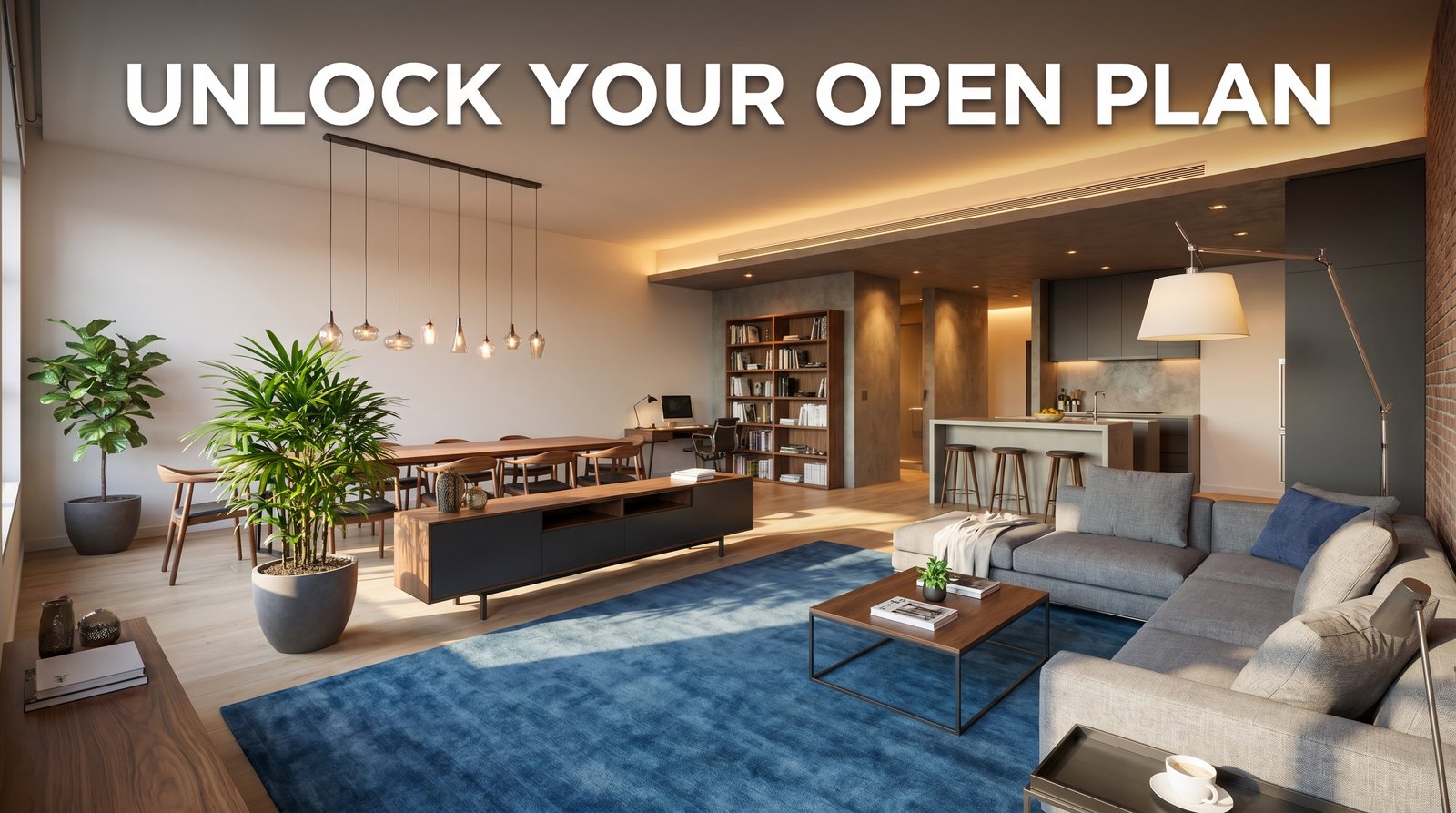
The allure of an open plan living space is undeniable. Flooded with natural light, offering expansive views, and fostering a sense of togetherness, it's a popular layout for modern homes. However, the very lack of walls that makes these spaces so appealing can also present a challenge: how do you create distinct functional areas without losing the flow? The secret lies in mastering the art of how to define zones without walls. With smart design choices, you can effectively zone your space, creating cozy, purposeful nooks within a larger area.
At ryy.com, we believe good design should be accessible to everyone. Our AI design tools can help you visualize how different furniture layouts, room dividers, and color schemes can transform your open plan living area into a beautifully segmented, highly functional home. Let's explore how to achieve this harmonious balance.
The Allure and Challenge of Open Plan Living
Why We Love Open Plans
Open plan layouts are celebrated for their ability to promote social interaction, especially in the kitchen, dining, and living areas. They make homes feel larger, brighter, and more modern. For families, an open design means parents can cook while keeping an eye on children playing in the living room. For entertainers, it facilitates seamless transitions between cooking, dining, and lounging, ensuring hosts are always part of the action.
Common Pitfalls and How to Avoid Them
Despite the many benefits, without careful planning, an open plan can feel cavernous, cluttered, or lack intimacy. Noise can carry, and a clear distinction between activities can be lost. This is where defining zones becomes crucial. Without physical walls, you need visual and functional cues to delineate areas for cooking, dining, relaxing, or working. The goal is to retain the expansive feeling while injecting purpose and coziness into each section.
Clever Strategies to Define Zones in Your Open Plan Living Space
When thinking about your open plan living area, consider each "zone" as its own mini-room with a specific function. Here's how to create those boundaries without reaching for a sledgehammer.
Furniture as Functional Barriers
Furniture is perhaps the most intuitive and effective tool for carving out distinct areas. It naturally acts as a soft barrier, guiding the eye and traffic flow.
- Sofas and Sectionals: Position a sofa with its back to another area (e.g., facing a TV or fireplace) to create an immediate living room zone. A sectional sofa, in particular, can clearly delineate a seating area from a dining or kitchen space.
- Bookshelves and Consoles: A tall, open-back bookshelf can serve as an excellent room divider, providing both storage and a visual separation. Similarly, a long console table placed behind a sofa can define the living room from an entryway or dining area, offering a convenient surface for decor or lighting.
- Area Rugs: This is a powerful, yet simple, way to zone your space. An appropriately sized area rug anchors a furniture grouping, visually defining a living room or dining area. Choose rugs that complement each other but also have distinct personalities to differentiate zones.
- Accent Chairs and Ottomans: A pair of accent chairs with a small table can create a conversational nook, subtly separated from the main living area.
The Power of Lighting and Color
Lighting and color are often underestimated in their ability to define spaces, but they are incredibly effective for zone demarcation.
- Layered Lighting: Use different types of lighting for each zone. A dramatic pendant light over a dining table instantly marks it as a distinct area. Floor lamps and table lamps create a cozy ambiance in a living room, while task lighting is essential in a kitchen. Dimmers are your best friend, allowing you to adjust the mood and highlight different zones at various times.
- Color Palettes: While maintaining an overall cohesive look, you can subtly shift color palettes to differentiate zones. For instance, a slightly darker or richer hue on an accent wall in the dining area can distinguish it from a lighter, airier living room. Or, use varying shades of the same color family to create subtle transitions.
- Paint Treatments: Consider using paint to create an illusion of separation. A half-wall paint treatment, a color block, or even a different finish (matte vs. satin) can define an area without a physical wall.
Textures, Rugs, and Accessories
Beyond the major furniture pieces, smaller elements play a huge role in adding character and delineating zones.
- Distinct Area Rugs: As mentioned, rugs are phenomenal for creating a visual boundary. Choose different styles or colors for each zone to create a sense of individuality. Ensure the rug is large enough to encompass most, if not all, of the furniture within that zone.
- Curated Accessories: Use accessories relevant to each zone's function. In a reading nook, stack books and place a cozy throw. In a dining area, a beautiful centerpiece or unique placemats reinforce its purpose.
- Indoor Plants: Large indoor plants or even a cluster of smaller ones can act as soft, organic room dividers, adding life and texture while gently separating spaces.
Strategic Room Dividers: Beyond the Obvious
Sometimes you need a more explicit visual break, but still want to maintain an open feel. Modern room dividers offer stylish and flexible solutions.
Screens and Panels
Decorative screens come in countless designs, from intricately carved wood to sleek metal or fabric panels. They offer privacy when needed and can be easily moved or folded away. Sliding or pivot panel systems can also provide a more permanent, yet flexible, partition that still allows light and connection when open.
Open Shelving Units
Unlike solid walls, open shelving units allow light to pass through while providing significant visual separation and storage. They are perfect for displaying books, plants, and decorative objects. Make sure to style both sides of the unit beautifully, as they will be visible from different zones.
Curtains and Draping
Fabric is a wonderfully soft and versatile material for defining zones. A ceiling-mounted track system can allow you to draw curtains across a space to create a temporary "room within a room" – perfect for creating a guest sleeping area, a home office, or simply a cozier living space in the evenings. Sheer fabrics can offer a subtle separation while still allowing light flow.
Practical Tips for Zoning Your Open Space
Consider Traffic Flow
Before placing any furniture or room dividers, consider how people will move through your space. Ensure clear pathways are maintained between zones to avoid bottlenecks and make the space feel intuitive to navigate.
Maintain Cohesion
While you're defining zones, it's crucial that the entire open plan living area still feels like a unified home. Use a consistent color palette, recurring textures, or a similar design style across all zones to tie them together. Think of it as different chapters of the same book.
Utilize Vertical Space
Don't just think horizontally. Tall plants, floor-to-ceiling shelving, or even a striking piece of vertical art can help define the height of a zone and draw the eye upwards, making the area feel grand yet contained.
Don't Forget the Details
Small details can make a big difference. Think about the subtle scent diffusers for each zone, distinct throw pillows, or even different types of music that might be played to suit the mood of an area. These sensory cues reinforce the boundaries you've created.
Design Your Perfect Open Plan Living Space with ryy.com
Transforming your open plan living area into a beautifully zoned, functional, and stylish space doesn't have to be overwhelming. By thoughtfully using furniture, lighting, color, and strategic room dividers, you can create distinct areas that enhance both the aesthetics and usability of your home.
Ready to visualize your ideas? Head over to ryy.com today and try our free AI design tools. Upload a photo of your space and experiment with different layouts, furniture placements, and color schemes to see how you can effectively define zones without walls in your own open plan living environment. Let ryy.com help you bring your dream home to life!