Retro Kitchen Design: Capturing the Iconic Charm of the 1950s and 60s
Step into a time capsule and imagine a kitchen where vibrant colors meet classic functionality. The allure of the 1950s and 60s kitchen is undeniable, bringing with it a sense of nostalgia, comfort, and timeless style. If you're dreaming of a culinary space that makes a statement and tells a story, embracing retro kitchen design might be your perfect recipe. This guide will walk you through the distinctive elements of these beloved decades, offering inspiration and practical tips to infuse your home with vintage flair, all with a little help from ryy.com's innovative AI design tools.
The Allure of 1950s Kitchens: Mid-Century Modern Meets Post-War Optimism
The 1950s kitchen was a symbol of progress, convenience, and the American dream. As post-war prosperity grew, so did the desire for cheerful, efficient homes. Kitchens became the heart of the home, designed not just for cooking but for family gatherings and entertaining. The style was clean, optimistic, and often infused with playful elements.
Iconic Color Palettes: Pretty Pastels and Primary Pops
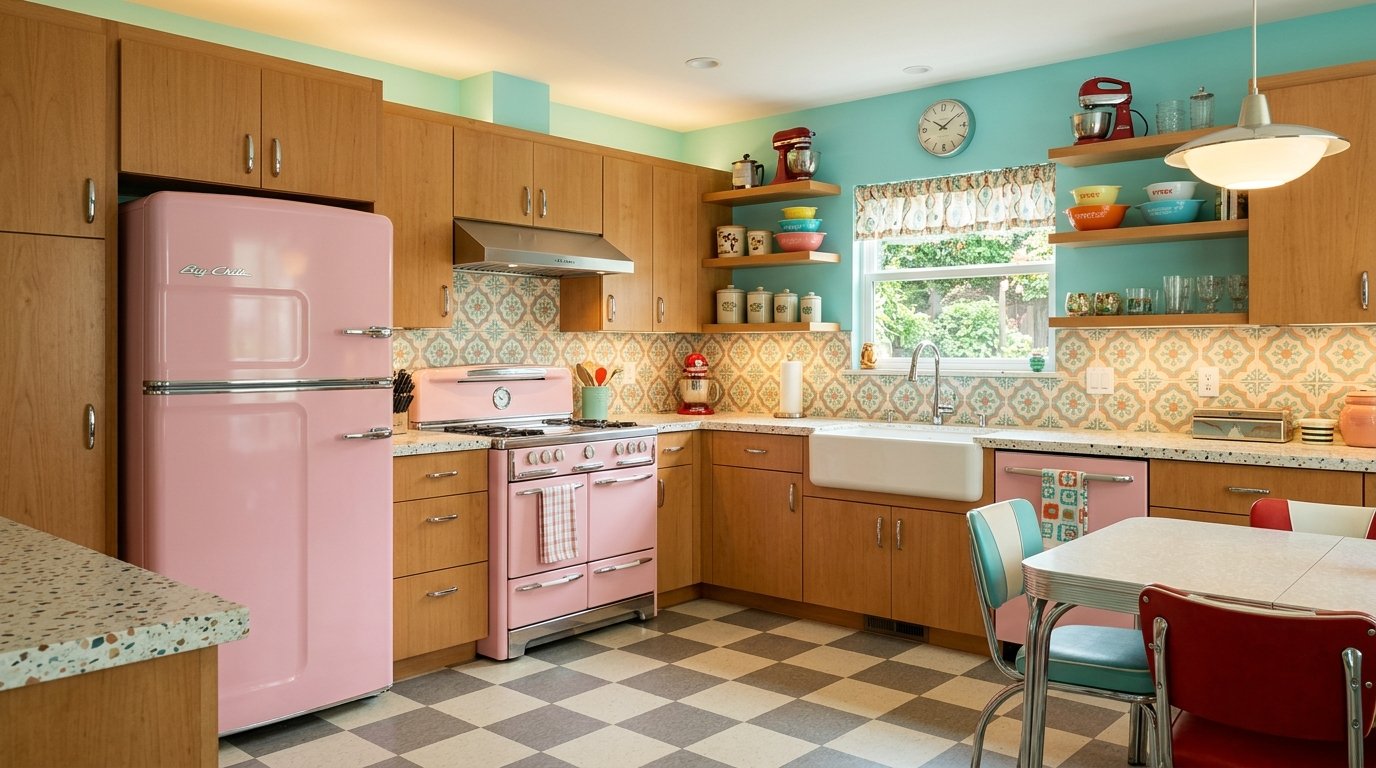
The 1950s were defined by a charming blend of soft pastels and vibrant primary colors. Think mint green, baby blue, bubblegum pink, and sunny yellow, often contrasted with bold reds and crisp whites. These colors were used on cabinets, appliances, and accessories, creating a cheerful and inviting atmosphere. A popular trend was to pair pastel cabinets with a contrasting countertop or a brightly colored kitchen island. For instance, a soft blue cabinetry set against a red and white checkered floor was a common and beloved sight.
Signature Appliances and Features: Chrome, Curves, and Comfort
Appliances in the 50s were not just functional; they were design statements. Refrigerators, stoves, and dishwashers often featured rounded edges, shiny chrome handles, and a robust, substantial feel. Iconic brands like Smeg, Big Chill, or even original vintage pieces are sought after today for their aesthetic appeal. Built-in features like breakfast nooks with banquette seating, laminate countertops with metal edging, and metal or wood cabinets with distinctive handles were also hallmarks of the era. The emphasis was on durability and ease of cleaning, often incorporating materials like stainless steel and Formica.
Flooring and Surfaces: Checkered Patterns and Durable Finishes
Flooring played a significant role in defining the 50s kitchen aesthetic. The classic black and white (or red and white) checkered linoleum floor is perhaps the most iconic, instantly recognizable and enduringly popular. Beyond linoleum, patterned vinyl tiles in geometric shapes or speckled designs were also common, offering both durability and a pop of visual interest. Countertops were typically made of laminate, often in vibrant colors or speckled patterns, trimmed with shiny chrome or aluminum strips, adding to the era's signature gleam.
Groovy 1960s Kitchen Design Elements: A Shift Towards Modernity
As the 1960s rolled in, kitchen design evolved, reflecting a growing sense of liberation and a move towards more daring aesthetics. While still retaining a sense of mid-century modern influence, the 60s introduced bolder colors, new materials, and a more open, streamlined approach to space. This evolution of retro kitchen design embraced a different kind of fun.
Bold Colors and Patterns: Earth Tones and Geometric Flair
The 1960s saw a departure from the soft pastels of the previous decade, ushering in a palette of richer, often earthier tones alongside vibrant, psychedelic hues. Avocado green, harvest gold, burnt orange, and deep browns became incredibly popular, reflecting a connection to nature and a more organic, yet bold, aesthetic. Patterns became more abstract and geometric, often appearing on wallpaper, fabrics, and even appliance fronts. Think floral patterns, psychedelic swirls, and large-scale geometric designs that brought a dynamic energy to the kitchen space.
Mid-Century Modern Influence: Sleek Lines and Wood Accents
The clean lines and functional beauty of Mid-Century Modern design continued to influence kitchens in the 60s. Cabinets often featured flat-panel doors, sometimes with integrated pulls, made from warmer wood tones like teak or walnut, or given a high-gloss lacquer finish. Open shelving became more prevalent, showcasing decorative dishes or cookware. The emphasis was on creating a fluid, uncluttered space that felt both sophisticated and inviting. Furniture, like dining chairs, often sported tapered legs and minimalist forms.
Tech and Gadgets: Early Integrations and Convenience
The 1960s brought a wave of new kitchen technologies designed to make life easier. Dishwashers became more common, and built-in ovens and cooktops started to replace freestanding ranges, creating a more integrated and custom look. Microwaves, though still a luxury, began to appear in some homes towards the end of the decade. The focus was on convenience and efficiency, with an increasing array of specialized gadgets and small appliances becoming available to the home cook.
Key Components of an Authentic Retro Kitchen Today
To successfully bring retro charm into a modern home, it's about carefully curating elements that evoke the era without sacrificing contemporary comfort and functionality. The beauty of retro kitchen design is its versatility, allowing you to lean into either the 50s or 60s, or even blend elements from both.
Vintage-Style Appliances: The Heart of Your Retro Kitchen
No retro kitchen is complete without appliances that look the part. Brands like SMEG, Big Chill, and Elmira Stove Works specialize in producing refrigerators, ranges, and dishwashers with the authentic look of the 50s or 60s but with modern efficiency and features. These often come in a range of vibrant colors or classic pastels, instantly setting the tone for your space. If a full suite is out of budget, even a single retro-style refrigerator can make a significant impact.
Playful Color Schemes: Making Your Statement
Decide whether you lean more towards the soft, cheerful pastels and primary colors of the 50s or the bolder, earthier, and sometimes psychedelic tones of the 60s. Don't be afraid to experiment with color combinations. For example, a mint green island paired with white cabinetry and a red accent wall can scream 50s diner, while avocado green cabinets with wood paneling might perfectly capture a 60s vibe. Consider using ryy.com's AI design tools to experiment with different color palettes and visualize how they'll look in your specific kitchen layout.
Storage Solutions with Style: Cabinets and Shelving
Metal cabinets, particularly in white or pastel colors, are a quintessential 50s element. For a 60s feel, opt for flat-panel wood cabinets, perhaps with a sleek walnut finish, or vibrant laminate doors. Open shelving is also a fantastic way to display vintage dishware, colorful glassware, or retro kitchen gadgets, adding to the overall aesthetic without feeling cluttered.
Lighting and Decor: The Finishing Touches
Lighting fixtures from the mid-century era often featured Sputnik designs, geometric shapes, or simple dome pendants, often made from chrome or colored glass. Incorporate kitsch decor like vintage advertising signs, reproduction atomic clocks, chrome diner stools, or quirky salt and pepper shakers. A collection of vintage Pyrex dishes or colorful Tupperware can also serve as both functional storage and decorative accents, tying the entire look together.
Bringing Retro Kitchen Design to Life Today
Modern homes can easily embrace a retro aesthetic without feeling dated. The key is to blend the nostalgic charm with contemporary functionality, ensuring your kitchen is not only beautiful but also practical for today's lifestyle.
Blending Old and New: The Best of Both Worlds
You don't have to commit to a full historical recreation. Blend retro elements with modern conveniences. For instance, install a retro-style refrigerator and range, but pair them with modern, energy-efficient lighting and durable quartz countertops. Use sleek, contemporary flooring but add a vintage-inspired rug. The contrast can be incredibly appealing, creating a unique space that is both classic and current.
DIY Retro Touches: Affordable & Impactful Updates
- Paint Power: Give existing cabinets a fresh coat of pastel paint for a 50s look, or a bold avocado green for a 60s vibe.
- Hardware Hacks: Swap out modern cabinet pulls for chrome, atomic-starburst, or simple round knobs common in the retro era.
- Wallpaper Wonders: Add a feature wall with a vintage-inspired wallpaper pattern – think geometric shapes for the 60s or cheerful floral prints for the 50s.
- Thrift Store Treasures: Hunt for vintage accessories like Pyrex mixing bowls, old advertising signs, classic toasters, or unique serving dishes.
Budget-Friendly Retro: Smart Choices for Style
Creating a retro kitchen doesn't have to break the bank. Focus on high-impact, lower-cost items first. A checkered floor decal can emulate linoleum without the cost of new flooring. Paint existing cabinets rather than replacing them. Seek out reproduction items that capture the look without the vintage price tag. Even a collection of colorful retro small appliances (like a Smeg toaster or kettle) can infuse significant character into an otherwise modern kitchen.
Practical Tips for Your Retro Kitchen Design Project:
- Start Small: If you're hesitant, begin by incorporating retro accessories, dishware, or a single statement piece like a vintage clock or stool.
- Choose an Era: While blending is possible, focusing predominantly on either the 1950s or 1960s can help maintain a cohesive and authentic feel.
- Don't Forget the Backsplash: A classic subway tile in a cheerful color, small square tiles, or even a metallic finish can significantly enhance the retro vibe.
- Consider a Diner Booth: If space allows, a built-in banquette or a standalone diner booth can be the ultimate retro seating solution, perfect for family meals.
- Think About Lighting: Lighting isn't just functional; it's a major decorative element. Look for pendant lights or ceiling fixtures that echo the mid-century style.
Your Dream Retro Kitchen Awaits!
The charm of retro kitchen design lies in its ability to transport us to a simpler, more colorful time, while still offering all the comforts of modern living. Whether you're drawn to the cheerful pastels of the 50s or the bold, earthy tones of the 60s, creating a retro kitchen is a delightful journey into design history.
Ready to visualize your perfect retro kitchen? At ryy.com, our free AI design tools allow you to upload a photo of your current kitchen and experiment with different retro styles, color palettes, and layouts. See how a checkered floor might look, or how avocado green cabinets could transform your space, all before making any commitments. Start Designing Your Retro Kitchen with ryy.com Today!