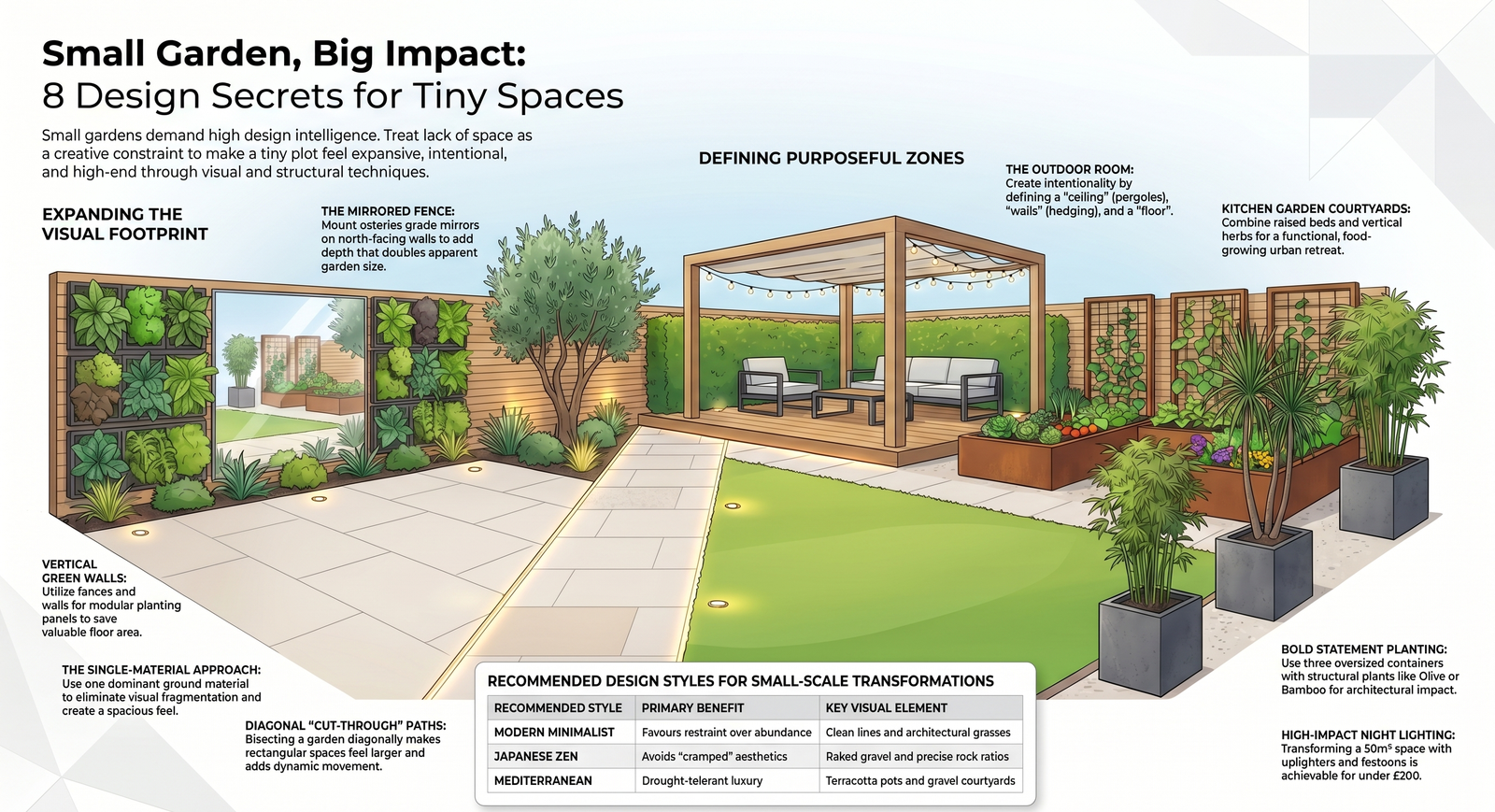
The biggest mistake with small gardens is treating them as a design problem rather than a design constraint. Constraints force creativity. Here are eight approaches that consistently transform tiny outdoor spaces into places people actually want to spend time.
Single-Material Ground Plane
Choose one dominant material—large-format porcelain tiles, gravel, or timber decking—and use it to cover the entire ground. This eliminates visual fragmentation. A small garden with five different paving materials feels chaotic. A small garden with one unified surface feels intentional and spacious.
Vertical Planting
Use walls and fences as growing space. Wall-mounted planters, trellis systems, climbing vines, and hanging baskets move the garden upward instead of outward. A 3m by 10m garden suddenly includes 40+ linear metres of planting surface.
One Statement Tree
A single specimen tree creates instant maturity and structure. A multi-stemmed birch, a Japanese maple, or a flowering cherry gives a small garden a focal point without consuming ground area. It grounds the space and creates height variation naturally.
Strategic Lighting
Outdoor lighting extends the usable season and makes a small space feel sophisticated. Path lights, uplighting for the specimen tree, and softer ambient lighting near seating create layers. The garden feels intentionally designed rather than neglected at dusk.
Built-In Seating
Instead of placing movable furniture, build seating into the garden structure. A bench with storage along one boundary, steps that double as seating—these integrated elements feel permanent and free up precious space.
Boundary Treatment
What surrounds a small garden matters enormously. A weathered fence painted deep charcoal instantly feels different. Add a trellis panel with climbing jasmine or clematis. The boundary stops feeling like a barrier and becomes a designed element.
Water Feature
Even still water adds movement through reflection and attracts wildlife. A small wall-mounted spout into a trough, a shallow bowl fountain, or a tiny wildlife pond transforms the sensory experience. Sound adds another layer.
Restraint on Plant Count
Less is more in small spaces. Choose five to seven key specimens (the tree, three shrubs, three perennials or grasses) and repeat them thoughtfully. Overplanting makes small gardens feel crowded and chaotic. Restraint creates impact.
Test these ideas before committing. Upload your garden photo to RYY and preview how each change actually works in your specific space.