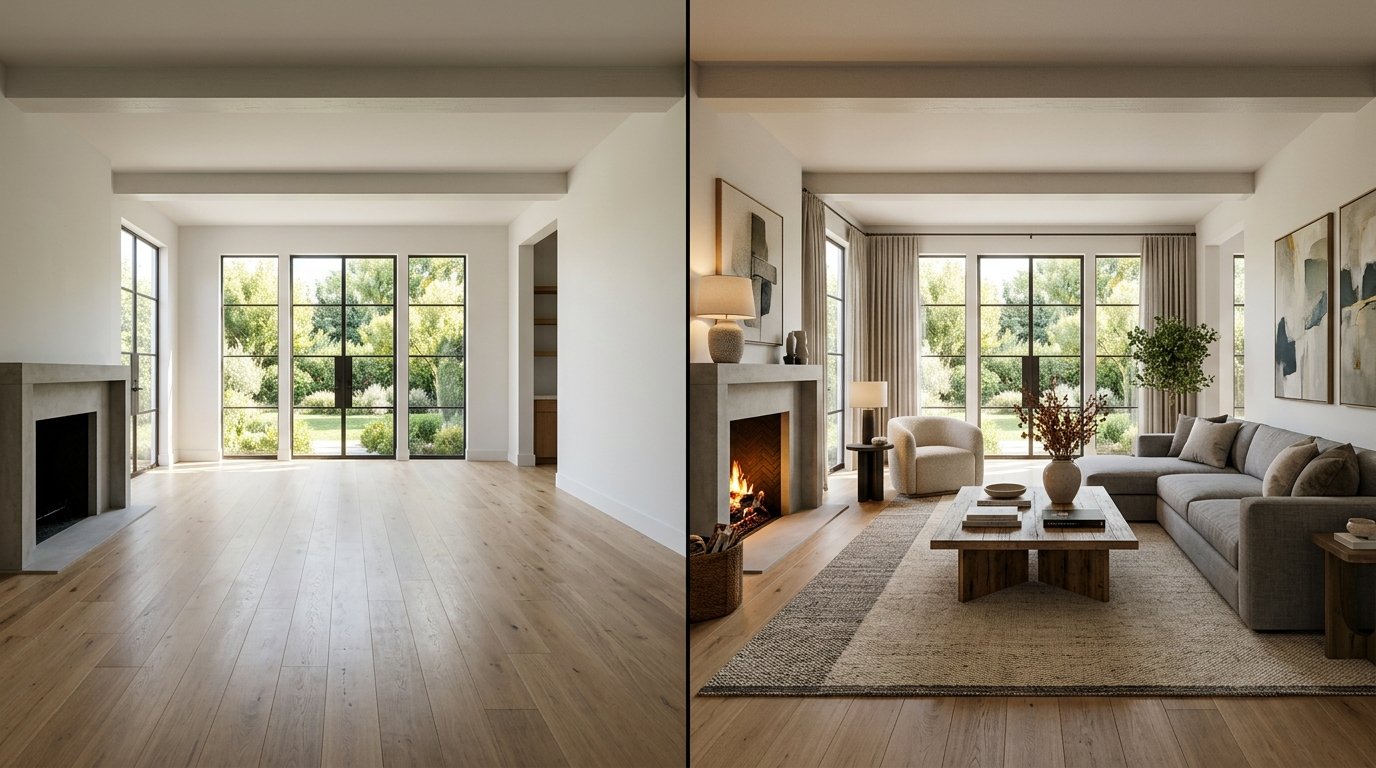
Ever gazed at an empty room – a blank canvas of potential – and felt overwhelmed by the sheer possibilities? Or perhaps you're trying to sell a property and those stark, vacant spaces just aren't capturing buyer imaginations. This is where the magic of virtual staging steps in, offering a glimpse into what could be. The impact of a stunning virtual staging before after comparison is undeniable, transforming sterile boxes into warm, inviting, and functional dream spaces.
At ryy.com, we understand the power of visualization in home design. Our AI-driven tools are revolutionizing how homeowners, sellers, and designers envision interiors, making it easier than ever to bring those empty rooms to life without lifting a single piece of furniture. Let's dive deep into how virtual staging works, its incredible benefits, and how you can harness its power to unlock the full potential of any space.
What is Virtual Staging? More Than Just Digital Furniture
Virtual staging is the process of digitally furnishing and decorating an empty room in a photograph. Instead of physically bringing in furniture, artwork, and accessories, designers use advanced software to add high-quality, realistic 3D models of items into existing images. This creates a compelling visual that helps viewers understand the scale, functionality, and aesthetic potential of a space.
Think of it as an interior design photoshoot, but entirely in the digital realm. The core idea is to make an empty, uninspiring room feel lived-in, stylish, and aspirational. While traditional home staging involves significant time, effort, and expense in renting and moving physical items, virtual staging offers a cost-effective and highly flexible alternative. It’s not just about placing a sofa and a rug; it’s about crafting an entire mood, a story, and an immediate connection with the viewer.
The Technology Behind the Magic
- 3D Modeling & Rendering: Designers use specialized software to create incredibly detailed 3D models of furniture, lighting fixtures, plants, and decor items. These models are then "rendered" with realistic textures, shadows, and lighting to seamlessly blend into the original room photograph.
- AI Integration: Modern virtual staging, especially platforms like ryy.com, leverages artificial intelligence. AI can help with everything from automatically detecting room dimensions and suggesting optimal furniture layouts to generating various design styles based on user preferences. This speeds up the process and offers a broader range of creative solutions.
- Photo Editing & Enhancement: After the 3D elements are placed, skilled photo editors ensure that the virtual furniture integrates perfectly with the room's existing lighting, perspective, and color temperature. This attention to detail is crucial for creating a believable "after" image.
The result is a visually stunning image that often looks indistinguishable from a professionally staged room, providing an instant understanding of the space’s true potential.
The Power of Virtual Staging: Before and After Transformations
The true impact of virtual staging is best understood through its dramatic virtual staging before after comparisons. These transformations don't just add furniture; they inject personality, purpose, and palpable warmth into an otherwise cold and uninviting space. Let's explore some common scenarios where virtual staging shines:
From Empty Shell to Cozy Living Room
- The "Before": Imagine an expansive living room, bare except for perhaps a single, dusty light fixture. The walls are a neutral beige, the floors an unpolished hardwood. It echoes when you speak, feels vast and impersonal, and leaves potential buyers or residents scratching their heads about how to fill it. It's just a space, lacking any sense of home.
- The "After": Through virtual staging, this same room is transformed. A plush sectional sofa anchors one wall, complemented by a stylish coffee table on a geometric-patterned area rug. Floor lamps cast a soft glow, illuminating an art gallery wall with curated prints. A few carefully placed throw pillows, a potted plant in the corner, and a stack of books on a side table complete the picture. Suddenly, the room isn't just large; it's a spacious, inviting haven perfect for relaxing or entertaining. The coldness is replaced by warmth, the emptiness by a compelling narrative of comfort and style.
Transforming a Vacant Bedroom into a Serene Sanctuary
- The "Before": Picture a standard bedroom: four walls, a window, and nothing else. It’s impossible to gauge if a king-sized bed would fit comfortably, or where a dresser might go. The room feels stark, uninviting, and lacks any suggestion of rest or personal space.
- The "After": Virtually, this room blossoms into a tranquil retreat. A luxurious king-sized bed with a padded headboard becomes the focal point, flanked by elegant nightstands topped with reading lamps. Soft, flowing curtains adorn the window, adding privacy and a touch of romance. A comfortable armchair and a small bookshelf create a cozy reading nook, while a long dresser provides ample storage. The colors are soothing, the textures inviting. It's no longer just a room; it's a personal sanctuary, clearly demonstrating its potential for comfort and relaxation.
Defining a Multi-Purpose Flex Space
- The "Before": Many homes have an "extra" room – a den, a loft, or an alcove – that often remains undefined and underutilized. Is it an office? A playroom? A media room? Without context, it's just wasted square footage, perceived as a challenge rather than an asset.
- The "After": Virtual staging can assign clear purpose. The flex space becomes a vibrant home office, complete with a modern desk, ergonomic chair, sleek shelving, and even a branded backdrop for video calls. Or perhaps it transforms into a children's play area with colorful rugs, toy storage, and child-friendly furniture. Another option: a home gym with virtual equipment, mirrors, and motivational artwork. The "after" image provides clarity and inspiration, showcasing how versatile the space truly is and allowing potential occupants to immediately envision themselves using it.
These examples highlight how virtual staging breathes life into properties, bridging the gap between an empty shell and a fully realized vision. It's about demonstrating potential, inspiring emotion, and ultimately, accelerating decision-making for buyers, renters, or even homeowners planning a redesign.
Who Benefits Most from Virtual Staging?
While often associated with real estate, the applications of virtual staging extend far beyond just selling homes. Many individuals and professionals can leverage this technology to their advantage.
Homeowners & DIY Enthusiasts
Planning a renovation or just want to redecorate? Virtual staging allows you to "try before you buy." You can experiment with different furniture styles, color palettes, and layouts without the commitment of purchasing or moving physical items. It's perfect for:
- Visualizing Renovations: See what new flooring, paint, or built-ins would look like before construction begins.
- Redecorating: Experiment with new furniture sets, decor themes, or room arrangements.
- Understanding Scale: Ensure furniture pieces will fit proportionally within your existing space.
- Renting Out: Present your vacant rental property in its best light to attract tenants quickly.
With ryy.com's free AI design tools, you can upload photos of your empty rooms and virtually stage them yourself, exploring countless design possibilities effortlessly.
Real Estate Agents & Property Sellers
This is arguably the most common and impactful use case. Virtual staging significantly enhances property listings by:
- Attracting More Viewers: Listings with staged photos receive significantly more clicks and views than those with empty rooms.
- Creating Emotional Connection: Buyers connect emotionally with a staged home, imagining themselves living there.
- Defining Purpose: Staging helps buyers understand how to utilize awkward or undefined spaces.
- Reducing Time on Market: Properties with virtual staging often sell faster.
- Increasing Offer Prices: A well-staged home can command higher offers.
- Cost-Effectiveness: It's a fraction of the cost of traditional staging, making it accessible for almost any budget.
Interior Designers & Architects
Virtual staging is an invaluable tool for design professionals to:
- Present Concepts to Clients: Show clients realistic renderings of design proposals, helping them visualize the final outcome before any physical work begins.
- Iterate Designs Quickly: Easily experiment with different layouts, furniture, and finishes.
- Win Pitches: Present compelling visuals that differentiate their proposals from competitors.
- Marketing & Portfolio: Showcase their design capabilities with stunning "before and after" transformations.
How to Achieve Stunning Virtual Staging Results with AI
Ready to turn your empty spaces into captivating visuals? Here’s how you can leverage tools like ryy.com to create impressive virtual staging before after transformations:
1. Start with High-Quality "Before" Photos
Even the best virtual staging can't fully compensate for poor original photos. Ensure your "before" images are:
- Well-Lit: Use natural light where possible. Avoid dark, shadowy areas.
- Straight & Level: Use a tripod or ensure your camera is perfectly level to avoid distorted perspectives.
- Clean & Clutter-Free: Even if the room is empty, ensure it's clean and any existing debris or marks are removed.
- High Resolution: Clear, high-res photos allow for better detail in the virtual staging.
2. Define Your Desired Style & Purpose
Before you start adding furniture, consider:
- Target Audience: Who are you designing for? (e.g., young professionals, families, retirees)
- Room Function: What is the primary purpose of the room? (e.g., living, dining, office, bedroom)
- Design Aesthetic: Do you prefer modern, traditional, minimalist, bohemian, or something else?
Ryy.com's AI can help by suggesting styles based on your input, making it easy to experiment.
3. Use AI for Initial Layouts and Suggestions
Platforms like ryy.com allow you to upload your "before" photo and then let AI do the heavy lifting. The AI can:
- Automatically detect room boundaries and suggest furniture placement.
- Generate multiple design concepts in various styles with different furniture sets.
- Provide 3D visualizations from different angles.
This speeds up the design process immensely and provides a fantastic starting point.
4. Personalize and Refine
While AI provides a great foundation, you’ll want to refine the details:
- Furniture Selection: Choose pieces that complement the room's architecture and your chosen style. Pay attention to size and scale.
- Color Palette: Ensure the colors of the virtual furniture, walls, and decor work harmoniously.
- Accessorize Thoughtfully: Small details like plants, artwork, rugs, and decorative objects make a huge difference in making a room feel "finished" and lived-in.
- Lighting: Consider how virtual light fixtures (lamps, ceiling lights) contribute to the mood and realism.
5. Consider Professional Help (Even with AI Tools)
While AI tools empower homeowners to do a lot themselves, for critical situations (like selling a high-value property), combining AI with a professional touch can yield the best results. Professionals can ensure perspective is perfect, lighting is flawless, and the staging meets the highest aesthetic standards.
Conclusion: Visualize Your Dream Space Today
The journey from an empty room to a dream space is no longer a daunting challenge, thanks to the revolutionary impact of virtual staging. The compelling evidence of virtual staging before after transformations clearly demonstrates its ability to not only beautify a space but also to unlock its full potential in the minds of anyone viewing it. Whether you're a homeowner looking to redesign, a seller aiming to attract top dollar, or an interior designer seeking to impress clients, virtual staging is an indispensable tool in today's digital age.
Don't let empty rooms remain a mystery. Empower your imagination and bring your design visions to life. With ryy.com's free AI design tools, you have the power to experiment, visualize, and create stunning interiors with just a few clicks. Take that "before" photo of your vacant room and discover the incredible "after" it can become. Start your design journey today and turn your empty spaces into inspiring realities at ryy.com!