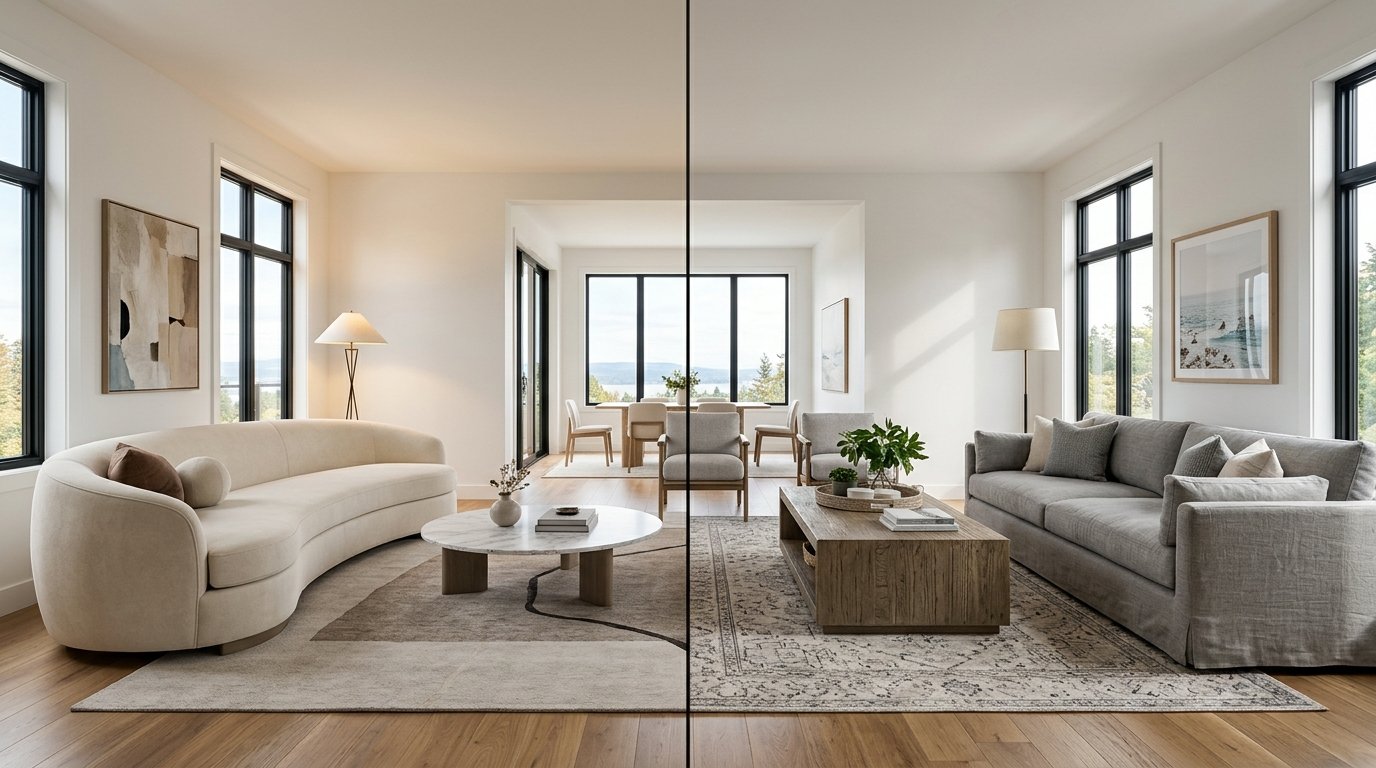
In today's competitive real estate market, presenting your home in its best light is paramount. Whether you're a seasoned seller or a first-time homeowner, you've likely heard of home staging – the art of making a property look appealing to potential buyers. But a new contender has emerged, challenging traditional methods: virtual staging. This raises a crucial question for many sellers: which is better, virtual staging or real staging? This comprehensive virtual staging comparison will break down both approaches, helping you decide the optimal strategy for selling your home faster and for a better price.
At ryy.com, we understand the power of visualization in design and real estate. While our AI tools empower you to redesign and visualize your spaces, we're here to help you navigate the broader world of home presentation. Let's explore the nuances of each staging method.
Understanding Real Staging: The Traditional Approach
Real, or traditional, staging involves physically furnishing and decorating a property to enhance its appeal. Professional stagers bring in actual furniture, art, and accessories, arranging them to create an inviting atmosphere that potential buyers can physically experience.
The Process of Real Staging
- Consultation: A professional stager assesses your home, identifies its strengths, and recommends a design plan.
- Decluttering & Cleaning: You'll need to declutter, depersonalize, and thoroughly clean the property.
- Repairs & Updates: Minor repairs, fresh paint, or lighting upgrades might be suggested.
- Furniture & Decor Placement: The stager brings in rental furniture and decor, strategically placing items to define spaces, highlight architectural features, and create a desirable lifestyle.
- Photography: Once staged, professional photos are taken to showcase the property online.
Benefits of Real Staging
- Tangible Experience: Buyers can physically walk through a furnished home, touch surfaces, sit on furniture (if allowed), and truly get a feel for the space. This creates an immediate emotional connection.
- Eliminates Guesswork: It helps buyers visualize how their own furniture might fit and how they could live in the home, especially in oddly shaped or empty rooms.
- Highlights Scale & Flow: Physical furniture clearly defines room dimensions and demonstrates the natural flow between spaces.
- Perceived Value: A well-staged home often appears more well-maintained and luxurious, potentially increasing its perceived value and attracting higher offers.
- Immediate Impact: An open house or showing will immediately impress buyers with a beautifully presented home.
Drawbacks of Real Staging
- High Cost: This is often the biggest hurdle. Real staging can cost anywhere from a few hundred dollars for a consultation to thousands or even tens of thousands for full staging, especially for luxury properties or extended periods.
- Time-Consuming: The entire process, from consultation to setup and removal, can take several days or even weeks.
- Logistical Challenges: Moving furniture in and out can be disruptive, and there's the risk of damage to property or items.
- Limited Flexibility: Once staged, changes are difficult and costly. If the home doesn't sell quickly, ongoing rental fees for furniture can accumulate.
- Wear and Tear: Physical items can get worn or damaged during showings.
Exploring Virtual Staging: The Digital Innovation
Virtual staging leverages technology to digitally furnish and decorate photographs of empty rooms. Using specialized software, designers add realistic 3D models of furniture, lighting, and decor directly into your listing photos.
The Process of Virtual Staging
- High-Quality Photos: You provide high-resolution photos of your vacant rooms. The quality of these initial photos is crucial for a realistic outcome.
- Design Selection: You might choose from various design styles (modern, traditional, minimalist, farmhouse, etc.) or let the virtual stager suggest options. Our own ryy.com AI tools can even help you explore different design styles for your rooms, giving you a fantastic starting point for virtual staging inspiration!
- Digital Furnishing: Virtual stagers use advanced software to digitally place realistic 3D furniture models into your photos, adjusting lighting, shadows, and perspective for a seamless look.
- Rendering & Delivery: The final staged images are rendered and delivered to you, ready for online listings.
Benefits of Virtual Staging
- Significantly More Affordable: Virtual staging is a fraction of the cost of real staging, often costing just a few hundred dollars per room, rather than thousands.
- Speed & Efficiency: Digitally staging a home can be completed in a matter of days, sometimes even hours, making it ideal for fast-paced markets.
- Unparalleled Flexibility: You can experiment with multiple design styles, change furniture layouts, or even alter wall colors without any physical effort or additional cost beyond the initial staging. This allows you to tailor staging to different buyer demographics.
- No Logistical Hassles: No furniture to rent, move, clean, or maintain. It's all digital.
- Broader Appeal: Can appeal to a wider range of buyers by showcasing different design aesthetics for the same room.
- Effective for Vacant Homes: Empty rooms often look smaller, cold, and uninviting. Virtual staging fills them with warmth and purpose.
- Green & Sustainable: Reduces waste and the carbon footprint associated with transporting physical furniture.
Drawbacks of Virtual Staging
- Not Tangible: Buyers cannot physically interact with the staged environment. This can be a disconnect for in-person showings.
- Potential for Misrepresentation: If not disclosed clearly, virtual staging can mislead buyers into thinking the home is actually furnished, leading to disappointment during a physical tour. Transparency is key!
- Limited to Online Presence: While incredibly effective for online listings, virtual staging doesn't impact the experience of a physical open house or showing.
- Quality Varies: The realism of virtual staging depends heavily on the skill of the designer and the quality of the software. Poorly done virtual staging can look artificial.
- Relies on Existing Conditions: If the room has damaged walls, old flooring, or outdated fixtures, virtual staging won't hide these flaws; it will only add furniture to an imperfect space.
Virtual Staging vs. Real Staging: A Direct Comparison
Now, let's put both methods side-by-side to highlight their key differences and similarities. This virtual staging comparison will give you a clear picture of what each offers.
Cost
- Real Staging: High. Involves rental fees for furniture, stager's fees, transportation, and potential storage. Can range from $1,000 to $10,000+ for a full home, depending on size and duration.
- Virtual Staging: Low. Typically priced per image or per room. Can range from $30 to $200 per photo, making it a much more budget-friendly option for full home staging.
Time Investment
- Real Staging: Requires significant time for planning, physical setup, and eventual de-staging. Can take days to weeks.
- Virtual Staging: Quick turnaround, often within 24-48 hours once photos are provided.
Flexibility and Design Options
- Real Staging: Limited. Once furniture is in place, changing the style or layout is costly and time-consuming.
- Virtual Staging: Highly flexible. Can easily produce multiple design styles for the same room, appealing to diverse buyer tastes. Want to see a modern minimalist living room and then a cozy traditional one? Virtual staging makes it simple. You can even use ryy.com's AI design tools to quickly visualize different design styles in your own photos, giving you perfect concepts to pass on to your virtual stager.
Effectiveness (Online vs. In-Person)
- Real Staging: Highly effective both online (through professional photos) and in-person (for showings and open houses). Creates an immersive experience.
- Virtual Staging: Exceptionally effective for online listings and marketing materials, grabbing attention and driving clicks. Its impact stops at the digital screen; the physical home will appear vacant.
Logistics & Effort
- Real Staging: High effort for sellers (decluttering, cleaning, coordinating with stagers, moving items).
- Virtual Staging: Low effort for sellers (primarily providing good photos).
Transparency & Disclosure
- Real Staging: No disclosure needed as items are physically present.
- Virtual Staging: Ethical best practice dictates clear disclosure (e.g., a small disclaimer on images or in the listing description) to inform buyers that the images are digitally enhanced.
When to Choose Which Staging Method?
The "better" option truly depends on your specific circumstances, budget, property type, and target market.
Choose Virtual Staging If:
- You're on a Tight Budget: It offers maximum impact for minimal cost.
- Your Property is Vacant: Empty rooms can look cold, uninviting, and smaller than they are. Virtual staging breathes life into them.
- You Need a Quick Sale: Speed of execution is a major advantage.
- Your Primary Audience is Online: Most buyers start their search online. Virtual staging helps you make an unforgettable first impression digitally.
- You Want Design Flexibility: Experiment with different styles to appeal to various demographics. Use ryy.com to visualize these styles for free before you even talk to a stager!
- You're Selling Remotely: If you're not physically near the property, virtual staging is logistically simpler.
Choose Real Staging If:
- You Have a High-End or Luxury Property: Buyers in this market often expect a fully immersive, tangible experience.
- You Anticipate Many In-Person Showings/Open Houses: The physical experience can seal the deal for many buyers.
- You're Targeting a Local Market: Where buyers are more likely to visit in person.
- The Property Needs to Feel "Lived-In": Sometimes, a physical, curated environment creates a stronger emotional connection.
- You Want to Highlight Specific Features: Such as a custom built-in bookshelf or a unique fireplace, which can be enhanced by physical decor.
Consider a Hybrid Approach:
For some properties, a combination of both might be ideal. You could physically stage key areas like the living room, master bedroom, and dining room, while virtually staging secondary bedrooms, offices, or tricky spaces. This balances cost and impact, leveraging the strengths of both methods.
Practical Tips for Maximizing Your Staging Efforts
Regardless of whether you choose virtual or real staging, these tips will help ensure your efforts pay off:
- Declutter and Clean Relentlessly: A clean, clutter-free space is the foundation of any successful staging, even if it's just for photos.
- Prioritize High-Quality Photography: This is non-negotiable. Professional photos are essential for both virtual and real staging to showcase your property beautifully.
- Understand Your Target Buyer: Research your local market. Who is buying homes in your area? Tailor your staging style to appeal to them. For example, if it's a family-friendly neighborhood, include a staged kids' room.
- Ensure Proper Lighting: Natural light is best. Open curtains, clean windows, and ensure all light fixtures are working.
- Consider Curb Appeal: Don't forget the exterior! A well-maintained yard and inviting entrance make a great first impression, both online and in person.
- Utilize ryy.com for Design Inspiration: Before you even stage, use ryy.com's free AI design tools to visualize different furniture arrangements, color palettes, and decor styles in your own photos. This can help you refine your staging vision, whether for a virtual stager or for guiding your physical decor choices.
- Disclose Virtual Staging Clearly: If using virtual staging, always include a small disclaimer on the images or in the listing description. Honesty builds trust.
Conclusion: Making Your Staging Decision
The debate between virtual staging and real staging isn't about one being inherently "better" than the other, but rather about which method aligns best with your goals, budget, and the specifics of your property. Our comprehensive virtual staging comparison has shown that while real staging offers a tangible, immersive experience, virtual staging provides unparalleled flexibility, speed, and cost-effectiveness, particularly for captivating online audiences.
Ultimately, the goal is to make your home irresistible to potential buyers. By understanding the advantages and disadvantages of each approach, you can make an informed decision that will help your property stand out in a crowded market. And remember, for any interior design dilemma or to visualize potential staging ideas, ryy.com's free AI design tools are here to inspire and assist you. Start designing your dream space today with ryy.com!