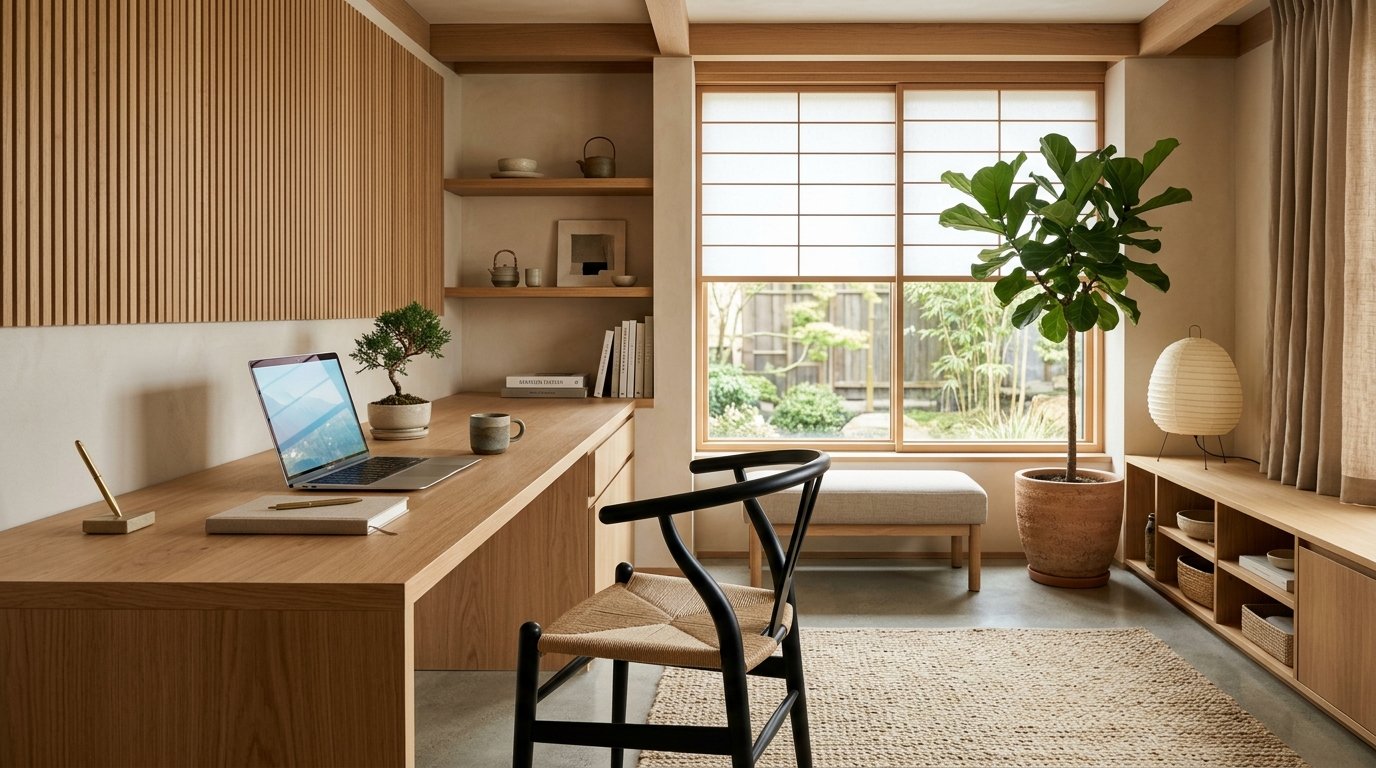
In our increasingly busy lives, the home office has evolved from a simple desk in a spare corner to a sanctuary of focus and creativity. If you’re seeking to transform your workspace into an oasis of calm that promotes both productivity and well-being, a zen home office design is the answer. Drawing inspiration from the elegant simplicity of Japandi style, you can cultivate an environment that feels both serene and highly functional. At ryy.com, we believe good design should be accessible, and our AI tools are here to help you visualize your dream space.
The concept of "zen" in design goes beyond mere aesthetics; it's about creating a harmonious balance that nurtures the mind and soul. When applied to a home office, it means fostering an environment free from clutter and distraction, allowing for deep concentration and sustained peace. The Japandi aesthetic, a beautiful fusion of Japanese minimalism and Scandinavian functionality, offers the perfect blueprint for achieving this.
Unveiling Japandi: The Perfect Harmony for Your Workspace
Before diving into the specifics of your zen home office design, let's explore what makes Japandi such an ideal muse. Japandi is a design philosophy that seamlessly blends the rustic warmth of Scandinavian "hygge" with the refined elegance of Japanese "wabi-sabi." The result is an aesthetic that prioritizes simplicity, natural materials, craftsmanship, and a deep appreciation for imperfect beauty. It's about finding joy in understated elegance and creating spaces that feel both inviting and impeccably organized.
Why Japandi Excels for a Home Office
- Serenity and Calm: Both Japanese and Scandinavian designs emphasize peaceful, uncluttered spaces. This inherent tranquility is paramount for a productive work environment.
- Functionality First: Scandinavian design is renowned for its practicality and smart solutions. In a home office, this translates to ergonomic furniture and efficient storage.
- Natural Connection: A strong emphasis on natural materials brings the calming influence of the outdoors in, reducing stress and improving mood.
- Understated Elegance: The aesthetic is sophisticated without being ostentatious, creating a professional yet comforting backdrop for your work.
Key Elements for Your Zen Home Office Design
Creating a Japandi-inspired zen home office requires a thoughtful approach to every detail, from color palettes to material choices. It's about intentionality and selecting elements that contribute to an overall sense of peace and purpose.
Color Palette: Soothing Neutrals & Earth Tones
The foundation of any zen space is its color scheme. Japandi favors a palette of muted, calming tones that promote relaxation and focus. Think:
- Soft Whites and Creams: For brightness and an expansive feel without starkness.
- Warm Grays and Greiges: Offering subtle depth and sophistication.
- Muted Blues and Greens: Bringing in natural, tranquil vibes reminiscent of sky and foliage.
- Earthy Terracottas and Beiges: Adding warmth and grounding the space.
These colors create a visual quietness, allowing your mind to concentrate without unnecessary stimulation. Consider using a lighter shade on walls to reflect natural light, and deeper tones for accents or furniture.
Natural Materials: Bringing the Outdoors In
One of the hallmarks of Japandi design is its profound connection to nature. Incorporating natural materials is crucial for a truly zen home office. These materials add texture, warmth, and an organic feel that grounds the space.
- Wood: Light to medium-toned woods like birch, oak, ash, or bamboo for desks, shelving, and flooring. The grain itself adds a subtle pattern and warmth.
- Textiles: Linen, cotton, wool, and jute for rugs, cushions, and curtains. These natural fibers provide softness and absorb sound, contributing to a quiet atmosphere.
- Ceramics and Stone: Hand-thrown pottery, natural stone coasters, or a small pebble tray can add an organic touch and tactile interest.
The beauty of these materials lies in their authenticity and subtle imperfections, echoing the wabi-sabi principle.
Minimalism & Functionality: Every Item Has a Purpose
A zen home office design thrives on minimalism. This doesn't mean stark emptiness, but rather a curated space where every item serves a purpose or brings joy. Clutter is the enemy of calm, so decluttering is paramount.
- Smart Storage Solutions: Opt for built-in or minimalist shelving units that blend seamlessly with the walls. Closed storage is excellent for concealing files and supplies, maintaining a clean visual line.
- Ergonomics: Functionality extends to comfort and health. Invest in an ergonomic chair and a desk at the correct height to support good posture and prevent strain during long work hours.
- Quality Over Quantity: Choose a few high-quality, beautifully crafted items rather than many disposable ones. This approach aligns with both Japandi sustainability and zen principles.
Designing Your Japandi-Inspired Zen Workspace – Practical Steps
Now that you understand the core elements, let's look at how to implement them in your actual home office setup. Remember, ryy.com's free AI design tools can help you visualize these concepts in your own space before you make any commitments!
Layout & Flow: Creating a Harmonious Space
The arrangement of your furniture can profoundly impact the energy of your office. Aim for a layout that feels open, accessible, and promotes ease of movement.
- Maximize Natural Light: Position your desk to take full advantage of windows. Natural light boosts mood and productivity.
- Clear Pathways: Ensure there are no obstacles in your walking paths. This creates a sense of openness and prevents "stuck" energy.
- Strategic Placement: Place your desk facing the door or with a clear view of it (without directly facing it if possible, to avoid distraction). This gives a sense of command and security.
Furniture Selection: Form Meets Function
Choose furniture that embodies both the minimalist aesthetic and robust functionality.
- The Desk: A simple, sturdy wooden desk is ideal. Look for clean lines and perhaps integrated storage. Standing desks are a great option for incorporating movement into your workday, aligning with a holistic wellness approach.
- The Chair: While ergonomic, your office chair doesn't have to be purely utilitarian. Many modern ergonomic chairs feature sleek designs that can complement a Japandi aesthetic. Consider natural upholstery like wool or linen blends.
- Storage: Minimalist shelving units, discreet drawers, or a low-profile credenza made from natural wood can keep your space organized without visual clutter.
Lighting: Enhancing Focus & Mood
Good lighting is essential for both productivity and creating a peaceful atmosphere.
- Natural Light: As mentioned, prioritize natural light. Use sheer curtains or blinds that allow light to filter in while maintaining privacy.
- Layered Artificial Lighting: Combine ambient lighting (general room illumination), task lighting (desk lamp for direct focus), and accent lighting (to highlight artwork or plants).
- Warm Light Temperatures: Opt for warmer Kelvin temperatures (around 2700K-3000K) for a cozy, inviting glow that's less harsh than cooler, blue-toned light.
Styling & Decor: Thoughtful Touches
With a minimalist foundation, your decor choices become even more impactful. Each item should be chosen with intention.
- Greenery: Introduce low-maintenance plants like snake plants, ZZ plants, or a bonsai. Plants purify the air and add a touch of living nature, bringing calm and vibrancy.
- Subtle Art: Choose abstract art, nature-inspired prints, or minimalist pottery. The focus should be on texture, form, and muted colors rather than busy patterns.
- Comforting Textiles: A soft wool throw draped over your chair or a small, textured rug can add warmth and sound absorption.
- Aromatherapy: A diffuser with calming essential oils like lavender, cedarwood, or bergamot can enhance the sensory experience of your zen space.
Achieving Zen Productivity: Beyond Aesthetics
A truly zen home office design goes beyond what meets the eye. It's about cultivating practices that support mindfulness and sustained focus.
Declutter Your Digital Space
Just as physical clutter distracts, so too does digital chaos. Regularly organize your computer files, clear your desktop, and manage notifications to minimize digital distractions.
Incorporate Rituals
Start your workday with a brief meditation or mindful tea ritual. Take short, intentional breaks to stretch, look away from your screen, or simply breathe deeply. These small practices reinforce the zen atmosphere you've created.
Personalization Without Overcrowding
While minimalism is key, your office should still reflect you. Choose one or two meaningful items – a treasured photo in a simple frame, a favorite ceramic mug – that inspire you without creating visual noise.
Practical Tips for Your Zen Home Office Transformation
- Start Small: You don't need to overhaul everything at once. Begin by decluttering, then introduce one or two Japandi-inspired elements.
- Prioritize Natural Light: This is often the most impactful (and free!) change you can make.
- Invest in Quality: Choose durable, well-made items that will last, reflecting the Japandi appreciation for craftsmanship.
- Embrace Imperfection (Wabi-Sabi): A slightly uneven handmade mug or the natural knots in wood add character and warmth, embodying the wabi-sabi principle.
- Test Your Ideas with AI: Before you buy, use ryy.com's free AI design tools. Upload a photo of your current office and experiment with different Japandi color palettes, furniture arrangements, and decor items. See how a new desk or a specific plant looks in your space instantly!
Design Your Perfect Zen Home Office Today
Creating a zen home office design inspired by Japandi is an investment in your well-being, productivity, and peace of mind. By focusing on simplicity, natural materials, and purposeful design, you can transform your workspace into a true sanctuary. Imagine stepping into an office that instantly calms you, where every element contributes to your focus and creativity. This isn't just a dream – it's an achievable reality with the right vision.
Ready to visualize your tranquil workspace? Head over to ryy.com today and try our free AI design tools. Upload a picture of your current home office and instantly generate Japandi-inspired concepts, experiment with serene color schemes, and see how different furniture and decor items look in your space. Let ryy.com be your guide to creating a truly zen and productive home office.